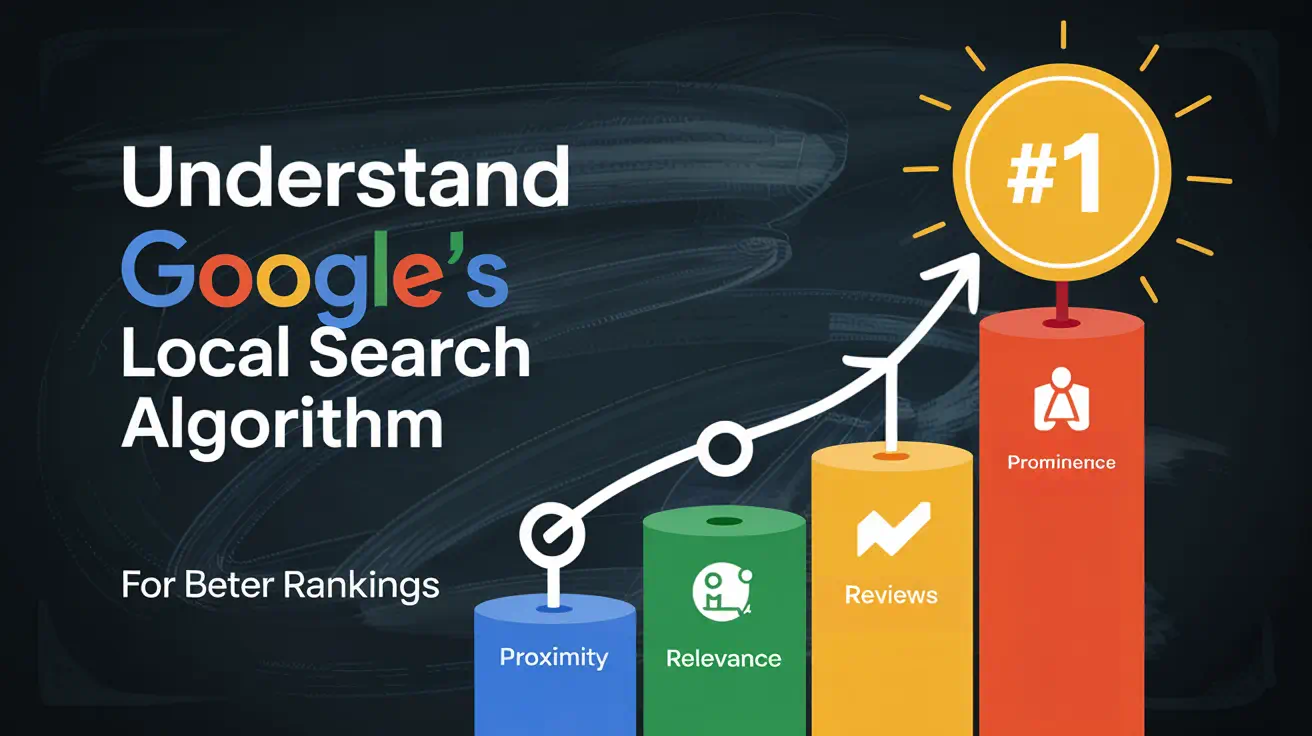
Did you know that proximity, relevance, and prominence are the three cornerstone factors influencing local search rankings? Google’s evolution from a simple list of “ten blue links” to a multifaceted tool offering organic results, images, videos, and local listings has revolutionized how businesses are discovered. Today, organic search results play a pivotal role in local visibility, outshining paid ads in driving authentic customer engagement.
The foundation of local search success lies in optimizing for organic rankings. This involves understanding and mastering the “big three” ranking factors: Google Business Profile (GBP) optimization, on-page SEO, and review management. These elements work synergistically to enhance your business’s online presence and attract more local customers.
This article delves into the intricacies of Google’s local search algorithm, providing actionable strategies to boost your rankings. From the fundamentals of the algorithm to practical tips on optimizing your GBP and managing reviews, we’ll explore the essential tools and techniques to help your business thrive in the competitive local search landscape.
Key Takeaways
- Mastering the “big three” local search ranking factors—GBP optimization, on-page SEO, and review management—is crucial for improving your local visibility.
- Organic search results drive more authentic customer engagement compared to paid advertisements.
- Proximity, relevance, and prominence are the cornerstone factors influencing local search rankings.
- Optimizing your Google Business Profile can significantly enhance your local search performance.
- Effective review management and high-quality local citations are essential for building trust and authority with search engines.
Overview of Local Search and Its Evolution
Over the years, the way people find local businesses has undergone a significant transformation. Search engine result pages (SERPs) have evolved from simple lists of links to dynamic, location-aware interfaces. This shift reflects how user behavior has changed, with more people seeking location-specific information.
The Shift from Traditional SERPs to Localized Results
In the past, search results were generic and didn’t consider the user’s location. Today, search engines prioritize local businesses, making it easier for users to find nearby services. For example, searching for “pizza” now shows options close to your location, highlighting the importance of proximity.
How Google Maps and Google Business Profiles Shape Local Search
Google Maps has become indispensable for local searches, celebrating 20 years of helping users find businesses. Google Business Profiles (formerly Google My Business) bridge the gap between online searches and physical stores, enhancing visibility for local businesses.
| Feature | Classic SERPs | Modern Local Search |
|---|---|---|
| Results | Generic, non-localized | Location-specific, dynamic |
| Interface | Text-heavy lists | Map-integrated, visual |
| Business Listings | Basic info, limited interaction | Detailed profiles, reviews, and photos |
This evolution mandates a fresh approach to optimizing for local search, ensuring businesses adapt to these changes to remain competitive.
Understanding Google’s Local Search Algorithm
The foundation of local search rankings is rooted in three essential factors: relevance, proximity, and prominence. These elements work together to determine how visible a business is in local search results.
Key Ranking Factors: Relevance, Proximity, and Prominence
Relevance refers to how well a business matches a user’s search query. For instance, optimizing your Google Business Profile with accurate categories and descriptions can improve relevance. Proximity is about physical location—how close a business is to the searcher. A search for “pizza” will prioritize nearby options, highlighting the importance of proximity.
Prominence reflects a business’s online visibility. This includes positive reviews, high-quality citations, and strong on-page SEO. Google’s guidelines emphasize that businesses with detailed profiles and active engagement tend to rank higher.
Insights from Google’s Official Guidelines and Industry Experts
Experts suggest balancing on-page SEO with off-page signals like reviews and citations to enhance trust with search engines. Understanding these factors is crucial for any local SEO strategy, as they form the backbone of search engine visibility and customer engagement.
Optimizing Your Google Business Profile for Local Success
Optimizing your Google Business Profile (GBP) is a cornerstone of local SEO success. A well-optimized profile not only enhances your online visibility but also builds trust with potential customers. By following a structured approach, you can ensure your GBP stands out and drives more local traffic to your business.
Setting Up and Enhancing Your GBP Listing
Setting up your GBP listing involves more than just filling out basic details. It requires a strategic approach to ensure accuracy and completeness. Start by verifying your business location, as unverified locations are less likely to appear in local search results. Next, provide a detailed business description, ensuring it includes relevant keywords that match what your customers might search for.
Accurate business details are crucial. Ensure your address, phone number, and operating hours are up-to-date. Even minor discrepancies can confuse customers and harm your local SEO efforts. For example, if your business operates seasonally, update your hours accordingly to maintain customer trust.
Incorporating Keywords and Accurate Business Details
Incorporating targeted keywords into your GBP listing can significantly enhance its relevance. Use specific terms that describe your services and location. For instance, if you own a pizza shop in New York, include terms like “New York-style pizza” or “pizza delivery service” to match local searches.
Linking your GBP to your official website is another critical step. This connection helps search engines understand your business’s online presence, improving your local SEO performance. Additionally, ensure your profile is consistently updated across all online directories to avoid inconsistencies that could hurt your credibility.
| Feature | Well-Optimized Profile | Under-Optimized Profile |
|---|---|---|
| Profile Completeness | 100% complete with accurate details | Missing key information |
| Keywords Usage | Relevant keywords naturally integrated | Lack of targeted keywords |
| Business Hours | Up-to-date and accurate | Outdated or missing hours |
| Website Linking | Linked to official website | No link or incorrect link |
By following these steps and maintaining a consistent, accurate GBP, you can improve your local search visibility and attract more customers to your business.
On-Page SEO and Local Content Strategies
Effective on-page SEO is the backbone of a successful local search strategy. By optimizing your website’s content and structure, you can significantly improve your visibility in local search results. This section explores the best practices for creating localized web content and the importance of structured data, meta descriptions, and title tags in boosting your search rankings.
Best Practices for Localized Web Content
Creating content that resonates with your local audience is crucial. Start by incorporating location-specific keywords naturally into your website’s content. For example, a bakery in Chicago could mention “Chicago-style pastries” or “baked goods in Lincoln Park.” This not only helps search engines understand your relevance but also attracts local customers.
Another key strategy is to develop content that addresses the needs and interests of your local community. Blog posts about local events, community news, or guides tailored to your area can drive organic traffic and engagement. For instance, a blog titled “Top 5 Summer Festivals in Austin” can attract local readers and signal to search engines that your content is geographically relevant.
Structured Data, Meta Descriptions, and Title Tags
Optimizing technical elements like title tags and meta descriptions is essential for improving your search ranking. Use location-specific terms in your title tags, such as “Pizza Delivery | New York City,” to clearly indicate your service area. Meta descriptions should also include relevant keywords and a call-to-action to encourage clicks from local searchers.
Implementing structured data, or schema markup, on your website can enhance your online presence. By adding schema markup for your business hours, address, and reviews, you help search engines understand your website’s content better. This can lead to improved visibility in search results and even rich snippet features.
Leveraging Reviews, Citations, and Backlinks
Customer reviews, citations, and backlinks are powerful tools that enhance your business’s online presence and local search rankings. These elements work together to build trust and credibility, making your business more attractive to both search engines and potential customers.
Building Trust Through Customer Reviews and Responses
Positive reviews are essential for establishing trust and prominence. Encourage your customers to leave feedback by providing excellent service and making it easy for them to review your business. Responding to reviews, both positive and negative, shows that you value your customers’ opinions and helps improve your online reputation.
Did you know that 74% of new customers will choose a business because of its positive reviews? Regularly monitoring and responding to reviews can significantly boost your local search rankings and attract more customers to your business.
Developing a Consistent Citation Strategy Across Directories
Citations are mentions of your business’s name, address, and phone number (NAP) across the web. Consistency is key to ensuring search engines trust your business’s information. Accurate and uniform citations across directories like Yelp, Foursquare, and TripAdvisor can improve your local search visibility.
Avoid inconsistencies in your NAP details, as they can confuse customers and harm your local SEO efforts. Use online tools to manage and update your citations regularly, ensuring your business information is accurate and up-to-date.
| Feature | Well-Optimized Profile | Under-Optimized Profile |
|---|---|---|
| Review Management | Actively monitors and responds to reviews | Does not engage with reviews |
| Citation Consistency | Maintains accurate NAP across directories | Has inconsistent NAP details |
| Backlink Quality | Has high-quality, relevant backlinks | Has few or low-quality backlinks |
By leveraging reviews, citations, and backlinks effectively, you can enhance your business’s online presence and improve its local search rankings. Remember, trust and consistency are key to attracting and retaining customers in the competitive local market.
Utilizing Analytics and Advanced Tools for Local SEO
In today’s data-driven world, leveraging analytics tools is essential for refining your local SEO strategy. These tools provide valuable insights into your online performance, helping you make informed decisions to improve your visibility and attract more local customers.
Tracking Local Search Performance with Analytics Tools
Google Analytics and Semrush Local are powerful tools that help monitor your local SEO performance. They offer detailed insights into website traffic, user behavior, and conversion rates. By setting up conversion goals, you can measure actions like form submissions, calls, or store visits, which are crucial for assessing your local SEO success.
Adjusting Strategies Based on Data Insights
Data-driven decision-making is key to refining your local SEO tactics. Regularly review metrics to identify trends and areas for improvement. For instance, if certain pages have high traffic but low conversions, consider optimizing them with more targeted content or calls-to-action. This approach ensures your strategy remains effective and aligned with your business goals.
Enhancing visibility requires continuous effort. Use analytics to identify gaps in your local SEO efforts and implement changes accordingly. Whether it’s adjusting your keyword strategy or improving your website’s user experience, data insights guide you toward better outcomes. Regular audits help maintain optimal performance and adapt to evolving search trends.
By integrating analytics tools into your local SEO strategy, you gain the insights needed to stay competitive and drive sustainable growth. Let data be your guide to unlocking new opportunities and achieving your business objectives.
Conclusion
In conclusion, mastering the intricacies of Google’s local search landscape is vital for businesses aiming to thrive in today’s competitive market. By focusing on key elements like Google Business optimization, on-page SEO, and review management, businesses can significantly enhance their online visibility and attract more local customers.
The actionable takeaways from this article emphasize the importance of continuous monitoring and iterative improvements. Regularly updating your Google Business Profile, engaging with customer reviews, and leveraging analytics tools can drive sustainable growth and better results.
Remember, precise strategies and a commitment to adaptability are essential for outperforming competitors. Encourage your team to implement these tactics and consider consulting with local SEO experts to further refine your approach. By doing so, your business can achieve improved customer engagement and a stronger online presence.
FAQ
How can I improve my business’s visibility in local search results?
To enhance your local search visibility, focus on optimizing your Google Business Profile with accurate details, gather positive reviews, and ensure your website has localized content. Additionally, building high-quality citations and leveraging structured data can boost your rankings.
What are the most important factors for local search rankings?
The key factors are relevance, proximity, and prominence. Ensure your business profile clearly matches what users are searching for, is located near their search area, and has a strong online presence through reviews and citations.
How do I set up my Google Business Profile effectively?
Start by claiming and verifying your profile. Add your business name, address, and phone number accurately. Include high-quality photos, update your hours of operation, and use relevant keywords in your description to improve visibility.
Why are customer reviews important for local SEO?
Positive reviews build trust and signal to search engines that your business is reputable. Responding to reviews, both good and bad, shows engagement and can improve your ranking factors. Aim to encourage satisfied customers to leave feedback.
How can I ensure consistent citations across directories?
Use trusted platforms like Yelp, Bing Places, and industry-specific directories to list your business. Ensure your name, address, and phone number (NAP) are identical across all platforms. Tools like Semrush Local can help monitor and fix inconsistencies.
Can I manage multiple business locations in Google Business Profile?
Yes, you can create a Google Business Profile for each location. Ensure each profile has unique and accurate details, and avoid duplicating content. This helps improve local search performance for each location.
How do I track the effectiveness of my local SEO efforts?
Use tools like Google Analytics and Semrush Local to monitor your website traffic, search rankings, and profile performance. Regularly review these insights to refine your strategy and improve results.
What role does my website play in local search rankings?
Your website’s content, meta descriptions, and title tags should include localized keywords to improve relevance. Additionally, ensure your site is mobile-friendly and loads quickly, as these factors influence user experience and rankings.
Source Links
- Google’s Local Algorithm and Local Ranking Factors – BrightLocal
- Google Local Search Optimization—What You Need To Know
- How Does Google Determine Ranking Results – Google Search
- The Evolution of Google AI in Local Search
- Unpacking Google’s Local Search Algorithm Updates
- Google Update To Local Search Results: What To Know and Do | Flowmatters
- Understanding Google’s Local Search Algorithm – Imani Advantage
- Google’s Local Search Algorithm and Rankings – Bruce Clay, Inc.
- Explaining Google’s Local Search Algorithm For Hotels
- How to improve your local ranking on Google
- Own the Map: Optimize Your Google Business Profile for Local Success – Farinella
- Google’s Local Algorithm and Local Ranking Factors – BrightLocal
- BruceClay – 25 Local SEO Techniques for Increasing Your Google Local Search Visibility
- How to Leverage Reviews to Boost Local Search Visibility — One Nine Design | Nonprofit Template Shop
- Understanding Google Local Algorithm for Multi-Location Brands
- Google’s local search algorithm: How it ranks businesses
- An Advanced Guide to Google Search Console for Local Search – BrightLocal
- How does the local search algorithm work?
- Local Search Ranking Factors – What Are They?