Category: News

  • Elementor 3.23: Exciting New Features Unveiled

    Elementor 3.23: Exciting New Features Unveiled

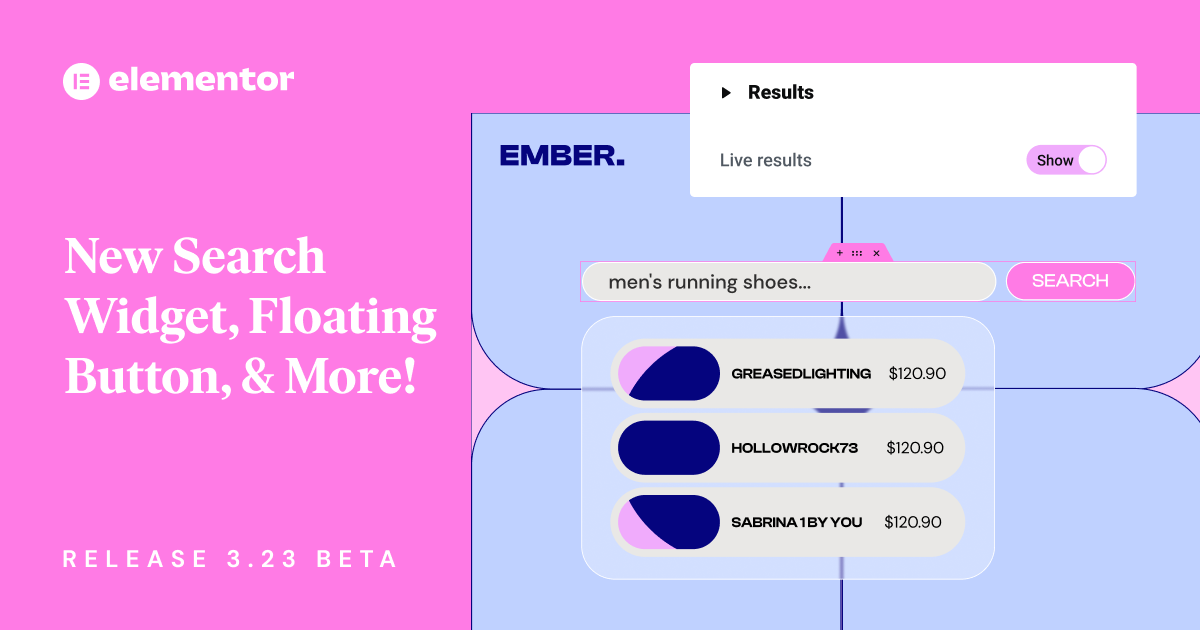
    Elementor New Search Widget and More, Release 3.23 Beta

    Elementor 3.23 has arrived, bringing new features to the popular website builder. This update focuses on making things faster and easier for users. It sets a new standard for web design tools.

    The latest version has an enhanced Search widget with live results. This makes finding things on websites faster and more fun. A new Floating Button widget helps increase sales, and Link in Bio widgets make adding social media links easy.

    These new features come with big performance upgrades. This makes Elementor 3.23 a big deal for web designers and site owners.

    One big improvement is Nested Elements, which make designing faster and more detailed. Editor performance has gotten 60%-98% better. Element Caching is now on by default for new sites, making websites load faster.

    Key Takeaways

    • New Search Widget with AJAX-powered live results
    • 40+ Floating Button templates available in Elementor Pro
    • Seven new Link in Bio widgets for social media integration
    • Significant editor performance gains with optimized Nested Elements
    • Element Caching active by default for new sites
    • Improved accessibility features, including screen reader compatibility

    Introduction to Elementor 3.23

    Elementor 3.23 is a big step forward in making websites better and more engaging. It comes with new tools to make exploring sites easier, design more precise, and keep visitors interested. The beta version is out for testing, letting users share their thoughts on the new stuff.

    The new Search Widget is a big deal in this update. It shows live search results as people type, changing how we look at site content. You can set the search to look in “All”, “Product”, or “Posts”, making searching more personal.

    Improving site speed is a key focus of Elementor 3.23. The time it takes for nested widgets to work has gotten much faster:

    Metric Before After Improvement
    Interaction Time (Case 1) 2,290ms 240ms 89.5%
    Interaction Time (Case 2) 707ms 5.5ms 99.2%

    Elementor 3.23 also introduces Floating Buttons to help increase conversions. These buttons make it easy for visitors to connect with you. They come in many templates and can show your contact info.

    For social media fans, there’s the Link in Bio widgets. These seven widgets are for both free and Pro users. They help make your online presence stronger and send more traffic to important website parts.

    To try out these new features, go to WordPress Dashboard → Elementor → Features. This update shows Elementor’s ongoing effort to make websites better and faster.
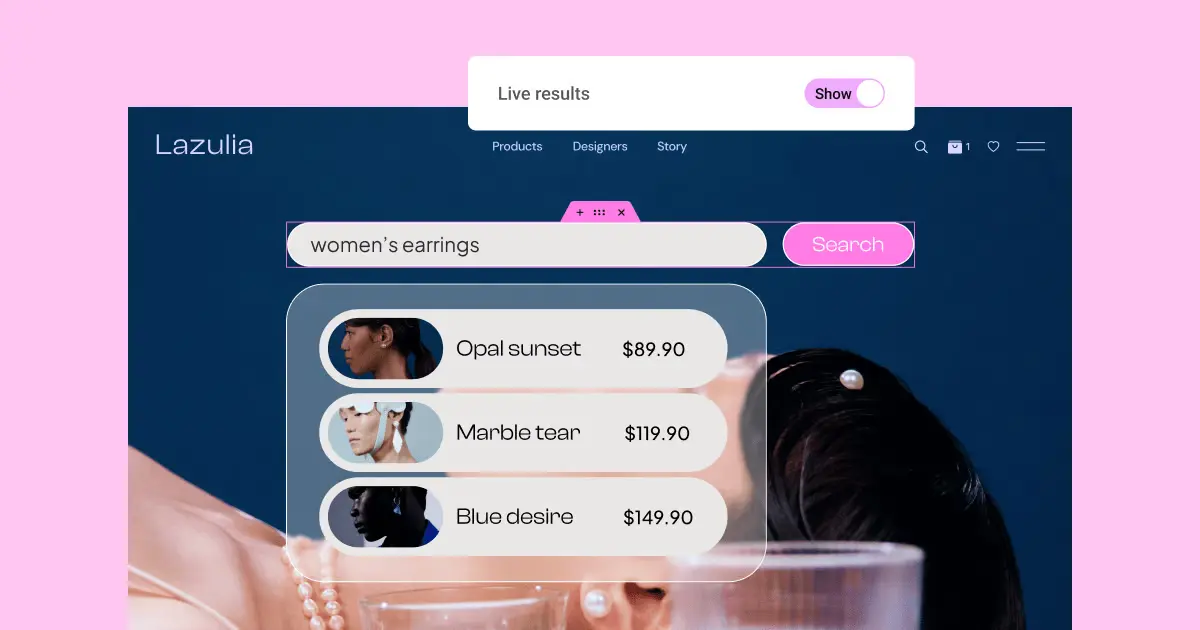
    Search results for women's earrings on Lazulia

    Enhanced Search Widget: Revolutionizing User Experience

    Elementor 3.23 introduces a game-changing search widget that changes how users interact with websites. This feature brings AJAX search to the forefront, making site navigation and user engagement better.

    AJAX-powered Live Results

    The new search widget uses AJAX technology for instant results as users type. This makes searching faster and more efficient, helping visitors find what they need quickly.

    Customizable Search Input and Results Display

    With this customizable search widget, website owners can make the search fit their brand. They can change the search input field, submit buttons, and how live results are shown.

    Dynamic Filtering Options

    The search widget also has powerful filtering options. Users can narrow down their search results on the fly. This makes searching more targeted and relevant, boosting user satisfaction.

    Feature Description Benefit
    AJAX Search Real-time results as users type Faster content discovery
    Live Results Instant display of search matches Improved user engagement
    Customizable Widget Tailored search input and results display Consistent brand experience
    Dynamic Filtering Refined search options More relevant search results

    The enhanced search widget in Elementor 3.23 is a big step forward for websites. It combines AJAX search, live results, and customization. This makes it a powerful tool for better user experience and finding content.

    Chat with store manager Sheila Lou

    Floating Button Widget: Boosting Conversions

    Elementor’s new Floating Button Widget is changing the game for boosting conversions. It has sticky buttons that stay visible as users scroll. This means users always have easy access to important actions. The widget comes with many customizable templates, including three for free and over 40 in Elementor Pro.

    Users can make each template their own, picking messaging platforms and customizing avatars and chat messages. This makes it easy to add chat features, which can improve user engagement and increase conversions.

    Feature Free Version Elementor Pro
    Pre-designed Templates 3 40+
    Customization Options Limited Extensive
    Click Tracking Yes Yes
    Display Conditions Basic Advanced

    The Floating Button Widget tracks clicks, helping businesses see how well it works. It also lets you target messages to certain groups of people. This personal touch can really help increase conversions, as studies show it can boost them by up to 35%.

    “The Floating Button Widget is a powerful tool for businesses looking to enhance user engagement and drive conversions. Its customization options and strategic placement make it an invaluable asset for any website.”

    Jeweler profile card with contact options

    Link in Bio Widgets: Streamlining Social Media Integration

    Elementor 3.23 has introduced a big change for social media: Link in Bio widgets. These widgets help make pages that bring together content and calls-to-action from different social platforms. They are customizable and responsive.

    Seven Ready-to-Use Widgets

    There are now seven new Link in Bio widgets. They help improve brand identity and make social media easier to manage. Users can pick from over 60 pre-made blocks in the library for quick page setup.

    Customization Options for Brand Identity

    These widgets let users customize their Link in Bio pages to match their brand. You can change colors and fonts to show off your brand’s unique style.

    Widget Feature Benefit
    Responsive Design Ensures optimal display across all devices
    Customizable Layouts Allows for unique brand representation
    Multiple Platform Support Integrates seamlessly with various social media platforms

    Availability for Free and Pro Users

    Elementor’s update is for both free and pro users. Free users get the “Minimalist” widget for simple social media integration. Pro users get all seven widgets for more design options and flexibility.

    With these new Link in Bio widgets, Elementor is making it easier for users to have a strong online presence on different social media platforms.
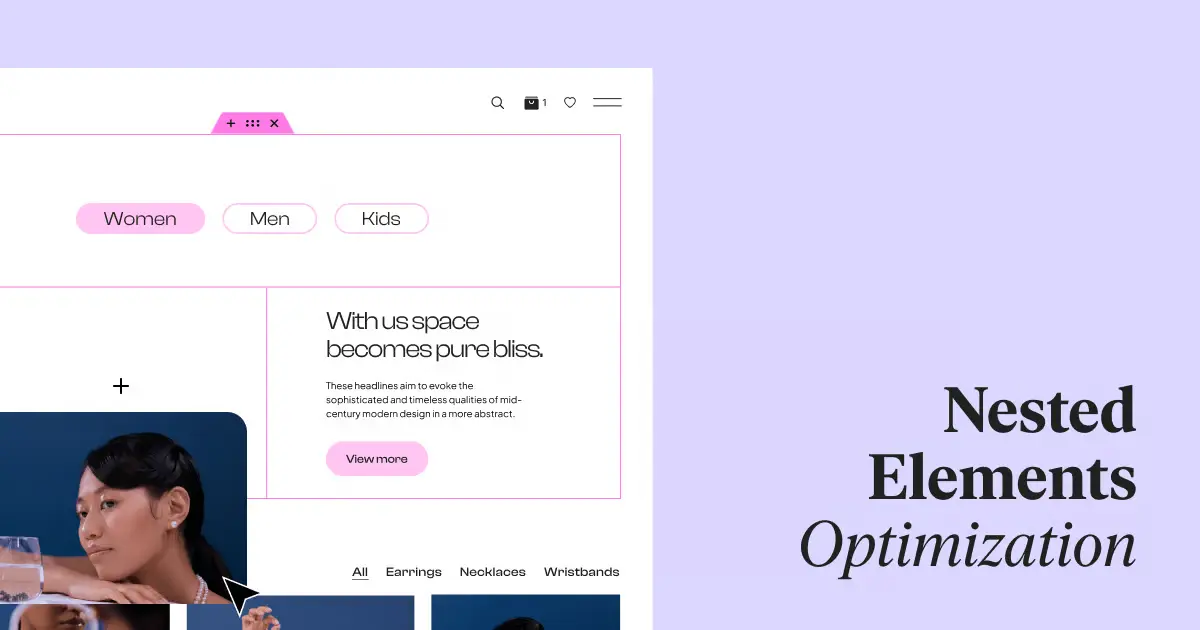
    Website header with categories: Women, Men, Kids

    Performance Improvements for Nested Elements

    Elementor 3.23 has changed the game with its boost to website performance. It has made the editor faster by cutting down the time it takes to interact with it by 60% to 98%. This is thanks to the upgrade of Nested Elements, a feature from version 3.10.

    Now, creating complex designs is faster thanks to the widget’s new infrastructure. Designers can easily make detailed layouts using Flexbox Containers. This makes editing smoother, letting users work better.

    Here are some key ways it’s improved:

    • Element Caching feature improves Time To First Byte (TTFB) by 30%-70%
    • Memory usage decreases from 3MB to 8KB with Elementor caching
    • Waypoint.js library replacement reduces memory use by 18KB

    These changes make designing easier and help websites run better. Sites load faster and use less memory, which means a better experience for visitors.

    Feature Improvement
    Editor Interaction Time 60%-98% reduction
    TTFB 30%-70% improvement
    Memory Usage Reduced from 3MB to 8KB

    With these updates, Elementor 3.23 helps designers make complex layouts efficiently. It also ensures websites run smoothly.

    New in Elementor 3.23: Element Caching and Top Bar

    Elementor 3.23 introduces big changes to make websites load faster and easier to edit. Element Caching is now on by default for new sites, making them run smoother and quicker. This is a big win for speeding up websites.

    The Top Bar is now a key part of the Editor, changing how we work. It makes editing better by showing responsive previews, giving quick access to the Theme Builder, and making it easy to move between pages. These updates make editing smoother and easier.

    Feature Benefit
    Element Caching Faster loading times, improved performance
    Top Bar Integration Enhanced editor navigation, streamlined workflow
    Responsive Preview Instant view of different device layouts
    Theme Builder Access Quick modifications to site-wide elements

    With these updates, Elementor keeps focusing on making things better for users and websites. The mix of Element Caching and the Top Bar lets users make websites that load fast and are easy to edit.

    Accessibility Enhancements: Improved DOM Output

    Elementor 3.23 makes a big step forward in web accessibility with its new DOM output. This update aims to make websites more inclusive, especially for users who use screen readers.

    Screen Reader Compatibility for Mega Menu

    The Mega Menu now works perfectly with screen readers. This means visually impaired users can easily go through complex menus. The better keyboard navigation also supports inclusive design, making sites more accessible to everyone.

    Impact on Overall Website Accessibility

    These updates make the web more inclusive. By making the DOM output better, Elementor 3.23 cuts down on code, making sites load faster. This is great for users with slow internet or old devices.

    • 39% less code for Flexbox Containers
    • 85% less code for Grid Containers
    • Improved Time to First Byte (TTFB) score by 3-5%

    With these updates, Elementor keeps focusing on making sites accessible to everyone. Now, developers can make sites that look good and work well for all users, no matter their abilities or tools.

    Elementor’s Growth and Market Presence

    Elementor keeps adding new features, showing it’s a big player in the website builder market. It’s always innovating, keeping up with the latest web design trends.

    The Search Widget with Live Results in version 3.23.0 is a great example. It uses AJAX technology for real-time search results. This meets the high standards of today’s web design.

    Elementor also introduced the Off-Canvas widget in version 3.22.0. This feature lets designers add engaging layers to their sites. Layers are a big trend in web design right now.

    Version Feature Impact on Web Design
    3.23.0 Search Widget with Live Results Improved user engagement
    3.22.0 Off-Canvas Widget Enhanced layered design capabilities
    3.21.0 Loop Taxonomy Query Advanced content organization
    3.19.0 Display Conditions Personalized content delivery

    These updates show how Elementor is making a mark in web design. It gives designers tools that follow the Golden Ratio. This helps create sites that look good and are easy to use. It could lead to more people using Elementor in the website builder market.

    Upcoming Features in Elementor’s Roadmap

    Elementor’s future updates are bringing exciting changes to web design. With over 16 million websites using it, the platform keeps getting better. Let’s look at some new features coming our way.

    AI Integration Advancements

    AI is changing web design. Elementor might add AI tools to help with design, layout, and even content creation. This could make designing websites faster and more engaging.

    Dynamic Content Enhancements

    Elementor already has dynamic content, but it’s getting even better. We might see more ways to personalize websites. This could mean websites change based on what users like or do.

    Website Setup Acceleration

    Elementor’s template library might grow even more. New tools could make starting a website quicker. Maybe with AI help or templates for specific industries.

    Details are still secret, but these ideas show Elementor’s drive for innovation. As it grows, users will get more tools to make amazing, dynamic websites easily.

    Elementor Hosting: Performance and Security Updates

    Elementor Hosting is changing the game with its managed WordPress hosting. It focuses on making websites secure and fast. It uses Google Cloud for top security like SSL certificates, daily backups, and protection against DDoS attacks.

    Building websites is quick and easy, taking just 5 minutes. There are over 120 widgets and 150 templates to choose from. This makes it simple for anyone to create a website.

    The Staging Tool is a big plus. It lets users test new features safely. This way, updates can be made without affecting the live site. Everything you need is in one dashboard, so you don’t need to know a lot about tech.

    • Worry-free managed hosting with optimized environments
    • Enhanced security measures for safe websites
    • Integrated AI tool for content creation and automation
    • Seamless domain purchase and custom email setup

    Elementor Hosting meets all kinds of needs, from simple sites to complex e-commerce stores. It works well with WooCommerce for better online stores. Features like Lazy Loading and Image Optimizer make websites run smoothly.

    With over 16 million websites using Elementor, its hosting keeps getting better. It’s setting new standards in managed WordPress hosting.

    Send: New WooCommerce Marketing Tool

    WooCommerce marketing has just gotten a big boost with Send, a new e-commerce tool. This tool aims to change how online store owners talk to their customers and boost sales.

    Early Access Program Details

    Send is now available through an early access program for WooCommerce store owners. By signing up, you can be one of the first to try this advanced email marketing platform. This program lets you help shape the tool and get ahead in the e-commerce world.

    Integration with Existing WooCommerce Stores

    Send works smoothly with your current WooCommerce store. This means you can easily share customer info, product details, and purchase history. You can use this info to make email marketing campaigns that really speak to your customers.

    Send has some key features:

    • Automated email sequences based on customer behavior
    • Customizable email templates optimized for conversions
    • Advanced segmentation capabilities for personalized messaging
    • Detailed analytics to track campaign performance and ROI

    By using WooCommerce and Send together, store owners can make their marketing more effective. They can build stronger customer relationships and increase sales. As online shopping changes, tools like Send are key to staying ahead.

    Conclusion

    Elementor 3.23 brings big updates that change web design for the better. It now has a search widget with live results and options to customize how it looks. This makes websites more user-friendly.

    There are also new tools like the floating button widget and link in bio features. These help turn visitors into customers and connect with social media easily.

    Elementor has made its elements faster and more efficient. It also works better with screen readers for people who need accessibility tools. This shows Elementor’s focus on making websites for everyone.

    Looking forward, Elementor is planning to add AI and dynamic content features. These updates will make websites faster and safer. The new tool for WooCommerce, Send, will help online stores grow even more.

    FAQ

    What are the key new features introduced in Elementor 3.23?

    Elementor 3.23 brings many new features. These include an enhanced Search widget with live results and a Floating Button widget for more conversions. It also has Link in Bio widgets for social media, performance boosts for Nested Elements, Element Caching, a Top Bar, and better accessibility.

    How does the new Search Widget in Elementor 3.23 improve the user experience?

    The new Search Widget shows live results as you type, thanks to AJAX. You can customize the search input, buttons, and how results are displayed. This makes searching more personalized.

    What is the purpose of the Floating Button widget in Elementor 3.23?

    The Floating Button widget aims to boost conversions by linking directly to chats or other platforms. It comes with customizable templates, messaging platform integration, and options for targeting your audience.

    How do the Link in Bio widgets in Elementor 3.23 benefit social media integration?

    Elementor 3.23 offers seven Link in Bio widgets for creating responsive pages. These pages have consolidated content and CTAs for social media. They let you customize for your brand and use over 60 pre-designed blocks.

    What performance improvements are included in Elementor 3.23 for Nested Elements?

    Elementor 3.23 has big performance boosts for Nested Elements. This reduces Editor interaction time by 60%-98%. It makes creating complex designs faster and editing smoother.

    What is Element Caching, and how does it impact website performance?

    Element Caching is now on by default for new sites in Elementor 3.23. It greatly improves performance and cuts loading times for websites made with Elementor.

    How does the new Top Bar in Elementor 3.23 enhance the user experience?

    The Top Bar is now a key part of the Editor in Elementor 3.23. It makes navigating and working more efficient. You can preview responsive views, access the Theme Builder, and switch between pages easily.

    What accessibility improvements are included in Elementor 3.23?

    Elementor 3.23 has made accessibility better with restructured DOM output. This makes Mega Menu content work well with screen readers. These updates help make websites more inclusive and accessible to everyone.


  • Popproxx & DesignRush Partnership: Uniting to Expand and Enhance Digital Solutions

    Popproxx & DesignRush Partnership: Uniting to Expand and Enhance Digital Solutions

    Stylized urban park with colorful autumn trees and pedestrians.

    Popproxx is excited to announce our latest partnership with DesignRush, a prestigious digital platform renowned for connecting businesses with top-tier design and development agencies globally.

    DesignRush Recognizes Leading Software Development Firms

    Joining forces with DesignRush marks a significant milestone for Popproxx. This collaboration expands our ability to offer clients a more diverse range of services and solutions. Leveraging DesignRush’s extensive network and deep industry knowledge, we’re now better equipped to bring our clients the most current design trends, valuable industry insights, and innovative digital solutions.

    Through this partnership, Popproxx enhances our suite of services, providing clients with comprehensive, tailor-made solutions. Working alongside DesignRush, we’re committed to delivering strategies and designs that align perfectly with our client’s unique needs and aspirations.

  • Navigating the 2023 Web Design Landscape with Popproxx

    Navigating the 2023 Web Design Landscape with Popproxx

    What’s new in 2023?

        • 2023 is seeing a resurgence in retro designs with bold, contrasting colors breaking away from recent minimalistic trends.

        • User-centric design is at the forefront, ensuring a seamless and engaging user experience across all devices.

        • Enhanced interactivity through custom illustrations, animated cursors, and diverse aesthetics is a hallmark of 2023 web design.

        • Security remains a paramount concern, with robust measures in place to safeguard against potential threats.

        • Popproxx’s comprehensive services align well with these trends, offering a one-stop solution for small businesses looking to make a mark online.

      Embracing the Retro Resurgence

      The web design arena is witnessing a delightful retro revival as we step into 2023. This trend is seeing websites adorned with elements reminiscent of the 70s and 90s aesthetics, stepping away from the modern minimalistic designs. Popproxx’s approach to Customized Themes resonates with this trend, ensuring that your brand stands out with an original look and feel.

      User-Centricity: The Core of Modern Web Design

      As the digital landscape evolves, the emphasis on user-centric design has never been more critical. The trend is about ensuring a seamless user experience, whether accessed via desktop or mobile. Popproxx’s Responsive Designs ensure your site looks flawless on all devices, aligning with the mobile-first strategies that are now more important than ever.

      Interactivity: Breathing Life into Web Design

      The year 2023 is seeing websites transforming into digital playgrounds with enhanced interactivity. Custom illustrations, animated cursors, and a blend of photos with graphical elements are making websites more engaging. Popproxx’s Seamless Integrations facilitates this level of interactivity, ensuring your website remains a cut above the rest.


      Mid-Post Summary

        • The retro design revival, user-centric approach, and enhanced interactivity are the driving forces in the 2023 web design landscape.

        • Popproxx’s tailored services in web design, hosting, and SEO position it as a go-to solution for small businesses aiming to align with these trends.


      Ensuring Speed and Security

      In a digital age where speed is synonymous with efficiency, having a fast-loading website is crucial. It’s not just about user satisfaction but also about SEO. Popproxx’s commitment to Optimized Speed ensures a fast, user-friendly, and search engine-friendly website. Moreover, with cyber threats on the rise, having a Secure & Robust website is non-negotiable. Popproxx ensures your site is fortified against potential threats, making security a cornerstone of its service offerings.

      An All-In-One Solution: Web Design, SEO & Hosting

      Navigating the complex world of digital presence can be daunting. However, Popproxx simplifies this journey with its All-In-One Website SEO, & Hosting services. From a stunning website designed by professionals to reliable hosting and robust SEO strategies, Popproxx provides a holistic solution for small businesses.

      The Popproxx Advantage

      The trends in web design for 2023 necessitate a blend of aesthetics, user-centric approaches, and robust security measures. Popproxx is well-poised to help your business navigate these trends with its comprehensive range of services. With Popproxx, you’re not just getting a service provider; you’re gaining a partner dedicated to ensuring your online success.


      Final Thoughts

        • As web design trends evolve, aligning with a service provider like Popproxx that stays ahead of the curve is crucial for online success.

        • The comprehensive services offered by Popproxx align well with the 2023 web design trends, providing a robust foundation for small businesses to thrive online.


      This outline structure aims to provide a comprehensive overview of the 2023 web design trends while seamlessly integrating the services offered by Popproxx, thereby presenting Popproxx as a reliable partner for small businesses looking to establish or enhance their online presence in line with the latest trends.

    • 5 ways vendors can meet new cybersecurity demands

      5 ways vendors can meet new cybersecurity demands

      Meeting New Cybersecurity Demands: 5 Vital Strategies for Vendors

      In today’s digital landscape, where cyber threats continue to evolve and become more sophisticated, vendors must proactively address the ever-increasing cybersecurity demands.

      Learn More

      Protecting sensitive customer data, preserving brand reputation, and ensuring business continuity have become top priorities for organizations across industries. In this blog post, we will explore five crucial strategies vendors can implement to meet the new cybersecurity demands and safeguard their businesses.

      1. Implement Multi-Factor Authentication (MFA)

      Traditional username and password combinations are no longer sufficient to protect against unauthorized access. Vendors should adopt Multi-Factor Authentication (MFA) as an added layer of security. MFA requires users to provide multiple credentials, such as a password and a unique verification code sent to their mobile device or email. By implementing MFA, vendors significantly reduce the risk of unauthorized access, even if a password is compromised. This simple yet effective measure can thwart the majority of automated cyber attacks.

      1. Regularly Update and Patch Software

      Outdated software and unpatched systems are common entry points for cyber attackers. Vendors must prioritize regular updates and patches for all their software, including operating systems, applications, and plugins. Timely updates often include security patches that address known vulnerabilities, preventing attackers from exploiting them. Implementing an automated patch management system can streamline this process and ensure that critical updates are not overlooked. By keeping software up to date, vendors strengthen their defenses against emerging cyber threats.

      1. Educate and Train Employees

      Employees play a critical role in maintaining cybersecurity. Vendors should invest in comprehensive cybersecurity training programs to educate their staff about best practices, common threats, and how to identify and report suspicious activities. Employees should understand the importance of strong passwords, data encryption, phishing awareness, and safe browsing habits. Regular training sessions and simulated phishing exercises can reinforce cybersecurity knowledge and create a security-conscious culture within the organization. Well-informed employees are crucial in mitigating human error-based security breaches.

      1. Employ Robust Endpoint Protection

      Endpoints such as laptops, desktops, and mobile devices serve as gateways to an organization’s network. Vendors must deploy robust endpoint protection solutions that include antivirus software, firewalls, intrusion detection systems, and data encryption capabilities. Endpoint protection helps defend against malware, ransomware, and other malicious attacks targeting vulnerable devices. It is essential to ensure that all endpoints are continuously monitored, and security software is regularly updated to detect and prevent emerging threats effectively.

      1. Regularly Perform Security Assessments and Penetration Testing

      To stay ahead of cyber threats, vendors must conduct regular security assessments and penetration testing. These measures help identify vulnerabilities in the organization’s infrastructure, networks, and applications. By proactively identifying weaknesses, vendors can implement necessary security controls and remediation strategies before attackers exploit them. Engaging third-party cybersecurity experts can provide an unbiased evaluation of the organization’s security posture and help uncover potential blind spots that internal teams may overlook.

      Conclusion

      In the face of evolving cyber threats, vendors must be proactive and vigilant in meeting the new cybersecurity demands. By implementing multi-factor authentication, regularly updating software, educating employees, employing robust endpoint protection, and conducting regular security assessments, vendors can significantly enhance their security posture and protect their businesses from potential breaches. Cybersecurity is an ongoing journey, and staying informed about emerging threats and evolving security practices is crucial to ensure the safety of customer data and maintain the trust and confidence of stakeholders. Embracing these strategies will enable vendors to navigate the dynamic cybersecurity landscape with resilience and protect their organizations from ever-evolving threats.

    • Unveiling the Biggest Data Backlink SEO Tools: Maximizing Your Website’s Potential

      Unveiling the Biggest Data Backlink SEO Tools: Maximizing Your Website’s Potential

      Unveiling the Biggest Data Backlink SEO Tools: Maximizing Your Website’s Potential

      In the ever-evolving world of search engine optimization (SEO), backlinks play a vital role in determining a website’s visibility and ranking on search engine result pages.

      Learn More

      To help businesses optimize their backlink profiles, several powerful SEO tools have emerged. In this blog post, we will explore some of the biggest data backlink SEO tools available today, highlighting their key features and benefits for improving your website’s SEO performance.

      1. Ahrefs

      Ahrefs is widely recognized as one of the most comprehensive backlink analysis tools on the market. It boasts an immense database of backlinks, allowing you to analyze your own website’s backlink profile and gain insights into your competitors’ strategies. With Ahrefs, you can explore referring domains, anchor text distribution, and even view historical backlink data. The tool also offers advanced features such as content gap analysis, keyword research, and rank tracking, making it an all-in-one solution for comprehensive SEO analysis.

      1. Moz Link Explorer

      Moz Link Explorer is another prominent SEO tool that provides valuable backlink insights. With its extensive link index, Moz allows you to assess the quality and quantity of backlinks pointing to your website. You can track link growth, evaluate domain authority, and identify spammy or low-quality links that may be negatively impacting your SEO efforts. Moz’s toolset also includes features like keyword research, site audits, and on-page optimization recommendations, making it a well-rounded choice for SEO professionals.

      1. SEMrush

      SEMrush is a versatile SEO tool that offers robust backlink analysis capabilities. It provides an in-depth overview of your backlink profile, including the authority of referring domains, anchor text distribution, and the number of follow and nofollow links. SEMrush also offers competitive analysis, allowing you to benchmark your website against your competitors and identify areas for improvement. Additionally, SEMrush offers features such as keyword research, site auditing, and social media analysis, making it a comprehensive solution for SEO optimization.

      1. Majestic SEO

      Majestic SEO is renowned for its vast index of backlinks, providing users with detailed insights into their website’s backlink profile. It offers metrics such as Trust Flow and Citation Flow, which help determine the quality and relevance of backlinks. Majestic SEO’s Backlink History tool allows you to explore a website’s historical backlink data, enabling you to track changes and identify potential opportunities or issues. With its focus on backlink analysis, Majestic SEO is a valuable tool for those seeking to enhance their website’s link building strategy.

      1. Raven Tools

      Raven Tools is a comprehensive SEO platform that incorporates powerful backlink analysis capabilities. It enables you to monitor and analyze your backlink profile, track link growth over time, and identify potential issues such as broken links or toxic backlinks. Raven Tools also offers features such as keyword research, competitor analysis, and website auditing, making it a versatile tool for managing various aspects of your SEO campaigns.

      Conclusion

      In the competitive realm of SEO, understanding and optimizing your backlink profile is crucial for achieving higher search engine rankings and driving organic traffic to your website. The aforementioned data backlink SEO tools—Ahrefs, Moz Link Explorer, SEMrush, Majestic SEO, and Raven Tools—provide robust features and extensive databases to help you gain valuable insights into your backlink strategy and that of your competitors. Whether you’re seeking in-depth analysis, competitive intelligence, or a comprehensive SEO platform, these tools offer the necessary resources to elevate your website’s SEO performance. By leveraging the power of these tools, you can make informed decisions, refine your backlink strategy, and maximize your website’s potential in the ever-evolving world of SEO.

    • End of Cookies in Chrome: What It Means for Web Privacy and Advertising

      End of Cookies in Chrome: What It Means for Web Privacy and Advertising

      Chrome browser ending support for tracking cookies.Google is leading a significant shift towards enhancing browser privacy by announcing that Chrome is phasing out third-party cookies. This move reflects an industry-wide push for increased web privacy and marks a pivotal moment in balancing personalized advertising and user consent. With the elimination of these tracking mechanisms, online tracking as we know it is set to undergo a radical overhaul. For users, the implications of this change are profound, promising a future where their browsing experiences align more closely with their privacy expectations.

      The strategy to retire third-party cookies is not abrupt but a gradual transition, with initial limitations enforced on a small percentage of users, scaling to encompass all of Chrome’s user base. By doing so, the tech giant aims to pivot the internet towards an environment where personal data protection is paramount without undermining the functionalities that keep the web’s vast array of content and services in free flow.

      Key Takeaways

      • Google’s initiative indicates significant progress in advancing web privacy and reforming online tracking methods.
      • Personalized advertising must adapt to new paradigms as Chrome phases out third-party cookies, relying more on privacy-centric technologies.
      • The tech industry is challenged to maintain website functionalities, including sign-ins and fraud prevention while respecting privacy concerns.
      • The Privacy Sandbox project plays a critical role in reconciling the need for user privacy with the demand for free online content and services.
      • A gradual, staged restriction plan allows for developing and testing new industry standards to sustain Digital marketing in the context of Google’s Privacy Sandbox replacing third-party cookies by 2023. in a cookie-less future.

      The Timeline and Impact of Chrome Phasing Out Third-Party Cookies

      As digital landscapes evolve, the impending third-party cookie phase-out proper by Chrome marks a radical change in cookie-based targeting and user data protection. Beginning with an initial soft launch affecting a small fraction of users, this shift sets the stage for a complete overhaul of how user data is used across the web. The phasing-out process is expected to accelerate throughout the year, culminating in a full-scale implementation that redefines the balance between personalization and privacy.

      Initial Testing and Gradual Implementation

      Google’s approach to transitioning from cookies to the Privacy Sandbox by 2023. Chrome phasing out third-party cookies starts with a testing phase on a manageable 1% of users, providing an environment for thorough analysis and refinement. This strategic rollout, targeting block third-party cookies, is essential for identifying potential challenges and opportunities for advertisers and publishers in 2023 and beyond.

      Critical Steps for Preparing Your Site

      For web admins and marketers, the imminent deprecation of third-party cookies signals a time to audit and adapt. Understanding current dependencies on third-party data is crucial, as is testing site functionality under the new regime. These preparations are fundamental to ensure seamless user experiences while navigating the new privacy-forward web ecosystem.

      Alternatives Provided by the Privacy Sandbox

      The Privacy Sandbox emerges as a beacon for those seeking alternative solutions to the traditional cookie-based ecosystem. Offering a suite of APIs designed to uphold both the delivery of personalized content and the shielding of user privacy, Google’s initiative presents new methods to redefine digital identity and advertising within a secure framework.

      The transformation initiated by the third-party cookie phase-out is a challenge and an opportunity for innovation in digital advertising and user data protection.

      Woman with sunglasses enjoying rain of money illustration.Understanding the Function of Third-Party Cookies in Digital Marketing

      In digital marketing, third-party cookies have long been the backbone of personalized advertising and complex web analytics. Yet, their pivotal role is set for a transformation as privacy concerns lead to less reliance on third-party data and an increased focus on first-party information. Let’s delve deeper into the nuances of the relationship between third-party cookies and online tracking The adaptation strategies that the industry must embrace as third-party cookies decline by 2023.

      How Third-Party Cookies Influence Online Advertising

      Third-party cookies facilitate user profiling by collecting information as users navigate different websites. This data powers targeted ad campaigns that lead to higher engagement rates and better ROI for advertisers. By understanding consumer behavior and preferences, businesses have been able to tailor their marketing messages, creating a more personalized experience that resonates with the audience.

      The Shift Toward First-Party Data Collection

      Amidst the phasing out of third-party cookies, a significant shift towards first-party data collection is emerging. Companies are increasingly incentivized to build direct relationships with their customers, gathering data through customer interactions within their digital platforms. This shift addresses the growing privacy concerns and feeds digital marketing strategies with more prosperous, reliable data directly from the source.

      Remaining Tracking Technologies and Their Challenges

      While alternatives to third-party cookies exist, such as Local Storage and IndexedDB, they are not without their challenges. Compliance with privacy regulations like GDPR in Europe and CCPA in California necessitates robust consent management systems, especially considering the future without third-party cookies by Q3 2024. The industry is turning towards new technologies supporting user privacy while providing crucial advertising capabilities. One emerging standard is Google’s trust tokens, which aim to facilitate online tracking without compromising individual privacy through anonymous verification of user behavior.

      The succeeding solutions must strike a balance: preserving the sophisticated capabilities of web analytics while respecting user privacy. Despite the challenges, transitioning away from third-party cookies could lead to more transparent, consent-based relationships between businesses and their customers, ultimately forging a new digital marketing era that aligns closely with user expectations and legal standards.

      Chrome Phasing Out Third-Party Cookies

      The digital marketing landscape faces a monumental shift as Chrome sets the stage for a future without third-party cookies. This initiative significantly impacts web privacy and browser privacy, reshaping online tracking and web analyticsAdvertiserspublishers, and tech vendors alike are on the verge of adopting new strategies that honor user consent while navigating the complex terrain of digital marketing in a cookie-less world.

      How This Shift Impacts User Privacy and Web Analytics

      As third-party cookies begin to crumble by Q3 2024, web privacy takes a front seat, empowering users with greater control over their online footprint. The fallout extends deep into web analytics, where metrics are poised to transform significantly. Metrics such as engagement rates, conversion tracking, and audience profiling will no longer rely on the cookie-based data that has been a long staple in online monitoring.

      Implementation of Browser Privacy Measures

      With Chrome’s declared plans, innovative browser privacy measures are swiftly taking form. Foremost among these is Tracking Protection, a feature promising users transparency and control over their data trail. This protection is part of a broader movement to offer users a safer browsing experience, acknowledging the need to balance user privacy and the necessities of digital commerce.

      Reactions and Adaptations from the Digital Marketing Industry

      The digital marketing industry has reacted quickly, with varied responses ranging from concern to proactive adaptation. Industry leaders are exploring alternatives to third-party cookies, such as contextual targeting and developing unified IDs based on first-party data. Strategies involving the ethical collection and use of data are under intense scrutiny as organizations prepare to comply with new web privacy norms. While some express apprehension about the potential hurdles, a consensus on innovation and strategy overhaul is noticeable across the board.

      Cookie-Based Strategies Emerging Alternatives
      Behavioral Targeting Contextual Advertising
      Conversion Tracking First-Party Data Analytics
      Retargeting Campaigns Privacy-Preserving APIs (e.g., FLoC)
      User Profiling Machine Learning Models

      Despite its inevitable challenges, phasing out third-party cookies can be seen as a critical juncture leading to a more privacy-cognizant online environment. The urgency for adaptation signals a transformative period for digital marketing, pushing the industry towards ethical practices that safeguard user privacy while continuing to enable advertisers to reach their target audience effectively.

      Conclusion

      The digital landscape is transforming with Chrome phasing out third-party cookies. This move serves as a precursor for heightened web privacy and user data protection, signaling the dawn of a new era in the digital marketing sector. Third-party cookies, once the linchpin of personalized advertising, are giving way to more secure and privacy-conscious alternatives, presenting new challenges and opportunities for publishers and marketers alike.

      In response to these changes, industry professionals must pivot and adapt. They are called upon to innovate and adopt fresh strategies that prioritize not only their campaigns’ effectiveness but also their audience’s privacy preferences. The traditional reliance on third-party cookies is being replaced by an increased focus on obtaining user consent, maintaining transparency, and leveraging sophisticated technologies that protect personal data. The end goal remains clear: crafting marketing efforts that respect user privacy while delivering relevant and engaging content.

      As Google’s timeline for eliminating third-party cookies progresses, all eyes are on the transformative effects this will have on digital marketing. The move requires a recalibration of methods and a redefinition of success metrics within the industry. It further underscores the importance of balancing effective marketing strategies with the fundamental rights to online privacy and data security. Indeed, these developments present a unique opportunity for growth and innovation that resonates with the evolving expectations of users and the digital community.

      FAQ

      What does Chrome phasing out third-party cookies mean for web privacy?

      The phase-out of third-party cookies in Chrome signifies a significant step in enhancing web privacy and user data protection. This initiative will limit the capacity of businesses to track users across multiple sites, thereby giving users more control over their personal information and reducing unsolicited online tracking.

      What is the timeline for Chrome to eliminate third-party cookies?

      Testing on 1% of Chrome users began on January 4, 2024. The plan is to gradually extend the restrictions on third-party cookies, affecting the entire user base by the third quarter of 2024. The period provided aims to ensure a smooth transition for the digital marketing industry to adapt to this change.

      What steps can site owners take to prepare for the end of third-party cookies in Chrome?

      Site owners should start auditing their use of third-party cookies and test for any potential site dysfunction. It is also essential to explore the alternatives offered by Google’s Privacy Sandbox APIs, which provide privacy-centric mechanisms for identity management, advertising, and fraud detection, among other functions.

      How have third-party cookies been used in digital marketing?

      Third-party cookies have played a crucial role in digital marketing by enabling advertisers to track users’ online activities across different websites, collect data on their preferences, and deliver personalized advertisements tailored to individual browsing habits.

      With Chrome phasing out third-party cookies, how will digital marketing be affected?

      Removing third-party cookies from Chrome will urge digital marketers to pivot towards first-party data strategies and investigate alternative tracking technologies that comply with new privacy standards. Marketers will need to focus more on obtaining explicit user consent and adopting emerging technologies safeguarding consumer privacy while delivering targeted advertising.

      What are the alternatives to third-party cookies for online tracking and personalized advertising?

      Developers and advertisers can employ several technologies as alternatives to third-party cookies, including first-party cookies, Local Storage, IndexedDB, and Web SQL. The Privacy Sandbox initiative proposes additional tools, such as trust tokens, to help with user authentication and fraud prevention without compromising individual user privacy.

      How does the phase-out of third-party cookies impact browser privacy?

      Phasing out third-party cookies will substantially increase browser privacy by eliminating a significant tool used for extensive user tracking and data collection without their explicit consent. This aligns with a growing demand for greater transparency and control over personal information among Internet users.

      How are the digital marketing industry and web analytics reacting to the end of third-party cookies?

      The industry must reassess and develop new tactics for gathering and using data for analytics and targeted advertising while adhering to enhanced privacy standards, especially in light of the block third-party cookies movement by 2023. This includes exploring innovative ways to measure and understand user behavior without relying on invasive tracking methods.

      Source Links