Author: jaming

  • WooCommerce vs Shopify: Best E-Commerce Pick?

    WooCommerce vs Shopify: Best E-Commerce Pick?

    E-commerce comparison: WooCommerce versus Shopify graphic.

    When asked about the ideal eCommerce platform for online stores, the debate of WooCommerce vs Shopify often takes center stage. As a seasoned eCommerce developer, I have witnessed firsthand how choosing the right platform can significantly influence the success of an online business. You must assess user-friendliness, feature set, cost implications, user experience, and customer support. With their ardent followers, WooCommerce and Shopify have carved out substantial niches for themselves, reflecting the complexities and varied needs of millions of global users and their successful billion-dollar revenue streams.

    When advising my clients on their choice, I often distinguish between prioritizing a straightforward shopping cart system or a highly customizable website. Shopify is a buy-my-product forward approach to a website design and doesn’t offer the deep customization you can create with WordPress Woocommerce. Shopify leans towards a straightforward, product-focused website design with limited customization options compared to what’s achievable with WordPress WooCommerce. Although Shopify is beginning to embrace more third-party design tools, it still lags behind the extensive range of third-party add-ons available for WooCommerce, which offers richer customization possibilities.

    Streamlining the debate, both platforms proffer distinct experiences despite sharing some standard features. Shopify shines with its quick setup and superior customer support, while WooCommerce is widely acknowledged for its unrivaled customizability and SEO prowess. However, it’s also clear that WooCommerce demands more technical savvy. I aim to empower small business owners and entrepreneurs to make informed choices, aligning their online business objectives with the most fitting eCommerce system.

    Key Takeaways

    • Assessing both platforms’ user-friendliness is crucial in the WooCommerce vs Shopify debate.
    • Understanding the cost structures of WooCommerce and Shopify informs long-term financial planning for an online store’s budgeting needs.
    • Considering the technical proficiency required for WooCommerce instead of Shopify’s ease of use provides a clear perspective on their fit for different entrepreneurs.
    • Evaluating Shopify’s comprehensive customer support helps gauge the level of assistance an online store owner might need.
    • Reflecting on WooCommerce’s customizability and advantageous SEO capabilities outlines the potential for a unique and optimized online presence.
    • Acknowledging each platform’s global user base and revenue generation offers insight into their proven track records of success.

    Introduction to WooCommerce and Shopify

    When establishing an online store, WooCommerce or Shopify often enters the discussion as top contenders in the eCommerce space. I want you to know that choosing between WooCommerce and Shopify requires a good understanding of what each platform offers and how it aligns with your business objectives. As I go into their features, it’s clear that the decision isn’t black and white; it depends on various factors, including technical know-how, customization needs, and desired user experiences.

    WooCommerce, the robust plugin designed for WordPress, gives users significant creative control – a dream for professionals with development knowledge. Its open-source nature encourages a more hands-on approach, allowing businesses to craft a unique online presence. Meanwhile, Shopify is celebrated for its user-friendly platform that simplifies technical hurdles, providing everything you need in one place to get your shop up and running, making it highly appealing to those without a web development background.

    Determining which is better – WooCommerce or Shopify revolves around the users’ specific needs and the kind of online store they intend to build. Whether you prioritize complete design freedom or ease of use for a quick market entry, both platforms support your eCommerce goals.

    • For tech-savvy users who prefer to have detailed control over every aspect of their website, WooCommerce provides the flexibility that might be critical to success.
    • On the other hand, Shopify might be the better choice for entrepreneurs seeking to minimize the complexity and time invested in setting up their stores.

    Ultimately, my journey in choosing between WooCommerce and Shopify is a decision that weighs individual preferences for control and customization versus convenience and streamlined functionality. As we further explore their distinct features, we can see why each has attracted such a dedicated user base in their own right.

    Understanding the Basics: What WooCommerce and Shopify Offer

    As an e-commerce entrepreneur, choosing the right platform is a critical decision that can significantly impact your online business’s success. Two giants dominate the landscape, WooCommerce and Shopify, each with impressive features tailored to various business needs. In this section, we’ll explore the WooCommerce pros and cons and the Shopify advantages and disadvantages to help you make an informed decision.

    A comparison of WooCommerce and Shopify reveals that both platforms are equipped with distinctive features. My analysis will delve into these features and how they weigh against each other regarding benefits and drawbacks.

    Key Features of WooCommerce

    Running on nearly 28% of all e-commerce websites, WooCommerce is a powerful, extendable platform designed for seamless integration with WordPress. Here are some of the standout WooCommerce features:

    • Customization: WooCommerce provides extensive customization options through hundreds of themes and plugins, allowing for a tailored approach to e-commerce.
    • SEO Performance: Leveraging WordPress’s formidable SEO capabilities, WooCommerce stores often rank well in search results.
    • Open-Source: The open-source nature gives you full access to modify the code to suit specific requirements, offering unparalleled flexibility.
    • Cost-Effectiveness: Starting out is free, with costs mainly associated with additional plugins, themes and hosting.
    • Self-Hosted: You can own your website and have complete control.

    Despite the advantages, consider the following WooCommerce pros and cons. The open-source format means you’ll face continuous maintenance, and a certain level of proficiency is required to optimize the platform’s use. Over time, additional costs may accrue from leveraging premium plugins and themes to maintain or enhance your site’s capabilities.
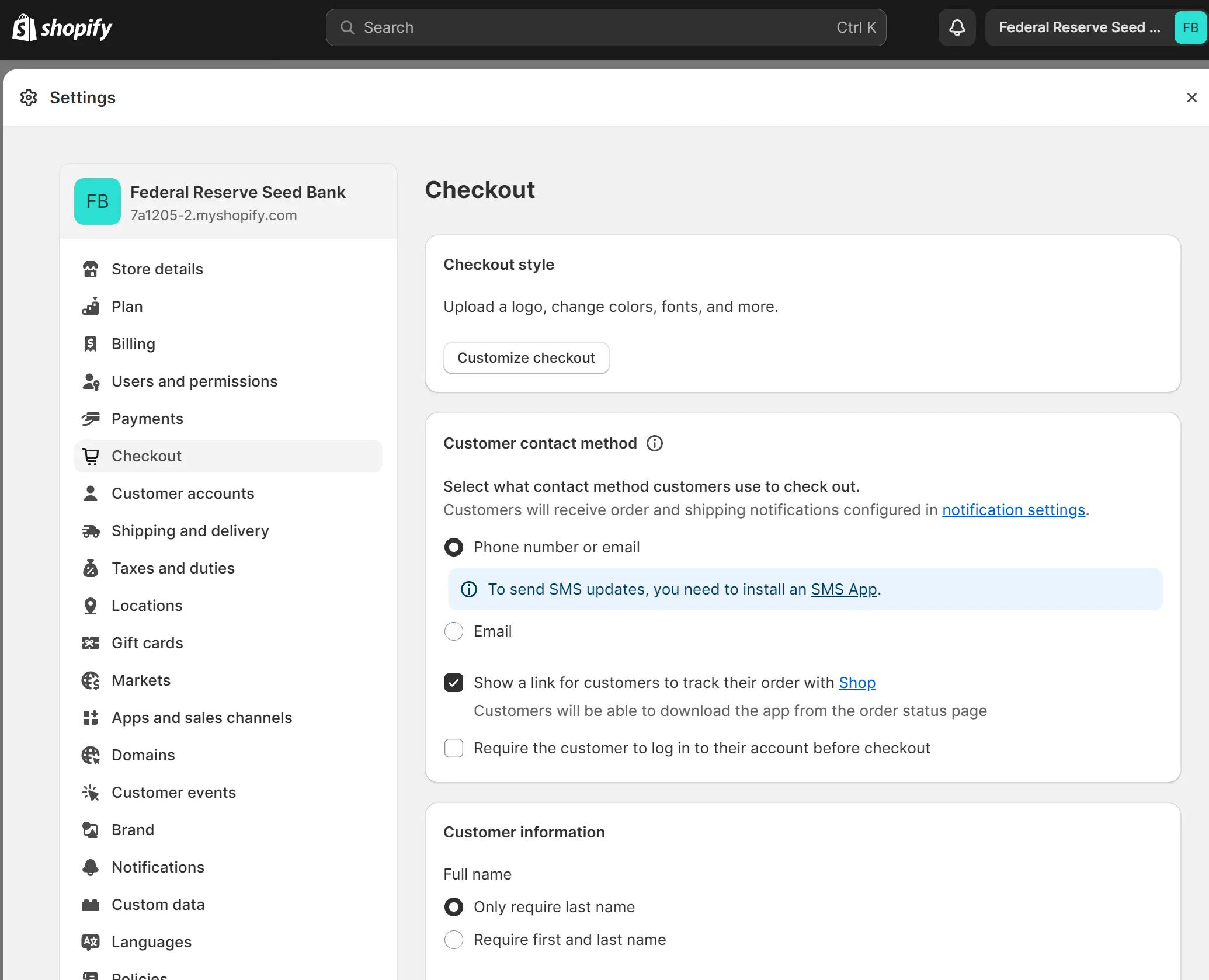
    Screenshot of Shopify checkout settings page.

    Key Features of Shopify

    Shopify simplifies the e-commerce experience with a comprehensive, all-in-one approach. Here are some Shopify features:

    • Simplicity: Shopify’s platform is known for its user-friendly interface, requiring less technical skill to get started.
    • Integrated Shipping Having shipping built into the website without needing to install 3rd party plugins is convenient.
    • Integrated Sales Features: From abandoned cart recovery to various payment gateways, Shopify equips you with tools that assist in managing sales efficiently.
    • Reliable Customer Support: With 24/7 support, Shopify takes pride in ensuring that help is available whenever you need it.

    When evaluating Shopify’s advantages and disadvantages, it’s essential to recognize its less customizable nature because it is a closed ecosystem compared to WooCommerce. Nevertheless, the platform’s ease of use and robust customer support make it a favored choice for entrepreneurs drawn to simplicity over flexibility.

    In your quest to evaluate the pros and cons of WooCommerce and Shopify, it’s crucial to consider your business’s unique requirements and technical capabilities. A careful assessment will guide you toward the best platform for your e-commerce vision.
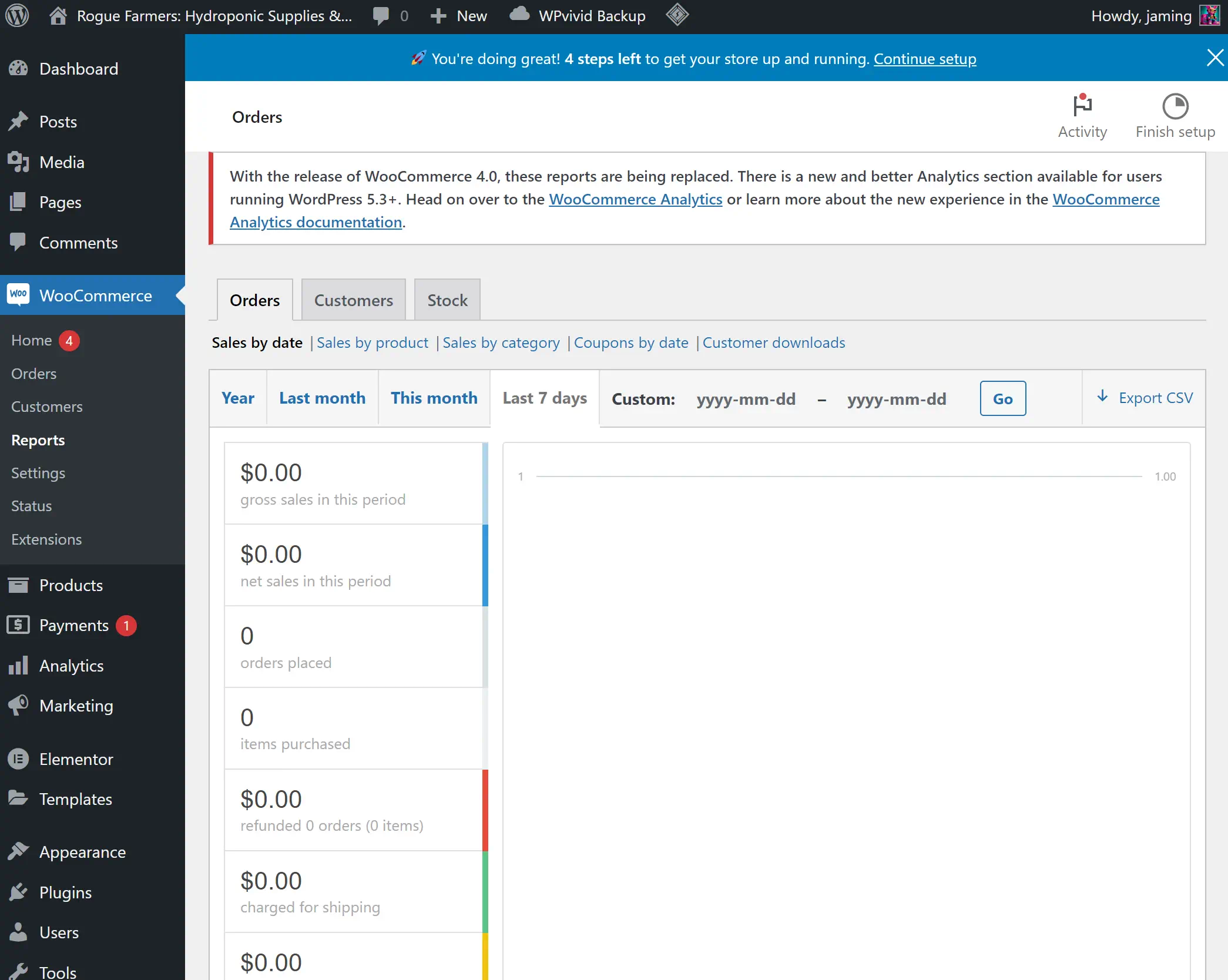
    WooCommerce dashboard displaying zero sales data.

    Diving Into WooCommerce: Advantages and Limitations

    Choosing between WooCommerce vs Shopify for small businesses involves an analysis deep enough to understand WooCommerce limitations and the advantages of WooCommerce. As an e-commerce platform built on the premise of flexibility, WooCommerce shows its strength in its capacity to be shaped and customized according to distinct business requirements, making it captivating for those looking to inject a unique flair into their online storefronts.

    The platform’s inherent affordability often entices small business owners; WooCommerce is free, and the primary expenses are tied to web hosting and domain registration. This compelling pricing structure is, however, just part of the picture. The reliance on plugins, which can amplify functionality, entails potential added costs. These additional expenses and the need for routine maintenance and updates must be considered when appraising the total cost of ownership.

    One must recognize the WooCommerce limitations that necessitate an understanding of web development. The platform demands more from you, urging the deployment of skills to manipulate an extensive array of themes and plugins effectively. This requirement may introduce a learning curve that some may need help with. Even though Shopify is easier to use, it still has many complexities that take time to learn, and if you have experience with WordPress, you might find it easier to use WooCommerce.

    If you want to build a great eCommerce website, you should hire a skilled web developer. Both eCommerce platforms overstate user-friendliness, and you don’t want a low-quality website representing your brand.

    With these considerations, the advantages of WooCommerce become clear with its high level of customizability and openness. The power to tweak every element of an e-commerce store to match a business’s precise vision and strategy is a lure strong enough to draw in those with the necessary technical savoir-faire. With WooCommerce, my experience has shown that the learning invested translates to greater control over your online presence—a nuanced advantage that should not be underestimated.

    1. Free platform with cost primarily from hosting and domain.
    2. High customizability and flexibility with open-source access.
    3. Requires web development knowledge for perfecting themes and plugins.
    4. Additional costs and maintenance associated with plugin reliance.

    WooCommerce’s New Integrated Payments and User-Friendly Product Editor Challenge Shopify’s Ease of Use

    WooCommerce has recently introduced new features that significantly enhance its product management capabilities, narrowing the gap in user-friendliness that has been a distinct advantage for Shopify. These updates include an integrated payments system similar to Shopify, offering a more streamlined and efficient checkout process.

    A standout improvement is the new product editor, currently in beta. This editor revolutionizes the way products are managed on WooCommerce. It adopts a tabbed workflow approach, simplifying product management by dividing it into specific sections such as descriptions, images, organization, pricing, inventory, shipping, and variations. This method allows users to concentrate on one aspect at a time, thereby improving efficiency and reducing distractions.

    Moreover, the introduction of Gutenberg blocks in the new editor offers enhanced design capabilities. Users can now create more engaging and visually appealing product descriptions, improving the overall aesthetic and information quality of product listings. The updated editor also makes adding and managing product images simpler, enhancing the visual appeal of products on the platform.

    These advancements in WooCommerce demonstrate a significant step towards providing a more user-friendly experience, rivaling the ease of use that Shopify is known for.
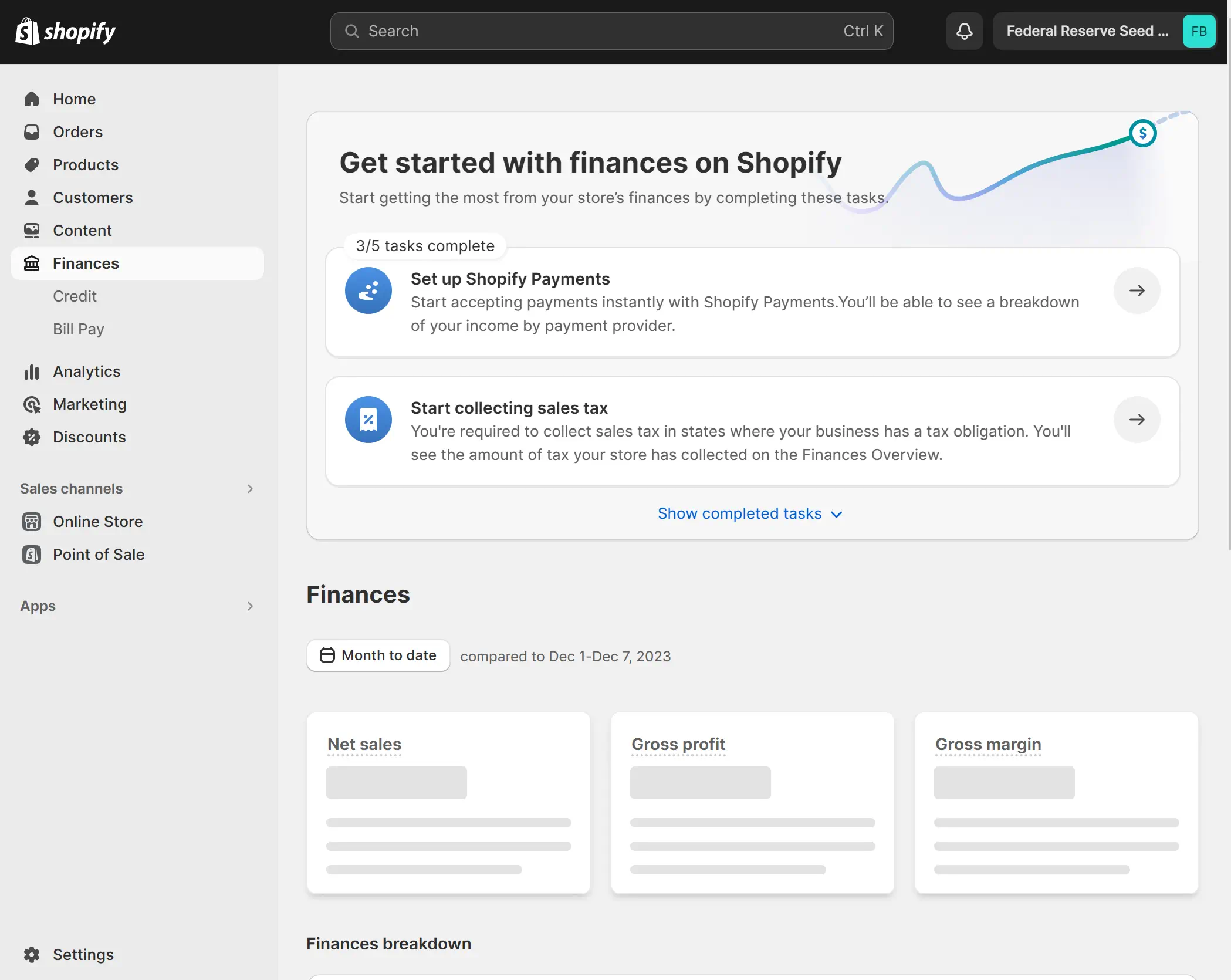
    Shopify dashboard displaying financial tasks and sales overview.

    Exploring Shopify: Pros and Cons

    When considering Shopify for online stores, it’s clear that the platform positions itself as the go-to choice for businesses seeking a seamless entry into e-commerce. I’ll explore the significant advantages of being user-friendly and customer-centric support.

    Ease of Use and Customer Support

    Shopify’s ease of use of Shopify is often highlighted by users who appreciate its intuitive interface. Setting up a shop is a hassle-free experience, guided by a clear dashboard and easy-to-follow steps. This simplicity is bolstered by Shopify customer support, a critical resource for users at all stages of building and managing their online presence. With a dedicated 24/7 Shopify Help Center and direct access to experts, merchants are assured they have the backing needed to resolve issues swiftly.

    Shopify Pricing and Transaction Fees

    Regarding Shopify costs, newcomers are sometimes surprised by the upfront price tag. Plans start at $39 monthly and can reach $399 for businesses scaling up their operations. They also have a Shopify Plus for $2000 monthly. These figures may initially overshadow the hidden costs of platforms with separate hosting fees. If you want to use a separate payment processor, Shopify charges transaction fees; these are forgone when utilizing Shopify Payments. Therefore, businesses opting for Shopify’s in-house payment processor stand to gain in the long run.

    Reflecting on these factors, it’s evident that Shopify presents an end-to-end solution that balances straightforward usability with a comprehensive support system. Despite these strengths, one must carefully assess ongoing transaction fees against the breadth of features and support provided. This evaluation is crucial in determining whether Shopify is the most cost-effective route for an online store, particularly when pitted against WooCommerce’s modular, but sometimes more complex, cost structure.

    WooCommerce vs Shopify: Core Differences

    When considering the options of WooCommerce versus Shopify, it’s essential to understand their core differences to make an informed decision that aligns with your business needs. These platforms diverge significantly, not just in terms of design and user experience but also regarding their fundamental structure and approach to e-commerce.

    With WooCommerce, the freedom it offers through its open-source nature is as expansive as it is demanding. The trade-off comes in the form of greater responsibility for your store’s maintenance and technical enhancements. In contrast, Shopify simplifies the process to a large extent, providing a hosted and comprehensive platform that spares you the intricacies of backend management.

    Here’s a concise WooCommerce vs Shopify comparison encapsulated in a table creates a clearer picture of their differences:

    Aspect WooCommerce Shopify
    Hosting Requires separate hosting services Includes centralized hosting solutions
    Customization Complete control with open-source customization Limited by the platform’s standardized features
    Technical Skill Required Higher technical understanding is needed for development and maintenance Designed for ease of use with minimal technical skill required
    Cost Free to start with, costs for extensions, themes, and hosting Monthly plans with various tiers, additional fees for extra features
    Payment Processing Flexibility in choosing payment gateways, potential additional fees Integrated payment solution with Shopify Payments, transaction fees can apply
    Support Community forums and developer resources are available 24/7 dedicated customer support

    While I contemplate the unique selling points of each platform, the choice between WooCommerce and Shopify can significantly impact the trajectory of your online business. Do you need control or prefer the ease of a pre-set structure? Analyzing the core differences between WooCommerce and Shopify is imperative to devise a strategy that’s not only compatible but also conducive to your online store’s growth.

    Real-World Performance: Case Studies and Success Stories
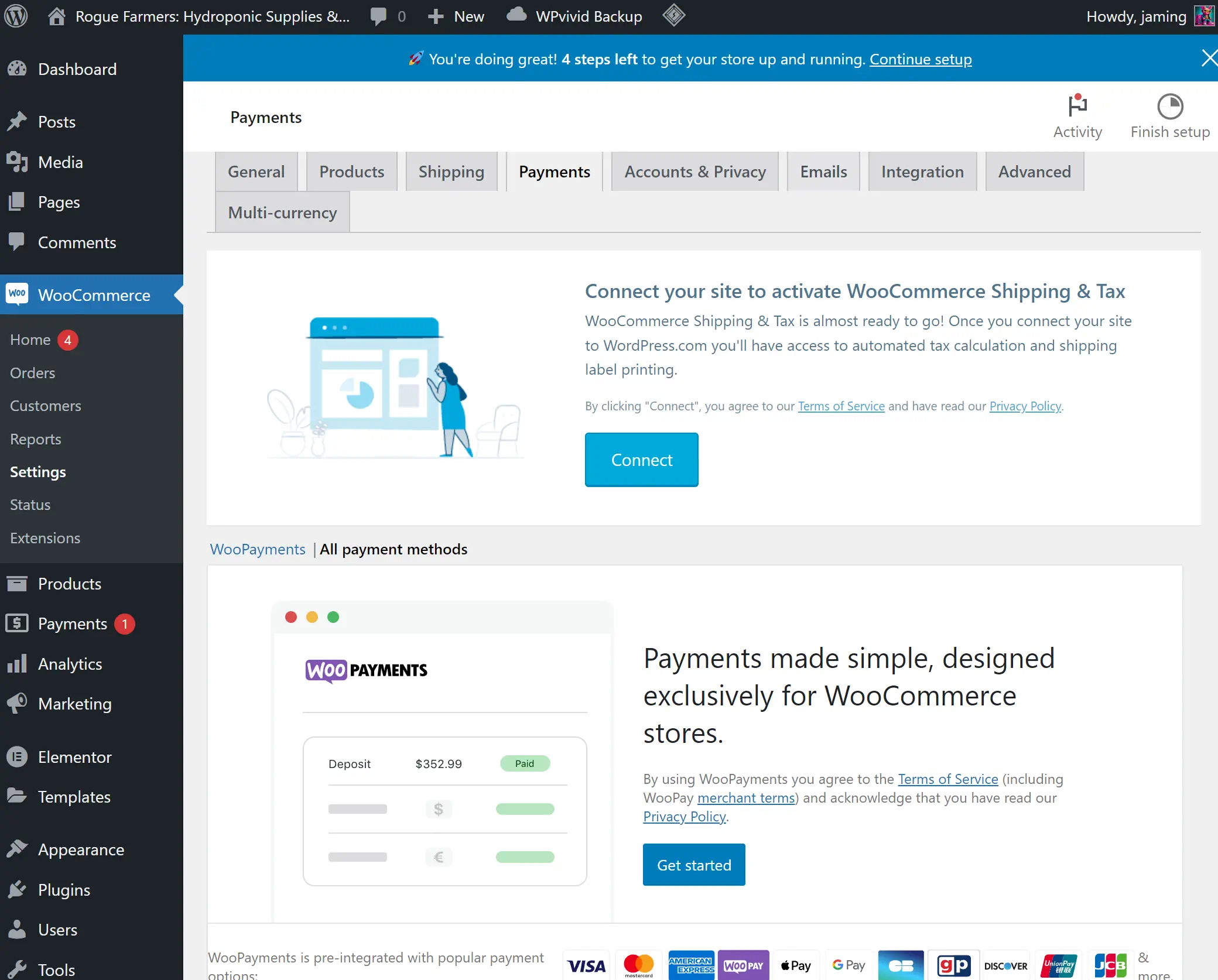
    WooCommerce Payments setup screen in WordPress dashboard.

    The true test for any platform is how it holds up in the real world. Let’s examine closely some of the real-world WooCommerce examples and Shopify success cases to understand the tangible impact these platforms have on the success of online stores.

    Success with WooCommerce

    One of the most compelling WooCommerce success stories comes from the famous home improvement brand Forage and Sundry. Beyond just selling products, the brand’s site provides a tailored experience with gardening tips and workshops, fully utilizing WooCommerce’s flexible nature to create a community around their niche. This level of customization is a testament to WooCommerce’s achievements, showcasing how a brand can leverage the platform to build a robust, content-rich, and distinct online presence.

    Success with Shopify

    A shining example of Shopify eCommerce success is seen with the fashion retailer Allure Bridals. Their transition to Shopify allowed for a more streamlined shopping experience, integrating multiple sales channels and simplifying inventory management. This case illustrates the Shopify store achievements that can be had when harnessing Shopify’s tools, making it easier for customers to purchase their dream wedding gowns.

    Platform Brand Key Achievements
    WooCommerce Forage and Sundry Customized content approach, community engagement, niche market leadership
    Shopify Allure Bridals Multichannel selling, simplified user experience, effective inventory management

    Both platforms have their myriad of success stories, but what’s clear is their capacity to scale and adapt to the specific needs of their users’ businesses. While WooCommerce offers a broad canvas for personalization and SEO strength, Shopify’s user-friendly interface and turnkey solutions provide quick market entry and operational simplicity.

    User Experience: Setting Up Your E-Commerce Store

    As someone who values the importance of user experience with WooCommerce and user experience with Shopify, I understand its critical role when setting up an eCommerce store. Crafting an appealing and functional storefront is essential, and the platform choice significantly impacts this process.

    From personal involvement with WooCommerce, I’ve come to recognize the depth and autonomy it provides. Yet, this comes with a caveat: a greater demand for technical knowledge. Acquiring a domain name, securing hosting services, and installing WordPress and its corresponding themes are steps that could intimidate novices, making it a better choice for those with technical proficiency or those willing to learn.

    Conversely, setting up an eCommerce store on Shopify is akin to having a personal assistant by your side. Its streamlined and guided setup processes offer a starkly different user experience—simplistic, direct, and beginner-friendly. This distinctive ease of Shopify use sparks a resonance with my clients who seek quick and efficient entry points into the online market.

    Shopify’s dashboard is designed for immediacy and ease, thriving as a turnkey solution for many aspiring online entrepreneurs.

    To show a clearer picture of these distinct set-up experiences, consider this comparative table highlighting the key steps and user involvement for both WooCommerce and Shopify.

    Set-Up Stage WooCommerce Shopify
    Domain Registration User Responsibility Guided Process
    Hosting Setup User Responsibility Included in Service
    Platform Installation Included with hosting Automatic Platform Setup
    Theme Installation Extensive Customization Curated Selection
    Adding Products Easy to use Product Builder Intuitive Product Builder
    Payment Gateway Configuration Multiple 3rd-Party Integrations Simple Native Solution
    Customer Support Community & Service Providers 24/7 Direct Support
    Launch Readiness Technical Testing User-Friendly Checklist

    Recognizing the strengths and constraints of WooCommerce and Shopify is integral for aspiring online retailers. One’s comfort with technology, desired control over their store, and support needs are all decisive factors—the final choice determines not only the set-up experience but possibly the trajectory of online business success.

    Conclusion

    The debate surrounding WooCommerce vs Shopify for online stores often boils down to choosing between personalization and convenience. I’ve taken a deep dive into both platforms and showed that the decision isn’t necessarily a matter of which is better—WooCommerce or Shopify—but rather which platform aligns seamlessly with your specific business needs and aspirations.

    Shopify has invested significantly in advertising, a stark contrast to WooCommerce’s more modest approach. Despite this disparity in marketing spend, with Shopify reportedly investing millions, the core functionalities of the two platforms are remarkably similar. Both Shopify and WooCommerce offer robust tools for building and managing online stores. Shopify’s extensive advertising budget, including a substantial investment in enhancing their software, doesn’t necessarily make it superior to WooCommerce, which maintains its strong position as a free, open-source solution. Each platform has its unique strengths, making them both excellent choices for different types of online businesses.

    For entrepreneurs with technical knowledge and a vision for a highly customized web store, WooCommerce presents an alluring choice. Its robust customization capabilities offer a hands-on approach to building an online store, and pairing it with a block builder like Elementor allows unlimited customization. On the flip side, Shopify shines in its ability to expedite the process with its user-friendly environment and dedicated support, making it a go-to for business owners seeking speed and ease in getting their store up and running in a shorter time.

    Deciding between WooCommerce and Shopify is akin to selecting a path in a choose-your-own-adventure story. Both platforms have significantly evolved from older systems such as Commerc.cgi, Zen Cart, and Magento. Nowadays, businesses can more easily create basic websites using these systems. However, to fully realize the website’s potential, the expertise of a dedicated team specializing in eCommerce is indispensable.

    Choosing between WooCommerce and Shopify depends on your digital expertise, business size, and eCommerce goals. Success comes from matching your platform choice with your business strategy and the customer experience you aim to provide. Whether it’s WooCommerce’s adaptability or Shopify’s user-friendly approach, the right fit is key.

    FAQ

    What are the key features of WooCommerce?

    WooCommerce is known for its flexibility and customizability due to being an open-source plugin for WordPress. It offers extensive customization options with hundreds of themes and plugins, allows for full control of your store’s functionality, and is known for its favorable SEO capabilities. However, it requires a higher level of technical expertise and may involve additional costs for hosting, themes, and plugins.

    What are the key features of Shopify?

    Shopify features an all-in-one, user-friendly platform that simplifies setting up and managing an eCommerce store. It includes hosting, security, and many payment gateway options. Its ease of use and 24/7 customer support appeal to those without extensive technical knowledge. The platform is less customizable than WooCommerce but offers a range of out-of-the-box sales features, such as abandoned cart recovery.

    What are the advantages and limitations of WooCommerce?

    WooCommerce offers a highly customizable platform, which is advantageous for those seeking to tailor their online stores to specific needs. The main advantages include no starting fees and expanding the functionality with plugins. However, the limitations involve the need for technical knowledge, additional costs for plugins, themes, hosting, and ongoing maintenance. It is ideal for those comfortable with the technical aspects of website development.

    What are the pros and cons of Shopify?

    The pros of Shopify include its hassle-free setup, comprehensive customer support, and inclusive package that covers hosting and security. It’s an excellent platform for entrepreneurs who prefer a straightforward approach to launching their online business. However, the cons involve higher monthly fees, less customizability, and transaction fees if using something other than Shopify Payments.

    What are the core differences between WooCommerce and Shopify?

    The core difference lies in their approach; WooCommerce is an open-source, highly customizable platform requiring more hands-on management and technical know-how. Shopify is a closed, all-encompassing platform known for its ease of use, making it ideal for those who prefer a more guided and maintenance-free pathway to establishing their online store.

    Can WooCommerce be more cost-efficient than Shopify?

    WooCommerce is free, making it appear more cost-efficient, especially for small businesses or startups on a tight budget. However, additional costs, such as hosting, can add up. Comparatively, Shopify has a monthly fee, which includes hosting and website security. The cost-effectiveness of either platform ultimately depends on the specific needs and budget of the business.

    What makes Shopify particularly appealing to new business owners?

    Shopify’s simplicity and ease of use appeal to new business owners. The platform is designed to help entrepreneurs set up their online stores quickly without needing advanced technical knowledge or understanding of web development. This simplicity, combined with its comprehensive customer support and all-in-one package, makes Shopify a go-to choice for those new to eCommerce.

    Are there any success stories from businesses using WooCommerce?

    Yes, many successful eCommerce websites have been built on WooCommerce, showcasing its scalability and ability to fit specific business needs through customization. Success stories often focus on the platform’s adaptable environment and efficient SEO management, which are pivotal to their growth and success.

    How do user experiences differ when setting up an online store on WooCommerce vs Shopify?

    Setting up an online store with WooCommerce can be more complex, involving the purchase of a domain, selecting hosting, installing WordPress, and setting up the WooCommerce plugin with the desired themes and extensions. On the other hand, Shopify users can enjoy a smoother initial setup due to Shopify’s guided process, comprehensive documentation, and user-friendly dashboard.

    Which platform is better for selling online – WooCommerce or Shopify?

    The better platform for selling online depends on the business owner’s specific needs and expertise. WooCommerce is suitable for those who want a highly customizable platform and are willing to manage the technicalities. Shopify is better for entrepreneurs looking for ease of use, quick setup, and minimal maintenance. Both platforms offer robust capabilities and have proven success, so the choice ultimately aligns with the individual’s business goals and technical aptitude.

    Source Links

  • Planning Your Marketing Budget: Key Strategies

    Planning Your Marketing Budget: Key Strategies

    Piggy bank with glasses on marketing budget strategies slide.

    As industry leaders in marketing services, we at Popproxx understand the intricacies of developing a robust digital marketing budget. The cornerstone of any successful campaign lies in the ability to strategically plan and allocate financial resources. Our expertise in marketing budget optimization is designed to help businesses of all sizes maximize ROI while employing effective budgeting techniques. Crafting an actionable plan is more than just crunching numbers; it’s about aligning your financial capabilities with marketing ambitions that drive growth and profitability.

    We pride ourselves on guiding companies through the nuanced process of budgeting for marketing. Developing a budget isn’t just about how much you spend, but where and how you invest each dollar. Let us walk you through the steps of how to plan your marketing budget to ensure every investment counts toward reaching your goals.

    Key Takeaways

    • Strategic budget planning is essential for aligning marketing ambitions with financial capabilities.
    • Optimizing your marketing budget requires an understanding of where to allocate funds to yield the best ROI.
    • Customized budgeting techniques are key to addressing unique business needs and market demands.
    • Analytical insights guide informed decision-making and contribute to successful resource allocation.
    • Popproxx offers professional guidance in crafting and implementing a comprehensive marketing budget plan.

    Understanding the Importance of a Strategic Marketing Budget

    In our commitment to fostering business growth, we recognize that grasping the marketing budget definition and its strategic importance is essential. A sound marketing budget dictates the blueprint for how resources are allocated towards marketing activities. Often, this encompasses various facets including outbound advertisements, inbound marketing efforts, and personnel resources necessary for execution and management. Establishing a strategic marketing budget is not about merely earmarking funds; it’s about judicious investment towards achieving significant business goals.

    Defining What Constitutes a Marketing Budget

    Comprehending the components that form a marketing budget is foundational to marketing budget management. This involves the recognition of expenditures that range from paid media placements and creative assets to marketing software subscriptions and staff compensation. A well-defined budget serves as the financial reflection of a marketing plan, enabling us to map out anticipated costs and measure returns on investment with precision.

    Aligning Marketing Efforts with Business Objectives

    One key to our success lies in ensuring that budget alignment is thoroughly in sync with our overarching business goals. Each dollar spent is aimed at driving concrete results, such as bolstering customer acquisition or enhancing brand visibility. Clear and measurable objectives steer our spending, granting us the dexterity to course-correct and capitalize on marketing opportunities as they arise.

    Emphasizing the Role of Market Analysis in Budget Planning

    Integral to sculpting an effectual marketing budget is the market analysis, which illuminates where our brand stands in relation to competitors and market trends. By diving deep into the analytics, we can make informed decisions about campaign targeting, channel mix, and resource allocation, ensuring that every aspect of the budget is geared towards optimal market penetration and return on investment.

    How to Plan Your Marketing Budget for Optimal Impact

    Piggy bank and budget money.
    Piggy bank and budget money.

    Effective planning of a marketing budget is a dynamic process that ensures every dollar is strategized for maximum impact. At the core, it harmonizes business objectives with financial realities, setting the stage for targeted marketing investment and sustainable growth.

    Clarifying Business Goals for Targeted Marketing Investment

    Our initial step involves crystallizing the business objectives. A laser-focus on business goals ensures that marketing investments are not only strategic but also promise the highest dividends in enhancing brand visibility and driving sales increments. We treat this alignment as the cornerstone of planning a marketing budget.

    Analyzing Past Spend and Forecasting Future Needs

    Analyzing spend patterns sheds light on the effectiveness of past marketing endeavors. This retrospective view forms the foundation for future budget forecasting, allowing us to adapt and allocate with precision.

    Utilizing Customer Retention Metrics for Budget Adjustments

    Next, we dive into customer retention metrics—a critical gauge of marketing success. High retention rates signal a successful marketing strategy and guide future investment, while low rates point to areas needing attention and possible budget reallocation.

    Adapting to Evolving Digital Marketing Trends

    Finally, we keep our fingers on the pulse of digital marketing trends, ensuring our strategies are flexible and current. Adapting to the digital marketing landscape means pivoting with agility to harness new channels and techniques that resonate with our target audience.

    To illustrate, let us review the performance of two different marketing strategies used in the previous year.

    Marketing Strategy Cost Customer Acquisition Retention Rate ROI
    Email Campaigns $10,000 350 new customers 75% 150%
    Pay-Per-Click Ads $15,000 420 new customers 40% 120%

    Our analysis reveals that while pay-per-click ads brought a higher quantity of new customers, email campaigns resulted in better customer retention and ROI. Moving forward, we will adjust our planning marketing budget to prioritize strategies that have demonstrated the highest value.

    Allocating Resources for Marketing: A Data-Driven Approach

    In a landscape where every dollar must be accounted for, we focus on a data-driven strategy to ensure every aspect of our marketing budget is optimized for performance. Understanding where to allocate marketing resources is not a guessing game; it’s a science. We track and analyze data meticulously to inform budget allocation for marketing. We prioritize channels that drive conversions, scaling up investment in high-performing areas while scaling back in others. This approach is central to our strategy for ROI optimization.

    Let’s break down how we manage our resource allocation using real data:

    • We begin by collecting data on all marketing channels to understand their impact on our bottom line.
    • Metrics such as conversion rate, cost per acquisition, and customer lifetime value are analyzed to identify the most effective strategies.
    • We forecast potential ROI to guide future marketing investments, weighing this against the expense of various campaigns.
    Marketing Channel Conversion Rate Cost per Acquisition ROI
    Email Marketing 5.1% $10 400%
    Social Media Ads 2.2% $30 150%
    Content Marketing 3.5% $20 250%
    Pay-Per-Click 4.0% $15 200%

    Our commitment to a data-driven approach consistently results in strategic resource allocation that maximizes our marketing budget and optimizes our ROI. The above table serves as an example of how data can influence decision-making in allocating marketing funds. By looking at these metrics, we can decide which marketing channels deserve more investment and which should be reconsidered.

    Effective Marketing Budgeting: Strategies and Management

    Marketing team.
    Marketing team.

    In marketing budget strategies, prudent budget assessment ensures prosperous outcomes. Our approach highlights the need for rigorous evaluation of financial commitments to marketing activities and their corresponding return on investment (ROI). We diligently manage budget allocation to maximize efficiency and drive growth.

    Determining Costs of Campaigns and Assessing ROI

    Conducting a thorough ROI evaluation encompasses tracking campaign spending and measuring their impact. We employ various methods to quantify the efficacy of each dollar spent, thus shaping our drive towards high-ROI channels.

    Investing in High ROI Channels and Cutting Underperformers

    Focusing on performance allows us to intensify investments in channels manifesting elevated ROI figures. Conversely, we do not hesitate to cut ties with underperforming outlets, redirecting those resources to more fruitful avenues.

    Designating a Budget Portion for Innovative Experiments

    We believe in reserving a segment of our budget for innovative marketing experiments. These ventures may not guarantee immediate results, yet they can potentially disrupt the market and significantly open new doors for engagement.

    Marketing Automation and Tools for Budget Efficiency

    Embracing technology, particularly marketing automation and budget management tools, is a hallmark of our strategy for enhancing budget efficiency. These technological solutions streamline workflows, offer precise analytics, and engender cost savings in the long haul.

    At Popproxx, our commitment to providing precise and effective marketing budget guidance is unwavering. We believe in employing a blend of tried-and-true practices and cutting-edge innovations to ensure that our marketing spend achieves its intended impact.

    Insights on Industry Trends and Competitive Analysis

    At Popproxx, we pride ourselves on delivering marketing budget insights that reflect current industry benchmarks and anticipate future shifts in your sector. Our mission is to provide you with in-depth industry spending insights and marketing trend analysis so you can make well-informed decisions to stay ahead.

    We embrace competitive analysis as an opportunity to understand the landscape in which your business operates. By identifying what competitors are investing in and cutting back on, we can offer tailor-made strategies for budgeting for competitive advantage. Here’s how we approach this crucial aspect of your marketing strategy:

    1. Comprehensive Market Overview: We start by distilling the vast data pool to present you with clear industry trends.
    2. Competitor Spend Habits: Next, we gather intelligence on your competitors’ spending to provide a comparative context for your marketing investments.
    3. Identification of High-Performance Strategies: We spotlight the marketing strategies that are generating the best ROI in your field.

    With this information, we can guide your decisions on where to distribute your marketing budget for the highest impact.

    Here’s a snapshot of an industry spending comparison:

    Industry Sector Average Marketing Spend Our Client’s Average Spend Competitor’s Average Spend
    Technology 18% 15% 20%
    Retail 14% 12% 15%
    Healthcare 12% 10% 14%

    Combining insights from these analyses, we formulate a robust marketing plan that aligns with your ambitions and ensures you gain a competitive edge in your respective industry.

    Conclusion

    In summing up the key takeaways from our comprehensive exploration of marketing budget strategies, it’s undeniable that adherence to marketing best practices is not merely a recommendation but an imperative for contemporary businesses. Recognizing the profound impact of a well-conceived and meticulously implemented marketing budget plan cannot be overstated. This is where our deep-rooted dedication to fostering Popproxx marketing success comes to the forefront, underscoring our pledge to empower your business’s growth.

    Reflecting on Marketing Budget Best Practices

    Our discussion has reinforced the conviction that successful marketing budgeting hinges on a dynamic blend of foresight, precision, and flexibility. We have delved into the essence of creating a budget that is both bespoke to your brand’s requirements and responsive to the market’s pulse. By implementing a custom marketing budget plan, you are taking a pivotal step towards ensuring that each dollar spent is an investment in your brand’s enduring prosperity.

    Our Commitment at Popproxx to Your Marketing Success

    At Popproxx, we stand committed to the accretion of your marketing success. Our expert team is equipped to journey with you through every phase of marketing budget reflection and execution, helping you cleave to the path that leads to an impressive return on investment (ROI). Every strategy we recommend is tailored to mirror the unique contours of your goals and visions.

    Next Steps for Implementing Your Custom Marketing Budget Plan

    We encourage you to engage with us as we embark on the next steps toward realizing a marketing budget that encapsulates your brand’s ethos and aspirations. Together, we will navigate the nuances of implementing your marketing budget—crafting, refining, and actualizing a financial blueprint that prioritizes efficacy and ROI. Let us unite in sculpting a narrative of triumph woven through the strategic threads of an exceptional marketing budget.

    Discussing the budget
    Discussing the budget

    FAQ

    What factors should be considered when planning a digital marketing budget?

    When planning a marketing budget, consider factors such as business goals, historical spending patterns, target audience, market trends, competitive landscape, and expected ROI on different channels. It’s also important to account for staffing, tools, technology investments, and potential experimental initiatives.

    How does Popproxx approach marketing budget optimization to maximize ROI?

    At Popproxx, we focus on a data-driven approach that analyzes past campaign performance, market trends, and customer retention metrics. We then allocate funds to high-ROI channels and adjust strategies based on analytics to ensure that every dollar spent contributes effectively to the clients’ business goals.

    What is the role of market analysis in planning a marketing budget?

    Market analysis plays a pivotal role in budget planning as it helps businesses understand their position within their industry, identify opportunities and threats, and gauge the effectiveness of past marketing efforts. This analysis informs the marketing budget’s strategic allocation to channels with the greatest potential for growth and customer engagement.

    How important is it to align your marketing budget with your business objectives?

    Aligning your marketing budget with business objectives is crucial as it ensures that the marketing efforts directly contribute to the company’s overarching goals, such as revenue growth, brand awareness, or market expansion. It ensures that the budget effectively achieves specific, measurable outcomes.

    Can you explain the benefits of a targeted marketing investment?

    Targeted marketing investment involves directing resources into specific areas that are most likely to yield results aligned with business objectives. Benefits include higher conversion rates, more effective customer engagement, increased sales, and better allocation of marketing resources, leading to improved ROI.

    Why are customer retention metrics important for budget adjustments?

    Customer retention metrics are vital as they indicate the success of current marketing strategies in maintaining customer engagement and loyalty. High retention rates suggest effective marketing, guiding future budget allocation toward tactics that continue to nurture and retain customers. Conversely, if these metrics are low, they highlight areas needing budget reallocation.

    How does adapting to marketing trends impact marketing budget planning?

    Adapting to current marketing trends allows businesses to stay relevant and competitive. It impacts budget planning by necessitating the incorporation of new and emerging channels into the marketing mix, which may require shifts in budget allocation to capitalize on these growth opportunities.

    What are the benefits of using marketing automation and management tools for budget efficiency?

    Marketing automation and management tools can streamline campaign execution, improve targeting, track performance, and provide actionable insights. This results in reduced manual labor, more precise budgeting, and better allocation of resources, enhancing overall marketing budget efficiency.

    How do insights on industry trends and competitive analysis inform the creation of a marketing budget?

    Insights on industry trends and competitive analysis help businesses understand the standard spending within their sector, the effectiveness of different marketing strategies, and the channels competitors are leveraging. This knowledge informs the creation of a budget that allows for competitive positioning and making informed decisions on where and how much to invest.

    How do we start implementing a custom marketing budget plan at Popproxx?

    To start implementing a custom marketing budget plan at Popproxx, we work collaboratively with clients to understand their unique objectives, conduct a thorough market and internal analysis, and use industry benchmarks to inform budget allocation. From there, we craft a tailored, dynamic marketing plan to achieve desired business outcomes.

    Source Links

  • Optimize Your Store with 5 Best Practices for WooCommerce

    Optimize Your Store with 5 Best Practices for WooCommerce

    Computer on desk displaying sunset through window.

    At the core of our endeavors, we pursue a singular goal: to empower WordPress ecommerce by sharing our profound insights into WooCommerce best practices. Our mission is to equip you with the tools and knowledge to optimize your WooCommerce shop for the ultimate customer experience and performance. We understand that in the age of digital retail, the difference between an average and outstanding online store hinges not just on what you sell but on how efficiently and engagingly you present it.

    In this rapidly evolving ecommerce sphere, optimizing your WooCommerce store is no longer optional. It’s imperative for success. Be it a startup or a well-established business, the digital storefront must function flawlessly – because if your online store isn’t up to par, customers have an abundance of alternatives just a click away. This is why we’ve invested our time and expertise to help you boost your WooCommerce store’s performance and, in turn, your sales.

    Key Takeaways

    • Implementing WooCommerce best practices is crucial for a lucrative WordPress ecommerce venture.
    • Optimizing your WooCommerce shop encompasses more than just aesthetic appeal – it includes technical enhancements for speed and efficiency.
    • A streamlined, optimized store significantly reduces the risk of losing customers to competitor sites due to slow load times or poor user experience.
    • Regular updates and mindful optimizations cater to evolving customer expectations and search engine requirements.
    • Critical aspects of WooCommerce optimization will be discussed, tackling settings, hosting, and performance strategies to cement your store’s presence in the competitive market.

    Understanding the Significance of WooCommerce Optimization

    As we delve into the realm of e-commerce, it is paramount to recognize that user experience (UX) forms the backbone of a successful online store. The quest to optimize WooCommerce shop operations goes hand-in-hand with providing customers with an environment that is visually appealing and functionally seamless. We understand that each second shaved off from load times can substantially improve customer satisfaction and, in turn, escalates conversion rates and profitability.

    A fully optimized WooCommerce store does more than merely display products; it engages with visitors, minimizes their effort, and ensures a delightful and smooth shopping journey. Amazon’s research on page speed underscores the critical nature of optimization, revealing the considerable influence of mere milliseconds on revenue streams. WooCommerce optimization tips extend beyond mere aesthetics, encompassing a comprehensive strategy to uplift every facet of the shopper’s experience—from the landing page to checkout.

    Every aspect of our WooCommerce optimization process is meticulously designed to foster trust, encourage interaction, and ultimately inspire action.

    • Improving load times for a swift browsing experience.
    • Enhancing site usability for effortless navigation and user interaction.
    • Implementing intuitive design elements that guide the buyer’s journey.
    • Ensuring responsive layouts for a consistent shopping experience across all devices.

    By aligning with these principles, we ensure a robust foundation for an optimized WooCommerce shop that not only attracts but retains customers, driving your business towards a trajectory of growth and success.

    Maximizing Efficiency with WooCommerce Settings

    Vibrant cafe interior with customers and plants illustration.

    As we delve into the capabilities of WordPress ecommerce, it is apparent that optimizing WooCommerce settings plays a pivotal role in streamlining the shopping experience. With a focus on improving operational efficiency, let’s explore essential adjustments within the WooCommerce settings that can enhance both speed and user interaction on your retail platform.

    Streamlining Add to Cart Behavior

    One of the first steps we take involves refining the ‘Add to Cart’ process through AJAX. By incorporating the AJAX Add to Cart feature on product archives, we reduce the number of server calls each time a customer adds a product to their cart. This not only minimizes loading times but also creates a smoother and more immediate interaction for users who wish to continue shopping without disruption.

    Effective Placeholder Image Use

    In our pursuit to optimize WooCommerce settings, we acknowledge the importance of image efficiency. Employing a unique identifier for placeholder images benefits us twofold: it conserves server space and accelerates content delivery by reducing file size. Smaller, optimized placeholder images mean quicker load times, essential for retaining customer interest and decreasing bounce rates.

    Managing Product Reviews and Ratings

    Product reviews and ratings can be a double-edged sword. While they foster trust and inform potential buyers, they also demand additional resources. For our smaller WordPress ecommerce sites, where numerous products lack reviews, disabling reviews can lead to a cleaner presentation and faster page loads. Similarly, turning off product ratings can streamline the user journey, eliminating the need for additional scripts associated with star-rating functionalities.

    Our commitment to refining your WordPress ecommerce venture does not end here. By focusing on these strategies to optimize WooCommerce settings, we foster a robust platform, ready to meet the expectations of the discerning online shopper. We continue to explore and implement innovative solutions for a seamless and efficient online store.

    Woman working on laptop at outdoor cafe evening.Choosing the Right Hosting for WooCommerce


    When we embark on the journey of operating a WooCommerce store, the bedrock of our success is not merely the products we offer or the UI/UX design we implement—it’s fundamentally the hosting that powers our WordPress ecommerce. Settling on WooCommerce optimized hosting is not just an option; it is an essential decision that profoundly influences the scalability, speed, and security of our online business.

    Recognizing the unique demands of an online store, we often recommend choosing a managed WordPress host that is tailored to cater to the high-performance requirements of WooCommerce. A stellar example in this domain includes hosting services from established providers like Liquid Web or Kinsta. These specialists in the field have fine-tuned their hosting environments to synergize with WooCommerce, thus allowing us store owners to focus on growth rather than getting bogged down by technicalities.

    Managed WooCommerce hosting solutions take the guesswork out of server management, providing optimized resources that adapt to the ebbs and flows of our ecommerce activities.

    • Optimization for WooCommerce features and updates
    • Robust security measures to protect customer data
    • Expert support tailored for WooCommerce retailers
    • Enhanced performance that scales with your store’s traffic

    Given these advantages, transitioning from a basic discount hosting service to a robust, WooCommerce optimized hosting plan can yield measurable enhancements in your store’s efficiency. In today’s competitive market, we can’t afford to compromise on uptime and page load speed—a reality that positions specialized WooCommerce hosting as a strategic investment for our ecommerce ambitions.

    We understand that every second counts in retaining customer interest and driving conversions. Thus, investing in the right hosting environment is a critical step toward securing a seamless shopping experience that customers anticipate and deserve. Let’s make the smart choice for our WooCommerce stores, ensuring our digital storefronts are always open, fast, and ready to welcome shoppers worldwide.Creative workspace with laptop, plants, camera, and coffee.

    5 Best Practices WooCommerce for Peak Performance

    To enhance WooCommerce performance effectively, there are five key strategies to implement. First, choosing a specialized WooCommerce hosting provider ensures optimized server resources and scalability to handle varying traffic volumes. Second, implementing caching solutions like Redis Object Cache or WordPress caching plugins significantly reduces server load and speeds up page loading. Third, optimizing images and media files through compression and implementing lazy loading techniques cuts down on page load times, improving overall site speed. Fourth, minimizing and combining CSS and JavaScript files reduces the number of HTTP requests, thus enhancing page loading efficiency. Lastly, regular database optimization by cleaning redundant data and optimizing tables ensures smooth and quick data retrieval, which is vital for maintaining a fast and responsive WooCommerce store. Each of these strategies contributes to a more efficient, user-friendly, and high-performing eCommerce site, ultimately leading to a better shopping experience for customers and higher conversion rates for businesses.

    1. Utilizing Global CDN Networks

    Embracing the power of content delivery networks (CDN), we partner with industry leaders like Cloudflare to establish a robust global presence. This strategic move ensures that images and content are delivered expeditiously to shoppers worldwide, regardless of their location, thereby reducing latency and improving site speed.

    2. Object Cache Like Redis

    Redis Object Cache significantly boosts WooCommerce performance by optimizing data retrieval. It caches database queries, allowing repeated queries to be served from the cache rather than the database, which reduces load and speeds up response times. It optimizes session storage by handling visitor sessions in memory, improving efficiency, and reducing database interactions. Unlike standard WordPress object caching, Redis’s persistent caching ensures data remains across multiple requests, enhancing page load speeds, particularly for repeated data access. This is crucial during high-traffic periods, as it allows for better handling of increased visitor volumes without compromising site responsiveness. Additionally, Redis reduces overall server load, offers scalability, and improves user experience with faster page loads and responsive interactions, which are essential for eCommerce success. This customization and flexibility in cache invalidation and data persistence allow WooCommerce sites to perform more efficiently, leading to smoother transactions and a better shopping experience.

    3. Focusing on Core Web Vitals

    Our adherence to Google’s Core Web Vitals underscores our commitment to user-centric performance metrics. We fine-tune code efficiency by minifying and deferring JavaScript, HTML, and CSS, dramatically enhancing loading times, interactivity, and visual stability. This meticulous attention to detail translates into a seamless shopping experience that customers can rely on.

    4. Compressing Images for Optimal Delivery

    Efficient image compression remains at the forefront of our optimization endeavors. Tools like Imagify have proven indispensable, seamlessly integrating with WordPress to support next-gen formats such as WEBP. We accelerate product page load times by reducing image file sizes without sacrificing quality, significantly enhancing customer engagement and satisfaction.

    5. Database Optimization

    Database optimization plays a pivotal role in enhancing the performance of a WooCommerce store. As an eCommerce platform, WooCommerce generates substantial data, including product details, customer information, order histories, and more. Over time, this accumulation can lead to database bloat, slowing down query processing and, consequently, website performance. Regularly cleaning the database by removing obsolete and redundant data such as expired transient options, outdated customer sessions, old order metadata, and spam comments can significantly streamline database efficiency. Additionally, optimizing database tables ensures data is stored and retrieved more effectively. Tools like WP-Optimize or plugins specifically designed for WooCommerce can automate this optimization process, handling tasks like database cleanup, image compression, and caching. This not only improves the speed and responsiveness of the WooCommerce site, enhancing user experience and search engine rankings but also ensures the database remains manageable and scalable as the store grows. Therefore, proper database maintenance and optimization are crucial for maintaining a fast, reliable, and efficient WooCommerce operation.

    WooCommerce Hosting SolutionsConclusion

    In wrapping up our discussion on optimizing a WooCommerce store, it’s essential to recognize that mastering the 5 best practices WooCommerce is not merely recommended, it’s imperative for thriving in today’s competitive WordPress ecommerce landscape. By implementing these strategic practices, you can fine-tune your WooCommerce settings and choose hosting solutions purpose-built for performance to ensure that your shop operates at peak efficiency.

    Implement caching mechanisms like Redis Object Cache, as mentioned earlier, or use WordPress caching plugins like W3 Total Cache or WP Rocket. Caching reduces server load by storing static copies of your content, decreasing the time it takes for pages to load.

    Leveraging CDN networks and image compression techniques not only enhance the speed and responsiveness of your store but also fortify the user experience. Moreover, adhering diligently to Core Web Vitals and regular updates enables your online store to align closely with user expectations and search engine benchmarks. It’s through these sustainable practices that we can optimize WooCommerce shops effectively, yielding significant improvements in conversion rates and revenue.

    Large images and media files can slow down your website. Use image optimization tools to compress and resize images without losing quality. Implement lazy loading, which loads images only as they come into the viewer’s screen, reducing initial page load time.

    Regularly cleaning and optimizing your WooCommerce database can boost performance. This includes removing unnecessary data like old revisions, spam comments, and transient options. Plugins like WP-Optimize can automate this process.

    At the heart of our efforts lies the commitment to a seamless shopping experience that proactively addresses the needs of our users while also meeting the technical rigor of search engines. With focused application of these WooCommerce optimization tips, we are setting the stage for increased shopper engagement, robust search engine visibility, and long-term success of our WooCommerce ventures. Remember, in the dynamic world of WordPress ecommerce, ongoing optimization is not just an option—it’s the cornerstone of enduring online retail success.

    FAQ

    Why is it important to optimize my WooCommerce store?

    Optimizing your WooCommerce store is essential for providing a superior user experience, achieving faster page speeds, and meeting customer expectations. This can help improve conversion rates and revenue, as online shoppers are likely to abandon a site that loads slowly or offers a cumbersome shopping experience. Companies such as Amazon have demonstrated that any delay can significantly impact finances, making optimization a critical aspect of ecommerce success.

    What are some WooCommerce best practices I should follow?

    Some best practices for optimizing your WooCommerce store include streamlining the ‘Add to Cart’ process with AJAX, optimizing placeholder images for reduced load times, managing product reviews and ratings, selecting a WooCommerce optimized hosting service, compressing and optimizing images for faster delivery, utilizing global CDN networks, and focusing on improving Core Web Vitals for better user experience and search engine performance.

    Can the choice of web hosting affect my WooCommerce store’s performance?

    Absolutely, the choice of web hosting significantly affects your WooCommerce store’s performance. Opting for a managed WordPress host that is specifically optimized for WooCommerce, like Liquid Web or Kinsta, can improve server-side stability, speed, and overall store efficiency. Such specialized hosting services cater to the unique requirements of WooCommerce shops, providing better support for features and updates.

    How can I effectively use placeholders in my WooCommerce store?

    To use placeholders effectively, it’s recommended to use a unique ID for a small, low file size image that minimizes the consumption of server space and loading time. This practice ensures that your store maintains a polished look without compromising on loading speeds, which are critical for user retention and conversion.

    How does compressing images and using a CDN network enhance my WooCommerce performance?

    Compressing images lessens file sizes, thereby reducing the loading time on product pages, which is crucial for keeping potential customers engaged. Using a global CDN network like Cloudflare ensures that images and other static content are delivered efficiently to users around the world, buffering the performance impact of geographical distance and reducing load on your primary server.

    What are Core Web Vitals and how do they affect my WooCommerce site?

    Core Web Vitals are a set of metrics by Google that measure real-world user experience for loading performance, interactivity, and visual stability of a webpage. They are particularly important for good SEO and user experience. Optimizing your WooCommerce site to improve Core Web Vitals involves techniques such as minifying and deferring JavaScript, HTML, and CSS. By focusing on these metrics, you can significantly enhance the shopping experience on your site and potentially improve search engine rankings.

    Should I disable product reviews and ratings to speed up my WooCommerce site?

    Whether or not you should disable product reviews and ratings depends on your specific context. For smaller sites with many unreviewed products, disabling reviews might make the site look more professional and load faster. However, reviews can build customer trust and influence purchase decisions. Therefore, it’s important to balance the feature’s impact on loading times with its benefit to the user experience.

    Is updating WooCommerce regularly necessary?

    Yes, it is crucial to keep WooCommerce and its extensions up to date. Regular updates ensure that you have the latest features, bug fixes, and security patches, which collectively improve the reliability, user experience, and performance of your store.

  • Demystifying the Inner Workings of an SEO Company

    Demystifying the Inner Workings of an SEO Company

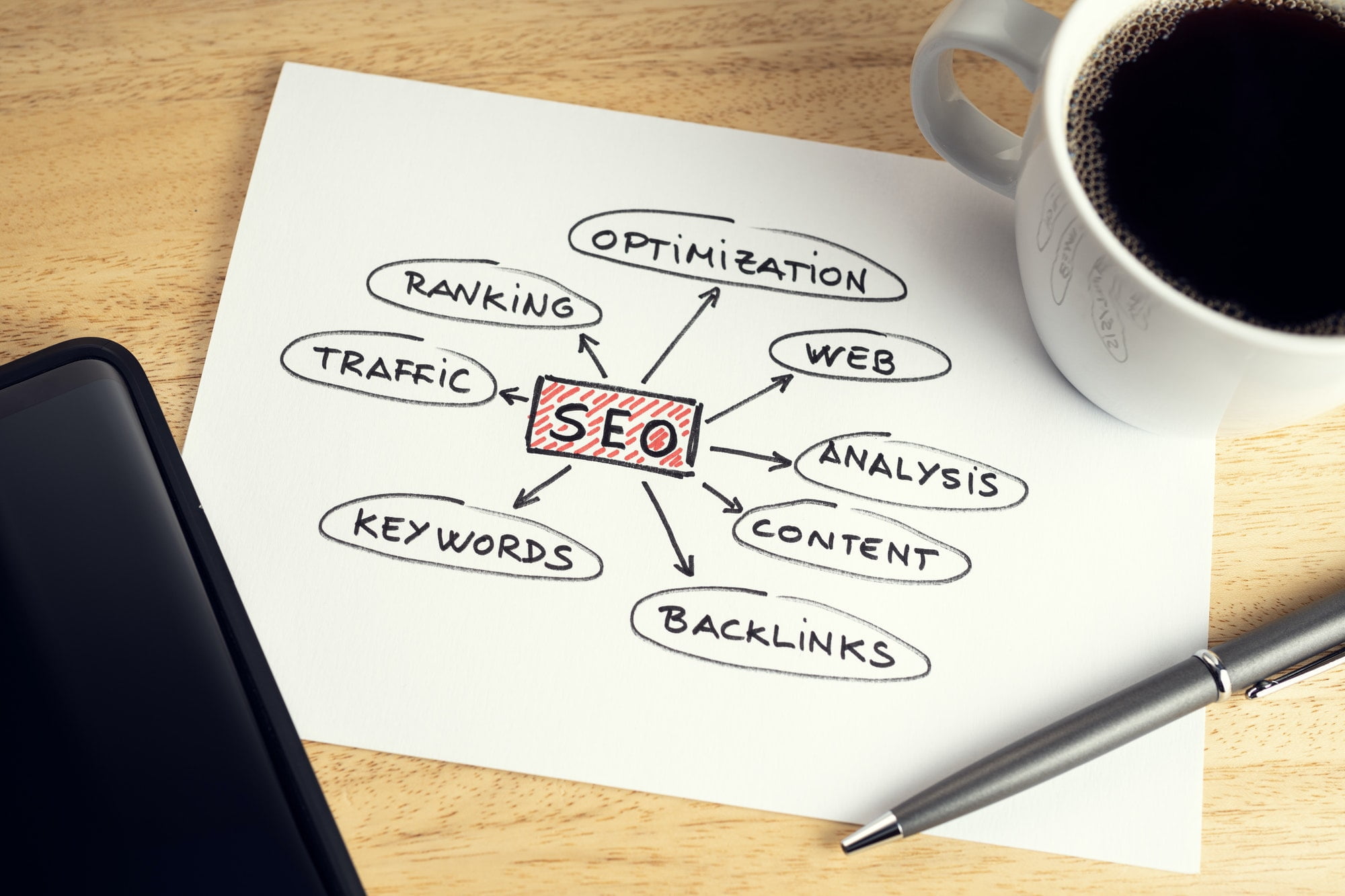
    Working desk with paper sheet with SEO planning
    Working desk with a paper sheet with SEO planning

    Welcome to our insightful exploration of the inner workings of an SEO company. In this article, we aim to shed light on the fascinating world of search engine optimization (SEO) and the invaluable services SEO companies provide. With the ever-increasing importance of online presence and organic search rankings, businesses are turning to SEO experts to optimize their websites and drive targeted traffic.

    So, what exactly does an SEO company do? At its core, an SEO company is dedicated to improving the visibility and ranking of a website on search engines like Google. Through a meticulous process of website optimization, content creation, and off-site strategies, these companies leverage the power of SEO to help businesses reach their online goals.

    Let’s dive deeper into the various aspects of an SEO company – from the initial assessments to keyword research, on-site enhancements, and off-site dynamics. We’ll uncover the strategies and techniques used to boost online visibility and drive organic traffic.

    Key Takeaways:

    • An SEO company improves a website’s visibility and search engine rankings.
    • Through comprehensive assessments, SEO companies identify areas for improvement and tailor strategies to meet specific business goals.
    • Keyword research is a crucial step in targeting valuable keywords and understanding user intent.
    • On-site enhancements, such as optimizing meta tags and improving content, are essential to maximize search engine visibility.
    • Off-site dynamics, including backlink building and social signals, help establish domain authority and credibility.

    The Pivotal Role of Initial SEO Assessments

    In the realm of search engine optimization (SEO), initial assessments lay the foundation for a successful SEO campaign. As an SEO company, our first step is to conduct a comprehensive analysis of our client’s website, current online presence, and the competitive landscape. This meticulous website analysis and competitor analysis allow us to identify strengths, weaknesses, and areas for improvement.

    With a deep understanding of our client’s goals and objectives, our team can develop a tailored SEO strategy that aligns with their specific needs. By leveraging the insights gained from the initial SEO assessments, we can optimize our client’s website and implement targeted solutions that drive organic traffic and improve search engine rankings.

    Sticker with the inscription keyword research hanging on a rope on a blue background
    Sticker with the inscription keyword research hanging on a rope on a blue background

    The Art and Science of Keyword Research

    Analyzing Search Volume and Competition

    In the SEO world, keyword research is a fundamental component of any successful optimization strategy. It involves analyzing search volume and competition to identify valuable keywords that align with the client’s business objectives. By understanding the popularity and competitiveness of specific keywords, SEO companies can develop a comprehensive plan to target the right audience and improve search engine rankings.

    When analyzing search volume, SEO professionals use various tools and techniques to determine how often users search for specific keywords. This data provides valuable insights into the demand for certain keywords and helps guide the optimization process. By focusing on keywords with high search volume, SEO companies can capitalize on the potential traffic and visibility these keywords can bring to a client’s website.

    On the other hand, understanding competition is equally crucial in keyword research. SEO experts evaluate the competition level for each keyword to determine the difficulty of ranking for it. This analysis involves assessing the number and quality of competitors targeting the same keywords. By identifying less competitive keywords, SEO companies can help their clients achieve quicker and more prominent results in search engine rankings.

    Understanding User Intent and Relevance

    Keyword research goes beyond search volume and competition analysis. It also involves understanding user intent and relevance, which are key factors in selecting target keywords. User intent is the underlying motivation or purpose behind a user’s search query. By understanding why users search for specific keywords, SEO companies can optimize website content to provide the most relevant information and meet user expectations.

    Relevance is another critical factor in keyword research. SEO professionals aim to identify keywords that closely align with the client’s business, products, or services. Choosing relevant keywords ensures that the website’s content is targeted towards the right audience and increases the chances of attracting qualified leads and potential customers.

    Selection of Target Keywords for Optimization

    Based on the search volume analysis, competition, user intent, and relevance, SEO companies select the most suitable target keywords for optimization. These keywords will be incorporated strategically into the website’s content, meta tags, URLs, and other optimization elements. By focusing on target keywords, SEO professionals can effectively optimize the website and improve its visibility in search engine results pages (SERPs).

    The selection of target keywords involves a combination of data-driven analysis and industry expertise. SEO companies utilize various tools, such as keyword research software and analytics platforms, to gather insights and assess the performance of different keywords. This meticulous approach ensures that the chosen keywords have the highest potential for driving organic traffic and delivering sustainable results for the client.

    Keyword research is an ongoing process in SEO. As user behavior and search trends evolve, SEO companies continuously monitor and update their keyword strategies to stay ahead of the competition and maintain the website’s visibility and relevance.

    scrabble letters with text SEARCH over green and yellow background.
    scrabble letters with text SEARCH over green and yellow background.

    On-Site Enhancements: On-Page SEO Essentials

    In this section, we will focus on the on-site enhancements that form the essentials of on-page SEO. These optimizations improve a website’s visibility and organic search rankings. By implementing proper on-page SEO techniques, businesses can maximize their online presence and attract targeted organic traffic.

    Optimizing Meta Tags and Website Structure

    Meta tags are HTML elements that provide information about a web page to search engines. They include the title, description, and keywords tags. SEO companies work closely with clients to optimize these tags, ensuring they accurately reflect the content and purpose of the page while incorporating relevant keywords.

    In addition to meta tags, the website structure also plays a vital role in on-page SEO. A well-organized and logically structured website is not only user-friendly but also helps search engines understand the hierarchy and importance of the content on the site. By optimizing the website structure, businesses can enhance their overall SEO performance and user experience.

    Improving Content with Target Keywords

    Content optimization is a fundamental aspect of on-page SEO. By strategically incorporating target keywords throughout the content, businesses can increase their visibility in search engine results pages (SERPs). SEO companies conduct extensive keyword research to identify the most relevant and valuable keywords for each page. They then collaborate with clients to optimize the content by seamlessly integrating these keywords while maintaining a natural flow and readability.

    Boosting Site Speed and Mobile Responsiveness

    Site speed and mobile responsiveness are essential factors in on-page SEO. Search engines prioritize websites that load quickly and provide a seamless user experience across devices. Optimizing the site’s code, compressing images, and leveraging caching techniques are some of the strategies employed by SEO companies to improve site speed. They also ensure that websites are mobile-friendly and responsive, allowing users to access and navigate the content easily on their smartphones and tablets.

    On-Page SEO Essentials Key Factors
    Meta Tags – Optimize the title, description, and keyword tags
    Website Structure – Create a logical and organized structure for better user experience and search engine understanding
    Content Optimization – Incorporate target keywords strategically and maintain a natural flow
    Site Speed – Optimize code, compress images, and leverage caching techniques
    Mobile Responsiveness – Ensure the website is mobile-friendly and provides a seamless user experience across devices
    SEO or search engine optimization concept
    SEO or search engine optimization concept

    Off-Site Dynamics: Building Domain Authority

    In this section, we will delve into the off-site dynamics involved in building domain authority. SEO companies employ various strategies, such as backlink building and social signals, to enhance a website’s authority and credibility. We will explore the importance of these off-site factors in improving search engine rankings and driving targeted traffic to a client’s website.

    Building domain authority is a key aspect of any effective SEO strategy. It involves implementing off-site optimization techniques that go beyond on-page changes and optimizations. By focusing on off-site dynamics, SEO companies aim to improve a website’s standing in search engine results and establish it as a trustworthy and authoritative source in its niche.

    One of the primary methods used to build domain authority is through backlink building. This involves acquiring high-quality and relevant links from other reputable websites. The more authoritative the linking sites are, the more valuable search engines consider the backlinks. SEO companies work diligently to secure these backlinks through outreach, content creation, and relationship-building with other website owners and influencers.

    Social signals also play a crucial role in building domain authority. Social media platforms provide an avenue for website promotion, content distribution, and engagement. By creating compelling and shareable content, SEO companies can generate organic social signals that indicate the popularity and relevance of a website. These signals can further enhance a website’s credibility and attract more visitors.

    When off-site dynamics are effectively managed, they contribute to improving a website’s domain authority, which in turn can result in higher search engine rankings and increased organic traffic. By focusing on backlink building and social signals, SEO companies can create a strong online presence for their clients that is recognized and trusted by search engines and users alike.

    The table below highlights key factors in off-site dynamics to build domain authority:

    Off-Site Dynamics Description
    Backlink Building Acquiring high-quality backlinks from authoritative websites to enhance website authority.
    Social Signals Engaging with the target audience on social media platforms to generate organic signals of popularity and relevance.
    Content marketing
    Content marketing

    Empowering Content Marketing and Engagement

    Developing Informative and Captivating Content

    In an SEO campaign, one of the key elements for success is developing informative and captivating content that resonates with the target audience. SEO companies understand the importance of creating high-quality content that not only provides valuable information but also engages and captivates readers. By delivering content that addresses the needs and interests of the target audience, SEO companies can attract and retain valuable website visitors, increasing the chances of conversions and customer loyalty.

    Strategies for Content Distribution and Promotion

    Once the content is created, SEO companies employ various strategies for its distribution and promotion. Content distribution is crucial for reaching a wider audience and maximizing visibility. SEO companies may utilize social media platforms, email marketing campaigns, and influencer partnerships to spread the content to a larger audience. By strategically distributing content across multiple channels, SEO companies can increase their reach and generate more traffic to the website.

    Similarly, content promotion is vital in amplifying its visibility and attracting more attention. SEO companies may utilize paid advertising, content syndication, and guest blogging opportunities to promote the content to a wider audience. These promotional efforts help to generate more brand awareness, increase website traffic, and improve search engine rankings.

    Leveraging Content to Build Backlinks and Social Signals

    Content creation not only engages the audience but also provides an opportunity to build backlinks and social signals. Backlinks, which are links from other websites pointing back to the client’s website, are a crucial aspect of SEO. SEO companies may leverage their content to attract interest from other websites and earn valuable backlinks. These backlinks not only drive referral traffic but also signal to search engines that the website is authoritative and trustworthy.

    Social signals, such as likes, shares, and comments on social media platforms, also play a role in enhancing a website’s authority and visibility. By creating high-quality and shareable content, SEO companies can encourage social media users to engage with the content and amplify its reach. This engagement helps to increase brand exposure, drive more organic traffic, and improve search engine rankings.

    Table: Strategies for Empowering Content Marketing and Engagement
    1. Create informative and captivating content
    2. Strategically distribute content across multiple channels
    3. Utilize social media platforms, email marketing, and influencer partnerships for content distribution
    4. Promote content through paid advertising, content syndication, and guest blogging opportunities
    5. Leverage content to attract backlinks from other websites
    6. Encourage social signals through shareable content on social media platforms

    Conclusion

    Throughout this article, we have explored the inner workings of an SEO company and the significant role they play in helping businesses improve their online presence and organic search rankings. By partnering with an experienced and reputable SEO company, businesses can leverage the power of search engine optimization to achieve measurable results and stay competitive in the digital landscape.

    An SEO company brings expertise and a deep understanding of the ever-evolving SEO landscape to the table. They conduct initial assessments to identify areas for improvement and develop tailored strategies that align with the client’s business objectives.

    From keyword research and on-site optimizations to off-site dynamics and content marketing, professional SEO companies employ a comprehensive suite of strategies and techniques to enhance a website’s visibility and authority. They work diligently to optimize meta tags, improve website structure, enhance content with target keywords, and build high-quality backlinks.

    By partnering with an SEO company, businesses can establish a robust online presence that attracts targeted organic traffic and maximizes conversion opportunities. The result is improved visibility in search engine results pages, increased brand awareness, and a competitive edge in today’s digital marketplace.

    FAQ

    What are the inner workings of an SEO company?

    An SEO company provides search engine optimization services to improve a business’s online presence. They utilize various strategies such as keyword research, on-page optimization, off-page optimization, content creation, and website analytics to help their clients achieve better search engine rankings.

    What is the purpose of an initial SEO assessment?

    The purpose of an initial SEO assessment is to conduct a comprehensive analysis of a client’s website and online presence. This assessment helps identify strengths, weaknesses, and areas for improvement. By understanding the client’s goals and objectives, an SEO company can develop a tailored SEO strategy that aligns with their needs.

    How does keyword research play a role in SEO?

    Keyword research is a crucial aspect of SEO. It involves analyzing search volume and competition to identify valuable keywords that align with the client’s business objectives. By understanding user intent and relevance, an SEO company can select target keywords for optimization and improve search engine rankings.

    What are the essentials of on-page SEO?

    On-page SEO includes optimizing meta tags and website structure to improve search engine visibility. Content optimization is also crucial in improving rankings, and an SEO company works with clients to enhance their content using target keywords. Additionally, site speed and mobile responsiveness are important factors in on-page SEO.

    How do SEO companies build domain authority?

    SEO companies employ various strategies to build domain authority, including backlink building and social signals. These off-site factors enhance a website’s authority and credibility, ultimately improving search engine rankings and driving targeted traffic.

    What is the role of content marketing in an SEO campaign?

    Content marketing plays a vital role in an SEO campaign. SEO companies focus on developing informative and captivating content that resonates with the target audience. They use various strategies for content distribution and promotion, including social media, email marketing, and influencer partnerships. Content can also be leveraged to build backlinks and social signals, further enhancing a website’s authority and visibility.

  • Top 5 Things to Consider for Effective Partner Recruitment

    Top 5 Things to Consider for Effective Partner Recruitment

    Understanding the Strategic Role of Recruitment Partners

    Welcome to our blog! At Popproxx, we understand the importance of effective partner recruitment in driving business growth and fostering successful collaborations. Whether you aim to expand your network or find partners for specific projects, recruiting the right partners can make all the difference. In this article, we will discuss the top 5 things to consider regarding partner recruitment strategies.

    Key Takeaways:

    • Effective partner recruitment is crucial for business growth and collaboration.
    • Strategic recruitment partners act as advisors, not just service providers.
    • Alignment of talent strategies with business objectives enhances recruitment success.
    • Effective communication and brand representation are essential in partnerships.
    • Proven strategies and continuous evaluation are crucial to building a solid partner network.

    Recruitment partners play a crucial strategic role in helping businesses attract and acquire top talent. They offer valuable expertise and insights that contribute to the overall success of an organization’s talent acquisition efforts.

    Seeking Advisors, Not Just Service Providers

    When choosing recruitment partners, it is essential to seek advisors rather than just service providers. Advisors bring a deep understanding of the industry and market trends, offering strategic guidance that goes beyond filling job vacancies. They can provide insights on talent attraction and retention strategies, employer branding, and talent market analysis, empowering organizations to make informed decisions and align their recruitment efforts with long-term business objectives.

    Aligning Talent Strategies with Business Objectives

    Effective recruitment partnerships require the alignment of talent strategies with business objectives. A strategic recruitment partner will work closely with the organization to understand its goals, values, and unique talent requirements. By aligning talent acquisition strategies with the broader business objectives, recruitment partners ensure that the right talent is attracted, hired, and retained to drive organizational growth. This alignment fosters a cohesive and integrated approach to talent acquisition, keeping recruitment efforts closely connected to the organization’s overall vision and direction.

    Communication and Brand Representation

    Effective communication and brand representation by recruitment partners is essential for attracting and engaging qualified candidates. Recruitment partners act as brand ambassadors, representing the organization to prospective candidates. Clear and consistent communication, both internally and externally, helps build trust and establishes a positive employer brand. By effectively communicating the organization’s values, culture, and career opportunities, recruitment partners can attract candidates who align with its mission and contribute to its success.

    Advantages of Seeking Advisors Advantages of Aligning Talent Strategies Advantages of Effective Communication
    1. Strategic insights and guidance 1. Recruitment efforts contribute to business objectives 1. Attracting and engaging qualified candidates
    2. Industry and market expertise 2. Cohesive and integrated approach to talent acquisition 2. Establishing a positive employer brand
    3. Informed decision-making 3. Aligned talent requirements with organizational goals 3. Building trust and fostering candidate interest

    Effective Partner Recruitment

    partner acquisition techniques

    Effective partner recruitment requires a strategic approach and the implementation of proven strategies. By optimizing the partner recruitment process, businesses can maximize their chances of finding the right partners for collaboration and business growth.

    One of the key partner acquisition techniques is targeted outreach. This involves identifying potential partners who align with your business objectives and contacting them directly. By approaching partners with a genuine interest in your industry or niche, you increase the likelihood of building strong, mutually beneficial relationships.

    Leveraging industry networks is another effective partner acquisition technique. By tapping into existing networks and associations, you can connect with like-minded professionals and companies who may be interested in partnering with your organization. These networks provide a valuable resource for identifying potential partners and expanding your network.

    Implementing an effective partner onboarding process is essential for successful partnerships. This involves providing comprehensive training and support to new partners, ensuring they are equipped with the knowledge and tools to contribute to your organization’s goals. By facilitating a smooth onboarding experience, you can foster a strong foundation for collaboration and long-term success.

    Building a partner network requires ongoing relationship management. It is important to regularly evaluate partner performance and address any issues or challenges that may arise. By fostering open lines of communication, you can maintain a strong, collaborative relationship with your partners and ensure that the partnership continues to drive positive results for both parties.

    In conclusion, effective partner recruitment involves optimizing the recruitment process, utilizing partner acquisition techniques, implementing a comprehensive partner onboarding process, and actively managing relationships within the partner network. By adopting these strategies, businesses can build a strong partner network that drives growth and contributes to long-term success.

    Conclusion

    In conclusion, effective partner recruitment is a continuous process that requires us to reshape our partner recruitment vision and embrace transparency and insight sharing. As we navigate the ever-changing market trends, it is essential to evaluate and improve our recruitment strategies to align with our organizational goals.

    Reshaping our partner recruitment vision involves staying ahead of the curve and adapting to the evolving needs of our industry. By remaining proactive and flexible, we can attract partners who can add value and contribute to our business growth. It is crucial to constantly reevaluate our recruitment strategies to ensure that they are in line with our organizational goals.

    Embracing Transparency and Insight Sharing

    Transparency and insight sharing play a vital role in building strong partnerships. By fostering open communication and sharing valuable insights, we can establish a foundation of trust and collaboration with our partners. This transparency creates an environment where both parties can work towards shared objectives and drive mutual success.

    Sharing insights not only allows us to leverage our partner’s expertise but also provides them with the knowledge they need to understand our organization fully. This mutual exchange of information fosters stronger relationships and enables us to make informed decisions that benefit both parties.

    By implementing these top 5 considerations for effective partner recruitment, we can enhance our network, drive growth, and build lasting partnerships. Reshaping our partner recruitment vision, embracing transparency, and sharing insights are essential to creating a thriving partner ecosystem that contributes to our overall success.

    FAQ

    What are the top 5 things to consider for effective partner recruitment?

    The top 5 things to consider for effective partner recruitment are seeking advisors, not just service providers; aligning talent strategies with business objectives; effective communication and brand representation; implementing proven partner acquisition techniques; and implementing an effective partner onboarding process.

    What is the strategic role of recruitment partners?

    Recruitment partners play a crucial strategic role in helping businesses attract and acquire top talent. They act as advisors, providing strategic insights and guidance throughout the recruitment process.

    Why is it important to seek advisors, not just service providers, when recruiting partners?

    Seeking advisors, not just service providers, ensures that recruitment partners can provide strategic insights and guidance, helping businesses make informed decisions and successfully attract top talent aligned with the organization’s goals.

    How does aligning talent strategies with business objectives contribute to successful partner recruitment?

    Aligning talent strategies with business objectives ensures that recruitment efforts contribute to the overall success of the organization. It helps identify candidates who possess the necessary skills and qualities that align with the organization’s long-term goals.

    Why is effective communication and brand representation important in partner recruitment?

    Effective communication and brand representation by recruitment partners is essential for attracting and engaging qualified candidates. It helps create a positive employer brand image, highlighting the organization’s values and culture and contributes to building strong partnerships.

    What strategies can be used for effective partner recruitment?

    Effective partner recruitment requires a strategic approach and the implementation of proven strategies such as targeted outreach, leveraging industry networks, and optimizing the partner recruitment process. These techniques help identify potential partners and attract qualified candidates.

    How can an effective partner onboarding process contribute to building a partner network?

    An effective partner onboarding process ensures that new partners are integrated smoothly into the organization. It helps establish clear expectations, facilitates knowledge transfer, and fosters strong relationships, contributing to the growth and success of the partner network.

    How can we reshape our partner recruitment vision?

    Reshaping our partner recruitment vision involves adapting to changing market trends and aligning recruitment strategies with organizational goals. It requires continuous evaluation and improvement, incorporating new approaches and best practices to attract and retain top partners effectively.

    How does embracing transparency and insight-sharing enhance partner recruitment?

    Embracing transparency and insight sharing in partner recruitment enhances collaboration and strengthens partnerships. By sharing information and insights with potential partners, we build trust and create a collaborative environment, fostering long-term partnerships that drive growth and success.

    How can effective partner recruitment strategies enhance our network and drive growth?

    By implementing the top 5 considerations for effective partner recruitment, businesses can enhance their network and attract top talent aligned with their goals. This, in turn, leads to strong partnerships, increased collaboration and drives business growth.

  • Popproxx & DesignRush Partnership: Uniting to Expand and Enhance Digital Solutions

    Popproxx & DesignRush Partnership: Uniting to Expand and Enhance Digital Solutions

    Stylized urban park with colorful autumn trees and pedestrians.

    Popproxx is excited to announce our latest partnership with DesignRush, a prestigious digital platform renowned for connecting businesses with top-tier design and development agencies globally.

    DesignRush Recognizes Leading Software Development Firms

    Joining forces with DesignRush marks a significant milestone for Popproxx. This collaboration expands our ability to offer clients a more diverse range of services and solutions. Leveraging DesignRush’s extensive network and deep industry knowledge, we’re now better equipped to bring our clients the most current design trends, valuable industry insights, and innovative digital solutions.

    Through this partnership, Popproxx enhances our suite of services, providing clients with comprehensive, tailor-made solutions. Working alongside DesignRush, we’re committed to delivering strategies and designs that align perfectly with our client’s unique needs and aspirations.

  • Understanding Core Web Vitals: A Comprehensive Guide for Webmasters

    Understanding Core Web Vitals: A Comprehensive Guide for Webmasters

    As stewards of the web, we recognize the significance of **web performance metrics** in shaping the user experience offered by our websites. Search engine optimization (SEO) trends have evolved, prompting us to focus more acutely on **Understanding Core Web Vitals**. These essential metrics serve as the pulse of website health, influencing factors such as accessibility, engagement, and retention. As webmasters, our mission extends beyond mere visibility; we strive for excellence in **website optimization** to ensure our users have the most seamless and enjoyable online experience possible.

    The journey toward mastering Core Web Vitals begins with a commitment to perpetual learning and adaptation. We immerse ourselves in the nitty-gritty of metrics like Largest Contentful Paint (LCP), First Input Delay (FID), and Cumulative Layout Shift (CLS), gaining an intrinsic understanding of how they affect our website’s standing in the vast expanse of the digital universe. Google’s algorithm intricately weaves these metrics into its tapestry, making them indispensable for anyone seeking a prime spot in search engine results.

    Embarking on this expedition entails not just knowledge acquisition but also proactive application. Let us delve into this guide with a steadfast dedication to refining our sites, sculpting a user-centric virtual environment where performance soars and satisfaction prevails. This is our frontier, our path to prominence in the competitive realm of SEO.

    Key Takeaways

    • Core Web Vitals are a trio of **web performance metrics** critical for SEO.
    • Understanding and improving these vitals contribute significantly to **website optimization**.
    • LCP, FID, and CLS are critical factors in Google’s user experience assessment.
    • Dedication to optimizing Core Web Vitals allows for better user engagement and retention.
    • A proactive approach enables web admins to improve site ranking and maintain competitive advantage.
    • Our goal is to create websites that not only rank well but also deliver exceptional user experiences.

    Discussing website project
    Discussing website project

    Introduction to Core Web Vitals and Their Impact on SEO

    As we delve into the realm of search engine optimization, the significance of Core Web Vitals has become increasingly prominent. These metrics serve as a beacon, shedding light on user experience signals that influence a site’s position in search rankings. Let’s explore the elements that illustrate why understanding and optimizing these metrics is indispensable for digital success.

    The Evolving Role of Page Speed in Search Rankings

    To remain competitive in today’s digital ecosystem, page loading speed is no longer a luxury; it’s imperative. As user patience dwindles and the demand for instant information rises, Google has adapted its algorithms to prioritize faster websites. This evolution underscores the reality that website speed optimization is not merely a technicality but a strategic component of SEO.

    Demystifying Core Web Vitals: Definition and Importance

    Core Web Vitals are the bedrock of Google’s user experience metrics. Comprising of distinct factors that measure real-world user interactions, these vitals are decisive in evaluating a site’s health. They quantify dimensions of web usability such as stability, responsiveness, and loading speed, all of which tie back to the overarching goal of enhancing user satisfaction.

    Embracing the User-Centric Metrics for Website Success

    We acknowledge that grasping the intricacies of Core Web Vitals can be daunting. However, familiarizing ourselves with tools like PageSpeed Insights and WebPageTest.org equips us with the analytics needed to refine our performance. Thus, we embrace these user-centric metrics, recognizing their capacity to elevate our website’s user experience and, by extension, our search ranking potential.

    We present a comparative analysis of tools to help digital enthusiasts gauge and improve their website’s loading efficiency, thereby enhancing the overall user experience:

    Tool Primary Function User Experience Signals Usability
    PageSpeed Insights Performance Auditing Loading Speed, Interactivity User-friendly with actionable insights
    Auditzy Comprehensive Analysis Loading Speed, Responsiveness Detailed reports for technical users
    GTmetrics Speed Testing Efficiency, User Engagement Intuitive with historical data tracking
    WebPageTest.org Custom Testing Options Custom Metrics, Real User Monitoring Advanced options for bespoke analysis

    As we continue to navigate the vast and ever-evolving landscape of SEO, it becomes clear that a dynamic approach toward website speed optimization is crucial for survival and success. Let us harness the power of Core Web Vitals and let every second saved in loading speed open a world of opportunities.

    The Three Pillars of Core Web Vitals

    As we delve into the intricacies of website optimization, it’s pivotal to focus on the three key metrics that Google emphasizes for a superior user experience. These pillars, vital for any webmaster’s toolkit, include Largest Contentful Paint (LCP), First Input Delay (FID), and Cumulative Layout Shift (CLS). Each of these plays a significant role in how users perceive the performance of a webpage, impacting both engagement and search engine rankings.

    Understanding Largest Contentful Paint (LCP)

    When we talk about Largest Contentful Paint, we refer to the time it takes for the page’s main content to load. An optimal LCP provides users with a sense that the webpage is loading swiftly, which is crucial for retaining their attention and minimizing bounce rates.

    Breaking Down First Input Delay (FID)

    First Input Delay, on the other hand, measures the time from when a user first interacts with your site to the moment the browser is able to respond to that interaction. This metric is essential for understanding the interactivity and responsiveness of a webpage, ensuring that users can navigate smoothly without frustrating delays.

    Addressing Cumulative Layout Shift (CLS)

    Last but not least, Cumulative Layout Shift assesses the visual stability of your website. This metric helps us understand how often users experience unexpected layout shifts – a critical factor for providing a seamless and enjoyable browsing experience.

    It is crucial to monitor these metrics closely, as they collectively form the foundation of Google’s latest user experience benchmarks. Below is a detailed comparison of these Core Web Vitals, providing insights into their specific thresholds and how they contribute to website performance.

    Core Web Vital Description Optimal Value
    Largest Contentful Paint (LCP) Loading performance of the main content 2.5 seconds or faster
    First Input Delay (FID) Interactivity and responsiveness metric Less than 100 milliseconds
    Cumulative Layout Shift (CLS) Visual stability of the page 0.1 or less

    To achieve excellence in these areas, we must invest in performance optimization strategies tailored to each pillar. By doing so, we not only enhance user satisfaction but also fortify our standing in today’s competitive SEO landscape.

    Tools for Measuring and Analyzing Core Web Vitals

    As digital landscapes evolve, it’s crucial for us to monitor and enhance our website’s user experience. To accomplish this, web vitals analysis is an instrumental procedure that gauges the health and responsiveness of a website. Fortunately, we have robust tools like Google Search Console and PageSpeed Insights at our disposal, which are tailored to measure the intricate Core Web Vitals. These instruments are not just diagnostics, and they are conduits to an optimized user experience.

    To fully understand the scope and utility of these tools, let’s consider PageSpeed Insights first. This powerful service conducts a thorough performance audit of web pages, presenting actionable insights aligned with Core Web Vitals metrics. It’s critical for us to review these recommendations and benchmarks regularly to ensure we stay ahead in the SEO race.

    Google Search Console, on the other hand, tracks web vital scores across an entire website, offering a macro view of our site’s health. Seeing our pages through the lens of actual user experiences allows us to make data-driven decisions to enhance performance at scale.

    Tool Core Web Vitals Measurement Utility
    PageSpeed Insights Performance Score, LCP, FID, CLS Identifies areas for improvement and provides suggestions for optimization
    Google Search Console URL-based CWV reports Monitors user experience across the site and highlights issues
    Chrome Web Vitals Extension Real-time LCP, FID, CLS Provides immediate feedback as users interact with the website

    Lastly, for those of us requiring instantaneous feedback on our web vitals, the Chrome Web Vitals Extension is a gem. It provides real-time data on how users interact with the page, an invaluable resource when testing new features or updates. Remember, the insights from these tools stem from the Chrome User Experience Report, rendering them credible and incredibly effective for enhancing our websites.

    At the core, understanding and improving these metrics is not just about appeasing algorithms but about delivering the seamless digital experiences that our users deserve. Let us wield these tools with precision and foresight, for our efforts today dictate the digital excellence of tomorrow.

    Strategies to Optimize the Largest Contentful Paint (LCP)

    Optimize Largest Contentful Paint

    To improve website performance, particularly the Largest Contentful Paint (LCP) metric, a critical starting point is the server that hosts your site. Superior hardware, faster networking equipment, and optimized server-side code can all significantly enhance loading times. Beyond server improvements, resource loading prioritization is key—ensuring that the most important parts of your site load first create a rapid appearance of complete pages to users. Further amplification of these efforts can be achieved by using a content delivery network (CDN) to reduce the geographical distance between your content and your visitors, leading to instant gains in speed.

    Server Upgrades and the Role of Web Hosting

    When we think about hosting, it’s not just about finding a place for our website to live. It’s about securing a fast, reliable, and scalable environment that can respond efficiently to the demands of our content. Upgrading to a premium hosting solution with dedicated resources can substantially cut down on the time it takes to deliver content to your users, directly benefiting LCP scores. Additionally, advanced configurations like the HTTP/2 protocol can further improve the speed of content delivery.

    Resource Loading Optimization Techniques

    Optimization techniques that fine-tune the order in which resources load play a crucial role. By implementing optimized image strategies, preloading critical assets, and deferring non-critical ones, we can control and reduce the biggest paint times. This not only speeds up the perceived load time for the user but also decreases the time until the page is fully interactive.

    Leveraging Content Delivery Networks (CDNs)

    Content delivery networks are vital in today’s global internet infrastructure. These networks enable us to distribute copies of our content across several geographically diverse servers, ensuring users have access to the data from a location nearest to them. This reduces latency, improves site speed, and, as a result, enhances LCP. Especially for websites serving a wide geographic audience, CDNs are not just an optimization; they are a necessity.

    Below is a table that outlines some key strategies and their direct impacts on LCP:

    Strategy Description Impact on LCP
    Upgrade Hosting Plan Move to a faster, more reliable server with dedicated resources. Directly improve server response time and load speed.
    Implement HTTP/2 Adopt modern protocols for faster and more efficient data transfer. Reduces load latency and boosts paint metrics.
    Critical Resource Preloading Preload key assets that are necessary for the initial paint of the website. Ensures vital content is loaded with priority, slashing paint times.
    Image Optimization Compress, scale, and use modern formats for imagery. Shrinks image weight without a loss in quality, accelerating LCP.
    Use a CDN Distribute content globally to minimize distance to end-users. Lowers network latency, making sites load faster across the globe.

    Applying a combination of these strategies will set a robust foundation for not only achieving but surpassing LCP performance targets. Always remember faster load times are not just about improving scores; they’re about delivering the best user experience possible.

    Enhancing User Interaction with First Input Delay (FID) Improvements

    As we delve into the intricacies of First Input Delay (FID), it’s imperative to recognize its critical role in improving website performance. This measure is paramount in perceiving how swiftly your webpage becomes interactive. Every millisecond counts towards creating a seamless user experience, and that’s where JavaScript optimization comes to the fore. By streamlining JavaScript parsing, compilation, and execution, we can significantly reduce response times.

    A pivotal aspect of enhancing user interactivity revolves around efficient web hosting. A robust hosting solution is the backbone of FID improvements, reducing server response time and swiftly delivering content to the user. To assist in these efforts, consider the following table, which outlines some of the effective strategies for optimizing FID.

    Optimization Strategy Benefits Notes
    Minifying JavaScript & CSS Reduces file sizes, improving load times. Tools like UglifyJS or CSSNano can be utilized.
    Eliminating Render-Blocking Resources Facilitates quicker interactivity. Async or defer attributes can be used for non-critical scripts.
    Efficient Third-Party Scripts Handling Minimizes unwanted latency. Use rel= “preload” to prioritize key scripts.
    Server-Side Rendering Delivers a fully rendered page to the browser. Allows quicker first paint and interaction.
    Code Splitting Loads only the necessary code chunks for initial load. Webpack, Rollup, or Browserify can be instrumental here.

    Implementing these strategies ensures that when users first click, tap, or press keys on your website, the response is instantaneous and effective. Prioritizing these aspects of website creation and maintenance can lead to a considerable uptick in user satisfaction and engagement.

    In sum, the journey to optimize user interaction is continuous. Our focus remains steadfast on refining the nuances of JavaScript optimization and selecting the right web hosting services to improve website performance. On this trajectory, the impact on FID is palpable, contributing to a more intuitive and responsive user experience.

    Improving Layout Stability with Cumulative Layout Shift (CLS) Solutions

    Website traffic
    Website Traffic

    Our journey towards achieving unparalleled website stability and user satisfaction leads us to address the critical aspect of Cumulative Layout Shift (CLS). The key to eliminating bothersome content movement lies in strategic implementation techniques that enhance the user’s visual experience. These tactics not only improve stability but also contribute significantly towards the elusive goal of mobile-friendliness. We’ll delve into how managing media dimensions, employing lunar synchronous loading methods, and focusing on above-the-fold content can dramatically optimize layout shifts on any website.

    Managing Media and Content Dimensions

    One of the foundational steps in CLS optimization is to ascertain and define the dimensions of media files and content blocks before they are loaded. This practice prevents unexpected content flow and delivers a smoother browsing experience. We encourage the precise measurement and implementation of dimensions for images, videos, advertisements, and embeds as a norm for content stability.

    Introducing Preloading and Asynchronous Loading Practices

    Asynchronous loading represents a cornerstone technique in our layout shift optimization toolkit. Through this approach, we can delay the loading of non-essential resources, allowing the critical sections to render promptly. This approach facilitates the swift availability of user-interaction elements and bolsters site performance on both desktop and mobile platforms.

    Prioritizing Above-the-Fold Critical Elements

    Our attention to above-the-fold content is unwavering. By prioritizing the loading of essential elements that the user first interacts with, we ensure an efficient and engaging experience from the moment the webpage opens. This technique underscores our commitment to delivering immediate interactivity, reinforcing the positive integration of both CLS and mobile-friendliness, along with user engagement.

    Below is a practical summary that illustrates our commitment to enhancing user experience through meticulous layout shift optimization:

    Optimization Strategy Benefits Implementation
    Defining media dimensions Prevents reflow and layout shifts Specify width and height in HTML/CSS
    Asynchronous resource loading Improves page responsiveness Use async/defer attributes in scripts
    Prioritizing above-the-fold content Enhances initial user interaction Inline critical CSS and defer non-critical
    Utilizing preload for key assets Speeds up access to critical resources Use rel= “preload” in link tags

    In our hands, these solutions pave the way for not just a stable and seamless experience but one that is deeply rooted in the principles of mobile-friendliness and layout shift optimization. As we continue to refine these practices, we remain at the forefront of delivering digital excellence that meets and exceeds user expectations.

    Online shopping website
    Online shopping website

    Understanding Core Web Vitals: Navigating the Future of User Experience

    As we delve into the ever-evolving landscape of website optimization, it’s clear that Core Web Vitals are poised to become a cornerstone of future algorithm updates. With search engines continuously refining their evaluation processes, staying informed on these critical metrics becomes essential for webmasters seeking to maintain and improve their online presence.

    The Anticipated Impact of Core Web Vitals on Future Algorithm Updates

    The integration of Core Web Vitals into the algorithms of search engines like Google signifies a significant shift towards prioritizing user experience. This evolution underscores a growing trend where technical SEO and user-centric performance go hand in hand. As we monitor upcoming algorithm updates, our strategies must evolve to align with these new standards, leveraging the valuable insights that Core Web Vitals provide.

    Preparing for the Shift in Search Engine Evaluation Paradigms

    Anticipating changes in search engine paradigms demands a proactive stance from webmasters. The forward-looking approach to website optimization should encompass both the current demands and the future expectations set forth by the ever-changing Core Web Vitals metrics. It’s not just about adapting to the changes but mastering them to provide unmatched user experiences.

    Staying Ahead of the Curve with Continuous Performance Monitoring

    Maintaining peak website performance is an ongoing challenge that requires continuous performance monitoring. By regularly evaluating Core Web Vitals, we can identify areas in need of enhancement, implement timely modifications, and ensure that our websites adhere to the highest standards of user experience and technical excellence. Thriving in this dynamic environment means never resting on our laurels but instead always scanning the horizon for the next wave of innovation.

    Conclusion

    As we venture through the dynamic terrain of web performance optimization, we’re met with a pivotal transformation heralded by the advent of Core Web Vitals. These critical metrics serve as our compass in championing a superior user experience, propelling us towards a horizon where speed, stability, and interaction converge. Embodying this change isn’t merely about adaptation; it’s about seizing an opportunity to amplify our digital presence, cater to user demands, and set a benchmark for excellence.

    Embracing the Change: The Journey to Optimal Web Performance

    In the quest for optimal web performance, embracing Core Web Vitals is akin to embarking on a journey that demands continuous innovation and a steadfast commitment to our users. The path is one of rigorous analysis, meticulous optimization, and an unwavering focus on the fine details that enhance user interactions with our web pages. This trek is not without its challenges, but the rewards reaped in user satisfaction and site reliability are invaluable.

    Maximizing the Benefits: Enhanced User Experience and Increased Conversions

    Understanding the intrinsic link between user experience and increased conversions has never been more critical. As we refine Core Web Vitals, we witness a symbiotic rise in user engagement and conversion rates. Users yearn for websites that load swiftly, respond promptly, and offer stability throughout their digital journey—principles that, when successfully implemented, can stimulate our site’s growth and profitability. Our focus on these metrics is not only a nod to the users’ needs but also a strategic move that nurtures our bottom line.

    Setting the Stage for Webmaster Success in the User-Centric SEO Landscape

    To thrive in a user-centric SEO landscape, webmasters must continue to innovate, remain adaptable, and consistently deliver a high-quality user experience. Core Web Vitals are more than just benchmarks; they are the pillars upon which Webmaster’s success is built. By elevating these key performance metrics, we fortify the foundation of our websites, propelling us toward a future where both users and webmasters emerge triumphant.

    Website development
    Website development

    FAQ

    What are Core Web Vitals, and why do they matter for SEO?

    Core Web Vitals are a set of specific factors that Google considers important in a webpage’s overall user experience. They consist of three main metrics: Largest Contentful Paint (LCP), First Input Delay (FID), and Cumulative Layout Shift (CLS). These metrics impact SEO because Google uses Core Web Vitals as ranking signals, meaning they affect how high a website appears in search results. By optimizing these signals, websites can improve their visibility and user satisfaction.

    How do page speed and user experience affect a website’s success?

    Page speed and user experience are directly correlated to a website’s success because they influence bounce rates, conversion rates, and overall satisfaction. Web pages that load quickly and provide a smooth experience are more likely to keep users engaged, leading to better outcomes for the site owner, whether that be longer session times, more conversions, or repeat visitors.

    Can you explain the Largest Contentful Paint (LCP) and its importance?

    Largest Contentful Paint (LCP) is a Core Web Vital metric that measures the time it takes for the largest content element visible in the viewport to become fully rendered. This is usually a large image or block of text. LCP is important because it provides an indication of how quickly a user feels the main content of a page is usable, which affects their perception of the site’s speed and reliability.

    What is First Input Delay (FID), and why is it critical for interactivity?

    First Input Delay (FID) measures the time from when a user first interacts with a page—for instance, clicking on a link or button—to the time when the browser is able to respond to that interaction. This metric is critical for assessing a site’s interactivity and responsiveness. A low FID is essential to provide a seamless user experience, especially for pages that require user input, such as forms and search fields.

    How does Cumulative Layout Shift (CLS) impact the stability of a website?

    Cumulative Layout Shift (CLS) is a measure of the visual stability of a webpage. It quantifies how often users experience unexpected shifts in page content, which can be frustrating and may lead to accidental clicks. A low CLS score helps ensure that content is stable as the page loads, thus providing a more pleasant browsing experience.

    What tools are available for measuring Core Web Vitals?

    There are several tools that can measure Core Web Vitals, including Google’s PageSpeed Insights, Google Search Console, the Chrome User Experience Report, and the Web Vitals Chrome extension. These tools provide insights into the web performance metrics and offer recommendations for improvement.

    How can one optimize the Largest Contentful Paint (LCP) on their website?

    To optimize LCP, website owners can implement server upgrades, optimize the order of resource loading, use content delivery networks (CDNs), enable compression, minify CSS and JavaScript, remove non-critical third-party scripts, and opt for lazy loading of below-the-fold images and iframes.

    What strategies can be applied to improve First Input Delay (FID)?

    Strategies to improve FID include minimizing and deferring JavaScript, reducing server response times, eliminating render-blocking resources, and using a web worker to run JavaScript on a background thread, allowing the main thread to remain free for user inputs.

    How can webmasters address Cumulative Layout Shift (CLS) to improve stability?

    To address CLS, webmasters should assign size attributes to images and video elements, prevent content from displacing other content as it loads, ensure ad elements have a reserved space, and avoid inserting new content above existing content unless in response to user interaction.

    How are Core Web Vitals expected to affect future algorithm updates?

    Core Web Vitals are expected to play an increasingly significant role in future algorithm updates as Google continues to prioritize page experience. This focus underscores the importance of optimizing web performance to align with the evolving standards that search engines use to rank pages.

    What steps can be taken to monitor and improve website performance continuously?

    Continuous monitoring and improvement can be achieved through regular audits using tools like Google Search Console and PageSpeed Insights, keeping up-to-date with the latest optimization techniques, and making iterative improvements based on real user monitoring data.

  • The Future of SEO: Emerging Trends and Predictions for 2024

    The Future of SEO: Emerging Trends and Predictions for 2024

    As we navigate the evolving SEO landscape, our attention turns with anticipation to the SEO future trends that 2024 promises to unfold. The fast-paced digital world where we operate demands our constant attention to the dynamic and emerging trends that shape our strategies for the future. We are witnessing an unprecedented era where artificial intelligence and machine learning are not mere buzzwords but pivotal elements redefining search engine optimization at its core. It’s clear that the future of SEO is becoming increasingly nuanced, prioritizing not only keywords and backlinks but also the surge of ethical and user-focused optimization practices.

    Our objective is to stay at the forefront of these changes, continuously adapting and refining our approach as the criteria for visibility and influence become more sophisticated. With this foresight, we are prepared to usher in a new chapter of digital marketing strategies that respond proactively to the rapid advancements in technology and user expectations. Embracing the future of SEO emerging trends and predictions for 2024 is more than a necessity—it’s an opportunity to set new benchmarks for success in the digital arena.

    Key Takeaways

    • Optimizing for the ever-advancing AI and machine learning technologies impacting SEO.
    • Incorporating the E-E-A-T principle to meet Google’s high-quality content standards.
    • Staying abreast of conversational AI’s influence on the SEO industry to enhance user experience.
    • Adapting SEO strategies in anticipation of new search behaviors, including voice and multimodal searches.
    • Recognizing hyper-localization as a growing SEO trend that can lead to greater local digital prominence.
    • Preparing for SEO’s embrace of diversifying content types, such as video, to maintain competitive advantage.

    Artificial Intelligence: The New Frontier in SEO Practices

    As we observe the ever-expanding capabilities of artificial intelligence (AI), it’s clear that AI is not just an emerging trend in SEO; it is a transformative force reshaping the very fabric of search and digital marketing. Machine learning in SEO is proving instrumental in unlocking new potentials, refining strategies, and propelling businesses forward in an increasingly competitive digital space. Let’s explore how the rise of AI is shaping SEO and what it means for us to adapt effectively.

    The Rise of AI and Machine Learning in Search Algorithms

    In the realm of search, machine learning algorithms have given us the ability to parse vast amounts of data, predict user behavior, and generate insights that were previously infeasible. This advancement means that AI shaping SEO is no longer a futuristic concept—it’s our current reality, with profound implications for how we approach content creation and optimization.

    For instance, Google’s Search Generative Experience (SGE) represents a leap forward in utilizing AI to deliver more precise and contextually relevant search results. AI’s deep understanding of nuances in user queries allows for a more personalized search experience, compelling us to produce content that aligns more closely with user intent.

    Adapting SEO Strategies for AI-Driven Search Experiences

    Adapting SEO for AI requires a keen sense of how machine learning affects search behaviors. We must craft content that not only speaks to algorithms but also resonates with real human experiences. By tailoring our strategies to be more AI-focused, we position ourselves to offer unparalleled value to users and remain prominent in search rankings.

    SEO Aspect Current Approach AI-Driven Approach
    Keyword Optimization Targeting specific keywords based on search volume Using semantic analysis to understand topic clusters and user intent
    Content Creation Writing content that matches search queries Generating content that caters to the conversation model of AI
    User Experience Focusing on navigability and readability Creating interactive and predictive user engagement through AI insights
    Analytics Descriptive data interpretation Prognostic and prescriptive analytics powered by AI

    To fully embrace this wave of innovation, we must ensure our content is both insightful and structured in ways that feed the AI’s algorithms, bolstering its ability to generate responses that exemplify the highest standards of relevancy and accuracy. In the SEO predictions for 2024 and beyond, it is evident that thriving in an AI-shaped landscape will be contingent upon our ability to merge the technical with the personal, creating a seamless, intuitive, and intelligent user journey.

    User Experience Optimization: The Pillar of Tomorrow’s SEO

    SEO optimization in 2024

    As we forge ahead into 2024, user experience optimization emerges as the bedrock of SEO, crucial for engaging and retaining users. It’s no longer simply about well-placed keywords; it has evolved to enmesh the intricate web of user satisfaction, site interaction, and content quality. This holistic approach is what will set apart successful SEO strategies in an environment where user expectations are at an all-time high.

    Google’s Emphasis on the E-A-T Principle

    Unwaveringly, Google continues to streamline its algorithms to prioritize the E-A-T principle—Experience, Expertise, Authoritativeness, and Trustworthiness. This emphasis underscores the import of not just what information is presented, but how it’s conveyed, mandating a stringent focus on authoritative and trustworthy content. Emphasizing E-A-T in SEO has become a necessity for businesses vying for visibility and credibility in search results.

    Improving Site Usability for Enhanced User Engagement

    To keep engagement high and bounce rates low, sites must be intuitive, responsive, and blazingly swift. The symbiosis of SEO optimization in 2024 and user engagement hinges on a seamless interface that’s both accessible on mobile devices and gratifying to navigate. As curators of web space, we bear the responsibility of fine-tuning the smallest details that contribute to overall site usability—be it through faster load times, easy navigation, or mobile optimization. Giving meticulous attention to these aspects ensures that user experience remains a priority in our SEO endeavors.

    • Fast loading times across all platforms
    • Mobile-friendly design for an impeccable experience on all devices
    • Clear calls to action for improved user pathway guidance
    • Engaging multimedia elements to captivate and inform visitors

    Enhancing user experience optimization is not merely a trend; it’s a commitment—a pledge to facilitate a smooth and enjoyable journey through the intricacies of cyberspace. Let’s continue to elevate the standards of user engagement, crafting websites that are not only found but fervently frequented and favored.

    Search Generative Experience (SGE): Transforming User Queries

    The advent of the Search Generative Experience (SGE) marks a pivotal shift in how search engines cater to the public’s need for information. With SGE’s ability to churn out AI-generated direct answers, we’re witnessing a significant change in the digital interplay between users and their queries. As content creators, we need to harness this change by delivering precise, relevant, and conversationally styled content – the crux of content preparation for SGE.

    The Impact of Direct Answers and Conversational Search

    It’s undeniable that SGE and conversational AI in SEO are crafting a landscape where users expect immediate, accurate responses. Direct answers in SERPs, provided by SGE’s intuitive AI systems, are setting a new standard for search experiences. These nuanced, conversational responses not only provide convenience but also stimulate user engagement, building a closer bond between the searcher and the technology that serves them.

    Preparing Content for the Era of Conversational AI

    We stand at the forefront of an era where conversational AI will dominate user interactions. As such, our content preparation for SGE must pivot towards clear, straightforward language that resonates on a conversational level. We aim to craft content that not only answers queries but also anticipates the evolving nuances of search conversations, elevating the chance for our contributions to be featured prominently within SERPs.

    • Focus on crafting content that addresses common questions
    • Use a tone that is familiar and engaging
    • Incorporate a style that mirrors natural speech patterns
    • Provide answers that are not just accurate, but predictive and helpful

    Looking ahead, the SEO strategies we devise today must intertwine with the technologically sophisticated services that users will come to expect. As the Search Generative Experience evolves, so too must our approach to optimizing content, ensuring we stay at the cutting edge of SEO and digital marketing.

    Voice Search Optimization: Keeping Up with Consumer Behavior

    Voice Search Optimization Trends

    As we delve into the nuances of SEO industry developments 2024, it’s evident that the dynamics of consumer interaction with technology are evolving. Voice search optimization emerges as a pivotal aspect of this change. To stay at the forefront, we must embrace strategies that reflect the increase in voice-activated searches, aligning with consumer behavior in SEO. Our commitment is to decoding this trend and providing actionable insights for businesses to seamlessly transition into the era of voice search.

    In understanding the shift towards voice queries, we have observed a congruent transition in language use. Our strategies include the incorporation of conversational keywords and phrases fundamental to optimizing for voice searches. Moreover, there’s a critical need for structuring content that delivers precise and succinct responses, which can be readily picked up by smart devices. We recognize these adaptations not merely as trends but as necessary steps for businesses to maintain relevance in a market where voice commands are increasingly commonplace.

    • Integrating conversational phrases
    • Delivering clear, direct answers
    • Ensuring technical compatibility

    Our focus on adapting to voice search is more than just about keeping pace; it’s about leveraging this change to build deeper connections with users. By optimizing for voice, we take into consideration the convenience that it brings to searching—be it looking up a recipe while cooking or finding the nearest gas station on a road trip. These moments are opportunities for brands to become an integral part of their consumers’ lives, stepping beyond the screen and into their spoken words.

    As voice search continues to grow, it solidifies its role as an integral component of voice search optimization. Looking towards the future, one thing is clear—our adaptability and responsiveness to these developments are what will continue to define our success in the vast, ever-changing landscape of SEO.

    Computer keyboard with seo key
    Computer keyboard with seo key

    Local SEO Evolution: Hyper-Localization and Community Focus

    As advocates for the power of digital visibility, we’ve witnessed the transformative local SEO evolution. It’s a shift towards deep-rooted hyper-localization and a strong community focus in SEO. The trajectory is clear—businesses must finetune their practices to cast a prominent digital shadow right where their customers live, work, and play.

    Strategies for Amplifying Local Digital Footprints

    A robust local digital footprint is the cornerstone of successful hyper-local SEO strategies. This encompasses a holistic approach that merges online presence with the local character. But where to start? Begin with optimizing your website for ‘near me’ searches, which have become ubiquitous in the search queries of today’s savvy consumers. Next, ensure your local business listings are not just present but polished—with accurate data and enriching content. It’s about making every digital touchpoint an invitation to the local community, beckoning them to engage with your brand.

    Leveraging Localized Content for Geo-Targeted Visibility

    To achieve geo-targeted visibility, we harness the specificity of localized content. It’s about creating a narrative that resonates with the locale while embedding strategic location-based keywords that act as beacons to search engines. This includes generating compelling content around local events or news, providing an authentic voice for your brand that locals can identify with and trust. Moreover, engaging actively with local reviews can forge a formidable reputation, endearing your business to the community.

    “Localized content isn’t just a means to an end—it’s a way to reflect the heart and soul of the local community through your brand.”

    Future of SEO Emerging Trends and Predictions 2024

    As we edge closer to 2024, the spotlight in the search engine optimization arena is being shone on several innovative trends. Video content, long revered for its engagement potential, now stands at the precipice of becoming an invaluable SEO asset. Contemporary search engines are placing elevated importance on such multimedia elements, aiming to deliver a more dynamic user experience.

    Video Content: The Untapped SEO Resource

    Given the vast streams of data pointing towards the efficacy of video in captivating audiences, it’s clear why video content in SEO is a game-changer. Not only does it enrich your content mix, but it also contributes significantly to extended visitor duration on websites, signaling quality and relevance to search engines.

    Additionally, utilizing videos can bolster your content’s visibility in search engine results through video snippets and carousels, a method that’s proving indispensable in multimodal search optimization.

    AI Copywriting and Content Generation Tools

    Moreover, AI copywriting tools are transforming content creation. These sophisticated tools can not only generate high volumes of content but also tailor this content to sync seamlessly with SEO benchmarks, ensuring both relevance and adherence to best practices. It’s a dual-fronted approach: complementing human creativity and increasing efficiency, while simultaneously fine-tuning the technical aspects of SEO.

    Visual and Multimodal Search: The Emerging Trendsetters

    Visual search trends are rapidly evolving, with platforms such as Pinterest and Google Lens steering users towards a more intuitive and image-focused browsing experience. This shift necessitates a dedicated optimization strategy for imagery and video, recognizing them as crucial pillars in visual search trends.

    Trend Impact on SEO Strategic Response
    Video Content Uptake Increase in user engagement and dwell time Incorporate multimedia in content strategy
    AI Copywriting Advancements Higher content volume with SEO compliance Integrate AI tools for content generation
    Visual Search Popularity Enhanced user interaction with image-based queries Optimize images and videos for visual search
    Multimodal Search Optimization Diversified search query input methods Ensure content is accessible via multiple modalities

    As we navigate the predicted SEO changes of 2024, embracing these trends and understanding their nuances will place us at the forefront of the industry. Video SEO, AI-driven content, and multimodal search experiences are not just buzzwords; they are the keystones around which a future-proof strategy should be built. Let’s continue to track these transformative trends and refine our SEO tactics to thrive in the dynamic digital landscape that awaits us.

    Seo business concept cloud chart print document.
    Seo business concept cloud chart print document.

    Conclusion

    As we march towards 2024, it’s evident that the evolving SEO landscape is witnessing a paradigm shift, one that’s intricately woven with advancements in AI, a refined focus on user experience, and the integration of voice and local search methodologies. This landscape is a challenging yet promising frontier for us as professionals, compelling us to scrutinize and embrace SEO future trends with both agility and foresight. To remain relevant and competitive, we must continually adapt our SEO strategies, acknowledging that our optimization tactics must evolve as swiftly as the technologies that drive them.

    Our journey into SEO industry developments for 2024 is not just about keeping pace with technological innovation; it represents a deeper comprehension of user interactions and their shifting expectations. Voice search optimization, the finesse of local SEO, and the dynamic role of multimedia content are more than just trends—they are the beacons that will guide us to deliver more impactful and user-centered content strategies. As increasingly sophisticated AI systems rear their head, the crux of our focus must be to leverage these intelligent tools to enhance human connections, rather than replace them. In essence, we are not just optimizing for search engines, but optimizing for a future where technology and humanity intersect more seamlessly than ever before.

    For us, SEO optimization in 2024 means to anticipate and embody change. We must stay committed to learning and morphing with the digital ecosystem—cultivating an acute sensitivity to emerging narratives and consumer behaviors. With a landscape that continues to expand in complexity and innovation, our readiness to adapt and refine our SEO practices will undoubtedly be the cornerstone of our enduring success. Let us journey forward with a shared ambition to not just witness but to shape the future of SEO.

    FAQ

    What are the future of SEO emerging trends and predictions for 2024?

    In 2024, the SEO landscape will likely be dominated by AI and machine learning, with a strong focus on personalization and user intent. Also, enhancing user experience with fast, mobile-friendly websites, and implementing E-A-T (Experience, Expertise, Authoritativeness, and Trustworthiness) will be pivotal. Other trends include the integration of voice search, hyper-localized SEO, and the significance of video and multimedia content for better engagement.

    How is artificial intelligence shaping SEO practices?

    AI is revolutionizing SEO by improving algorithmic understanding of user intent, driving more personalized and accurate search outcomes. Artificial intelligence coupled with machine learning can analyze data at scale, predict trends, and automate tasks like keyword research, content optimization, and technical SEO audits, making SEO strategies more effective and insightful.

    What changes need to be made for SEO strategies to adapt for AI-driven search experiences?

    SEO strategies must evolve to focus on creating high-quality, relevant content that caters to AI’s ability to discern user intent. Moreover, ensuring that content is structured in a way that AI tools and algorithms can easily interpret and use, leveraging AI-powered data analysis for strategy optimization, and keeping abreast of AI developments in search are essential strategies for adapting to AI-driven search experiences.

    What role does user experience optimization play in the future of SEO?

    User experience optimization is crucial in SEO as it directly impacts user engagement and retention. Google has made it clear that the user’s experience on a website, including page speed, mobile-friendliness, and interactive elements, will influence rankings. Thus, creating an intuitive, fast, and accessible website is critical for SEO success.

    How will the Search Generative Experience (SGE) transform user queries and SEO?

    SGE is aimed at providing users with direct answers and a more conversational search experience. As SGE becomes more prominent, SEO will shift towards optimizing for conciseness, context, and clarity, as well as for a conversational tone, to align with AI’s ability to produce direct responses to user inquiries. This means businesses will need to prepare content that the AI can easily feature in these new formats.

    How important is voice search optimization in the evolving SEO landscape?

    With the increase in use of virtual assistants and smart speakers, voice search optimization has become a key area in SEO. Adapting to natural language patterns, long-tail keywords, and precise, clear answers that suit voice queries are important for staying visible in voice search results, making it a vital component of modern SEO strategies.

    How is local SEO evolving and what role does hyper-localization play?

    Local SEO is evolving to focus more on providing hyper-localized results, reflecting the increasing importance of relevancy in a searcher’s immediate geographical area. Businesses will need to optimize for ‘near me’ searches, claim and update local directory listings, gather and respond to local reviews, and ensure their online presence is tailored to their local market to stay competitive.

    In what way will video content influence SEO tactics in 2024?

    Video content is predicted to play a more significant role in SEO tactics, as it can greatly improve user engagement and dwell time on a page, both important ranking factors. Video SEO will include optimizing video titles and descriptions, ensuring transcripts are available for better indexing, and leveraging video content for featured snippets and rich search results.

    How will AI copywriting and content generation tools impact SEO?

    AI copywriting and content generation tools will impact SEO by providing the ability to produce content at scale that is optimized for search engines while maintaining quality. These tools will aid in keyword integration, maintaining brand voice consistency, and generating creative content ideas that align with search intent and trends.

    What are the implications of visual and multimodal search on SEO strategies?

    Visual and multimodal search allow users to search using images, voice, and other inputs, making it crucial for SEO strategies to adapt to these formats. Brands should focus on image optimization, leveraging schema markup for enhanced visibility, and ensuring their content is optimized for various search interfaces, including visual and voice recognition technologies.