Tag: SEO for Local Businesses

  • The Rogue Valley Small Business Guide to Google Business Profile

    The Rogue Valley Small Business Guide to Google Business Profile

    When nearby customers need a trusted service, I help owners get found across Roseburg, Medford, Grants Pass, Winston, Sutherlin, Myrtle Creek, and Glide. A clear Google Business Profile can turn a map view into a call, visit, or website inquiry.

    One search giant controls 91.9% of the market, while 75% of people never reach page two. That makes strong visibility vital across the Rogue Valley. My approach to local seo Southern Oregon combines accurate details, useful local pages, reviews, and easy paths to contact you.

    Search habits also move quickly. “Near me” and “close by” queries rose 900% in two years. Nearly half of nearby search actions begin with these listings, and 88% lead to a call or visit within 24 hours.

    I focus on practical optimization, not thin marketing copy. Together, we build a clear strategy that helps people find the right service, trust the information, and take the next step.

    Google Business Profile for small business, local SEO Southern Oregon

    People in Medford, Roseburg, and Grants Pass often compare nearby options before they call. They check distance, services, reviews, photos, hours, and contact details in one search. I use this behavior to guide practical optimization that supports trust and visibility.

    Nearly half of local searches begin with a Google Business Profile. Customers also tend to review the top three map results before requesting directions or opening a website. A complete business profile can make customers 70% more likely to visit or consider purchasing.

    “Eighty-eight percent of local searches lead to a call or visit within 24 hours.”

    Why Nearby Customers Use Google Search and Maps

    A clear profile helps each service stand out when intent is high. Proximity, relevance, photos, reviews, citations, keywords, backlinks, engagement, organic ranking, and social signals all support stronger results. I focus on accurate information, not keyword stuffing or unsupported claims.

    How Profile Visibility Supports Calls, Visits, and Website Leads

    When details match across listings, customers can act with less doubt. They may call, request directions, or visit a website within minutes. My approach connects search visibility with measurable actions, without promising guaranteed rankings.
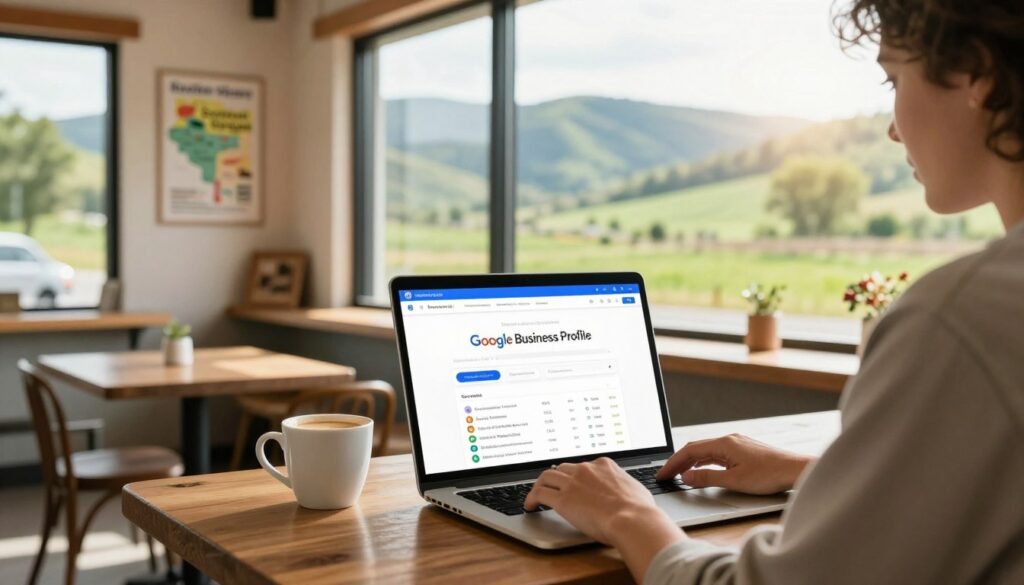
    A vibrant depiction of a small business owner interacting with a Google Business Profile on a laptop in a cozy Southern Oregon café. In the foreground, a focused individual in smart casual attire is engaged with a sleek laptop, their screen displaying a well-organized Google Business Profile. The middle ground features a coffee cup and local decor, showcasing Southern Oregon's unique charm, such as a map of the Rogue Valley on the wall. In the background, large windows reveal lush green landscapes and rolling hills, with warm sunlight filtering through, creating an inviting atmosphere. The scene conveys a sense of empowerment and local connectivity, highlighting the importance of local SEO for small businesses.

    Customer need Profile signal Likely action
    Nearby help Distance and service area Request directions
    Proof of quality Reviews and photos Make a call
    More details Website and contact options Visit the website

    Build a Complete Business Profile That Customers Trust

    A well-built listing answers key questions before a call begins. The current Google Business Profile name replaced the older Google My Business label. Complete details can make customers 70% more likely to visit or consider a purchase.

    Choose Accurate Categories and Describe Real Services

    I select one primary category that best matches the company’s main work. Then, I add only genuine services, clear descriptions, and helpful content. This gives search systems a stronger way to match intent with the right provider.

    Keep Details, Hours, and Service Areas Consistent

    I match the name, phone number, address, hours, and coverage areas across the listing, website, and citation sources. A service-area company can hide a home address while naming valid communities, such as Roseburg or Central Point. Consistent data builds trust, visibility, and long-term authority.

    Use Local Photos to Show Proof

    Real images create stronger proof than stock art. I recommend job sites, storefronts, clinic rooms, food, staff, equipment, and current work. Up to 50 location-signaled photos can support updates, credibility, and better optimization.

    A professional workspace focusing on Google Business Profile optimization, featuring a modern laptop displaying a colorful business listing dashboard. In the foreground, show a diverse group of business owners, dressed in professional attire, engaged in a discussion. The middle ground should include a whiteboard or flip chart with strategic notes, graphs, and checklists for building credibility. In the background, depict a bright, inviting office environment with large windows allowing natural light to flood the room. Use a soft focus and warm lighting to create an optimistic atmosphere, emphasizing collaboration and trust. The scene should feel dynamic yet professional, highlighting the importance of an optimized business profile.

    Profile element My focus Customer benefit
    Category and services Accurate details Clear expectations
    Hours and coverage Consistent records Fewer missed calls
    Photos and content Real evidence Greater confidence

    Improve Local Visibility Across the Rogue Valley

    Strong geographic signals help a company appear when people need help nearby. I connect a Google Business Profile with focused city pages, useful service details, and clear contact paths. This approach gives customers a simple route from a map result to a trusted website.

    “Near me” and “close by” searches grew by 900% in two years. That shift makes accurate coverage important across Roseburg, Medford, Grants Pass, Winston, Sutherlin, and Central Point.

    Connect Your Profile With City and Service-Area Pages

    Each page should offer genuine value, not copied text with a new city name. I add useful FAQs, industry details, internal links, and technical SEO support. These elements strengthen relevance while helping visitors find the right service.

    Support Searches Across Roseburg, Medford, Grants Pass, and Nearby Communities

    Coverage may include Myrtle Creek, Glide, Oakland, Canyonville, Riddle, White City, Reedsport, Coos Bay, North Bend, and Drain. Accurate information builds authority more reliably than hundreds of thin pages. My optimization plan connects the homepage, service pages, city pages, FAQs, and contact options so customers move naturally through the site.

    Turn Reviews and Updates Into Customer Confidence

    Trust often starts with a customer’s latest experience, not a sales message. Nearly 90% of people check reviews before choosing a provider. I make reputation care part of each company’s daily strategy, since steady feedback can improve search results and local visibility.

    Create a Consistent Review Request Process

    I suggest asking after a clear success moment, such as a finished repair, delivered meal, completed project, or successful appointment. One simple review link helps teams and customers in Medford, Roseburg, and Grants Pass avoid confusing steps. Requests must follow Google’s guidelines.

    A review request system should feel natural, not forced. AmpLocal describes automated requests and collection as part of its review-management approach. This steady process can turn positive experiences into useful proof.

    Respond to Reviews With Specific, Human Answers

    Each reply should be brief, warm, and tied to the customer’s experience. I avoid canned language and never reveal private details. Repeated themes can shape website content, service pages, FAQs, and future updates.

    The reported 225% rise in call volume at All City Event Rentals shows why this work deserves measurement. I track review activity, calls, and outcomes to refine each business profile.

    Action Best timing Customer benefit
    Request feedback After a success moment Easy participation
    Answer reviews Within a short interval Visible care
    Use themes During page updates Clearer service details

    Align Your Website With Your Google Business Profile

    A profile click should keep the same promise from search to contact. I connect each offer with a focused page that shows the service, coverage area, proof, and next step. This keeps the message clear and helps protect search visibility.

    Match Profile Services to Focused Website Pages

    A vague homepage can waste strong intent. A plumbing, repair, fitness, dental, or catering service needs its own page. Each page should use clear content, real photos, reviews, and a direct call to action. I also match page details with the listing to support steady SEO optimization.

    Make Mobile Calls, Directions, and Contact Forms Easy

    Most people scan reviews, photos, services, location signals, and contact choices in seconds. I use mobile-first design with tap-to-call links, simple menus, directions, and short forms. Next.js can support fast loads, server-rendered pages, clean routes, and strong Core Web Vitals.

    Need Page feature Customer action
    Service detail Focused page Review options
    Fast contact Tap-to-call link Start a call
    Easy access Directions and form Request help

    My Google Business Profile and Local SEO Services

    I turn scattered listing details into a clear plan that supports trust, action, and measurable growth. My work can cover Roseburg, Medford, Grants Pass, Eugene, Springfield, Cottage Grove, Reedsport, Coos Bay, and North Bend.

    Profile Audits, Optimization, and Ongoing Updates

    I review categories, services, citations, photos, website links, and map details. One-time cleanup may suit a company with outdated records. Ongoing care adds updates, review monitoring, content planning, and reporting.

    Review Strategy, Citations, and Search Reporting

    I track calls, impressions, traffic, and actions after each change. Reported results include a 103% traffic increase at Martin Outdoor Property Group and 170% more impressions at Superior Buildings and Design. Improvements may appear in analytics within one to two weeks.

    “The right plan should match your goals, resources, and service area.”

    Custom Local SEO Support in Southern Oregon

    AmpLocal lists a $499 Starter Package, a $699 monthly Growth Package, and a $1,499 monthly Amplify Package. These examples show how scope can vary. The right strategy depends on site health, review needs, and page count. Request a consultation, and I will recommend focused work rather than unnecessary marketing.

    Conclusion

    A clear path from discovery to action gives Rogue Valley customers confidence. A complete business profile, accurate services, fresh photos, steady details, and honest reviews can improve visibility in Roseburg, Medford, Grants Pass, and nearby communities.

    The same promise should continue across website pages, mobile contact tools, service areas, and review requests. Helpful content and real customer proof build trust. Duplicated pages, unsupported claims, and artificial reviews can weaken that trust.

    I use practical optimization to connect search actions with measurable results. Contact me to discuss a profile audit, website handoff review, or a tailored plan across Southern Oregon. I will help you choose the next steps that fit your goals and resources.
  • Your Roadmap to SEO Success for Service-area Businesses

    Your Roadmap to SEO Success for Service-area Businesses

    Roadmap to SEO success for businesses.

    Imagine losing 6 out of 10 potential clients because they discovered a competitor first. With 65% of shoppers researching options online before visiting stores—and 59% checking products in-person before buying—your digital footprint decides who wins these customers. How do you become the first choice in an invisible race?

    Companies covering multiple locations face a unique hurdle: standing out in local searches without a single storefront. Traditional marketing often misses the mark, leaving gaps where competitors thrive. Recent data shows consumers now compare providers weeks before making contact—scrutinizing reviews, service areas, and expertise.

    This isn’t about chasing algorithms. It’s about strategic visibility. Top-performing brands use coordinated tactics across search engines, maps, and directories to build trust. They optimize profiles, target hyper-local keywords, and track what actually drives calls or clicks.

    One HVAC company doubled its leads within three months by refining its Google Business Profile alone. Another plumbing service expanded into two new cities using precise geographic targeting. The pattern? A clear plan that adapts as customers move from “just browsing” to “ready to book.”

    Key Takeaways

    • 65% of shoppers start their buying journey with online research
    • Multi-location operations need tailored visibility strategies
    • Google Maps and local directories influence 80% of purchase decisions
    • Profile optimization can double lead generation for service providers
    • Real-time tracking reveals what converts browsers into customers

    Introduction to Local SEO for Service-area Businesses

    Did you know 76% of mobile searches for nearby services lead to in-person visits within a day? This urgency defines modern consumer behavior. Local search optimization bridges the gap between digital visibility and real-world results.

    Local SEO transforms how companies appear in location-based queries. Unlike broader strategies, it prioritizes geographic relevance. A restaurant equipment repair company, for instance, might target “commercial oven servicing [City Name]” rather than generic terms. This precision matters because 82% of shoppers use “near me” filters before contacting providers.

    Google Maps and traditional search results work like twin engines. One plumbing contractor saw a 140% boost in calls after synchronizing their website content with map listings. “Optimizing both channels isn’t optional—it’s how customers find solutions,” notes a Popproxx strategist.

    Three pillars define success here:

    • Accurate business details across directories
    • Reviews addressing local pain points
    • Content answering hyper-specific questions

    Search engines reward businesses that demonstrate community ties. A roofing company in Phoenix gained top rankings by embedding neighborhood-specific keywords like “Monsoon-ready roof inspections.” Mobile users especially favor brands appearing in their immediate area during urgent searches.

    Mastering these elements creates a digital footprint that turns casual browsers into confirmed appointments. The goal? Being the first name customers see—and trust—when needs arise.

    Understanding the Importance of a SEO Roadmap

    Picture a blueprint that turns digital chaos into structured growth. A strategic plan aligns teams around measurable goals, replacing guesswork with clarity. One electrical contractor increased website traffic by 180% in six months after mapping their priorities. “Without direction, even talented teams spin wheels,” notes a digital strategist.

    Disjointed tasks drain budgets. When marketing efforts lack coordination, duplicate work and missed deadlines become routine. Studies show companies using clear plans resolve issues 40% faster than those winging it. Tracking progress becomes impossible when no one knows which metrics matter.

    Focus fuels results. Prioritizing high-impact actions—like optimizing local listings or creating location-specific content—delivers quicker wins. Allocate resources to initiatives that boost rankings while building lasting authority. For example, a landscaping company redirected efforts from generic ads to neighborhood-focused blog posts, tripling organic clicks.

    “Plans evolve as markets shift. What worked yesterday might miss tomorrow’s opportunities.”

    Effective strategies include:

    • Setting quarterly targets tied to search trends
    • Assigning roles for content updates and profile management
    • Reviewing performance data weekly to adjust tactics

    Businesses that document their approach see 30% higher customer retention. Regular check-ins keep teams accountable, turning abstract ideas into trackable outcomes. The right framework doesn’t restrict—it empowers smarter decisions.

    Popproxx: Your Partner in Local SEO Growth

    What separates thriving service providers from those stuck answering missed calls? Strategic partnerships built on measurable results. Popproxx delivers tailored solutions that transform how multi-location operations connect with local customers.

    The agency’s approach begins with hyper-local visibility. By optimizing for “near me” searches and Google Maps placements, clients appear when urgency matters most. One appliance repair company saw 23% more same-day bookings after implementing these tactics.

    “We treat every client’s digital presence like a neighborhood storefront—visible, welcoming, and ready to serve.”

    Comprehensive profile management ensures accuracy across platforms. Popproxx handles everything from initial Google Business Profile setup to review monitoring. Regular updates prevent outdated hours or addresses from costing leads.

    Their team digs deeper than basic keywords. Analyzing search patterns reveals phrases like “emergency drain cleaning [City]” or “24-hour HVAC repair.” This data shapes content that answers real questions from local customers.

    Technical improvements load pages faster while mobile-friendly designs keep users engaged. A recent client reduced bounce rates by 41% after site optimizations. Performance dashboards track rankings and conversions, proving what drives growth.

    With Popproxx, businesses gain more than an SEO vendor—they get a growth partner invested in their community impact. Results speak through increased calls, bookings, and lasting customer relationships.

    Roadmap SEO Service-area Businesses

    What separates brands that dominate local searches from those struggling to get noticed? A structured approach rooted in data and tailored to unique operational needs. Start with a deep audit of your online presence. Check where you rank for key terms in each city you serve. Identify technical gaps slowing your site or hiding your services.

    Geographic patterns matter. Companies covering multiple regions need strategies reflecting their actual coverage. A pest control provider might target “bed bug removal in coastal towns” rather than generic phrases. This precision helps match customer intent while standing apart from competitors.

    “Cookie-cutter plans fail because every market has distinct needs. Your plan should flex like your service trucks—ready for any neighborhood.”

    Set clear targets tied to growth. Aim to boost leads from underperforming areas by 25% in six months. Focus on terms like “24/7 appliance repair [Region Name].” Track progress weekly using tools that show real-time rankings and traffic sources.

    Prioritize foundational fixes first:

    • Optimize Google profiles with accurate service areas
    • Fix mobile loading speeds below 2 seconds
    • Create location-specific FAQ pages

    Teams thrive with assigned roles and deadlines. Schedule monthly reviews to adapt tactics as markets shift. One garage door installer gained 38% more appointments after aligning content updates with seasonal demand spikes. Stay agile—what works today might need tweaking tomorrow.

    Local Search Optimization for “Near Me” Searches

    When was the last time you searched for a service and didn’t use “near me”? Over 72% of consumers now include location terms in their queries—a 210% surge since 2019. This shift means companies must adapt to how people find solutions during urgent moments.

    Optimizing Visibility on Google Maps

    Your Maps presence acts as a digital storefront. Complete profiles with updated hours, photos, and service areas rank higher. One bakery in Austin gained 31% more weekend orders after adding “gluten-free cupcakes near downtown” to their description.

    Regular updates matter. Search algorithms prioritize businesses that refresh their listings weekly. A garage door repair company saw 19% more same-day bookings after posting seasonal maintenance tips every Friday.

    “Maps optimization isn’t just about pins on a screen—it’s about proving you’re the closest solution to someone’s problem.”

    Leveraging Local Directory Citations

    Consistency builds trust. Ensure your name, address, and phone number match exactly across Yelp, Yellow Pages, and industry-specific platforms. Discrepancies confuse both customers and search crawlers.

    • Claim profiles on at least 15 quality directories
    • Use neighborhood-specific keywords like “Midtown appliance repair”
    • Respond to reviews within 48 hours

    Popproxx’s approach combines hyper-local content with technical precision. Their clients average 40% more map views by aligning service pages with how different areas describe needs—like “pool leak detection” vs. “hot tub repairs” in regional searches.

    Google Business Profile Management Best Practices

    How many potential customers scroll past your listing because of outdated hours or missing photos? A polished Google Business Profile acts as your 24/7 storefront—answering questions before customers even call. Proper management bridges the gap between being visible and being chosen.

    Establishing and Verifying Your Profile

    Start by claiming your free profile. Fill every field with precise details: exact service areas, phone numbers, and operating hours. Inconsistencies with other directories—like Yelp or industry sites—can delay verification. One electrician lost 18 leads monthly until fixing mismatched addresses across platforms.

    Verification proves legitimacy. Most service-area companies use postcard verification mailed to their physical address. Instant phone verification works for eligible businesses. Popproxx streamlines this process, handling document submissions and resolving common roadblocks like location conflicts.

    Ongoing Optimization and Updates

    Fresh content keeps profiles competitive. Upload photos weekly—before/after project shots or team images build trust. A roofing contractor increased profile clicks by 33% by adding seasonal service tags like “storm damage inspections” during hurricane months.

    “Treat your profile like a living billboard. Regular updates signal reliability to both customers and algorithms.”

    Enable messaging for instant inquiries. Integrate booking tools to convert profile visitors into appointments. Respond to all reviews within 48 hours—positive or negative—to show engagement. Popproxx clients see 27% higher conversion rates when using these advanced features consistently.

    Advanced Local Keyword Targeting Strategies

    Did you know 93% of online experiences begin with a search bar? For service providers, the right phrases determine whether you appear as the solution or remain invisible. Precision in keyword selection separates market leaders from competitors stuck guessing what clients need.

    Researching Customer Search Terms

    Start by mining real queries from tools like AnswerThePublic and Google’s “People also ask” features. A garage door company discovered customers searched “stuck garage door emergency repair [City]” 23% more often than generic terms. This insight reshaped their content strategy.

    Keyword Type Example Competition Level Conversion Potential
    Short-Tail Plumber High Low
    Long-Tail 24/7 sewer line repair [Neighborhood] Medium High

    Incorporating Long-Tail Keywords

    Specific phrases attract ready-to-buy clients. Popproxx found HVAC companies using “noisy AC unit troubleshooting [Region]” converted 40% better than those targeting broader terms. These hyper-detailed phrases match urgent needs while bypassing crowded markets.

    Regional dialects matter. A pool service in Florida optimized for “hurricane-proof screen enclosures,” while Arizona teams used “monsoon drainage inspections.” Local SEO thrives on these nuances. Track monthly search trends to adapt as language evolves.

    “Keyword research isn’t a one-time task—it’s a conversation with your market’s changing needs.”

    Balance core services with location modifiers. Create pages targeting both “emergency tree removal” and “storm damage cleanup [County].” This dual approach captures varied search behaviors across your service areas.

    Website Optimization for Improved Performance

    What happens when customers click your link but can’t load your site? Over half abandon pages taking longer than 3 seconds to load. Technical groundwork ensures your digital presence works as hard as your team.

    Enhancing Technical SEO Elements

    Mobile responsiveness isn’t optional—it’s survival. With 62% of urgent service searches happening on phones, slow-loading pages lose bookings instantly. Popproxx streamlines code and compresses images to slash loading times below 2 seconds.

    Secure connections build trust. SSL certificates encrypt data while signaling reliability to search crawlers. Proper XML sitemaps guide bots through your pages, ensuring new service areas get indexed fast. One HVAC provider fixed crawl errors and saw 37% more traffic in 30 days.

    “Your site’s skeleton determines how high it climbs. Optimize the bones before decorating the walls.”

    Clear navigation keeps visitors engaged. Separate service pages for each region—like “Orlando AC repair” vs. “Tampa HVAC maintenance”—help users find answers quickly. Structured headings and meta descriptions align content with local search intent.

    Popproxx combines speed upgrades with UX tweaks. Clients report 29% longer session durations after simplifying contact forms and adding emergency service buttons. Every technical fix fuels better rankings and more conversions.

    Performance Tracking and Data-Driven Decisions

    What if you could predict customer needs before they search? Tracking key metrics turns guesswork into actionable insights. Without clear data, companies risk pouring resources into strategies that don’t deliver real results.

    Popproxx simplifies this process through customized dashboards. Their tools monitor what matters most—local search positions, website visits, and conversion patterns. One appliance repair team discovered 42% of their calls came from neighborhoods they’d nearly stopped targeting.

    Setting Up Key Metrics and Reports

    Start by defining success. Track weekly rankings for priority phrases like “emergency HVAC repair [City].” Monitor mobile traffic spikes during peak service hours. Popproxx clients receive monthly reports highlighting growth areas and hidden opportunities.

    Analyzing SEO Progress Regularly

    Review data every 14 days to spot trends. A roofing company adjusted their content calendar after noticing “storm damage inspection” searches doubled in rainy months. Tools like Google Analytics reveal which pages convert visitors into leads.

    Popproxx’s approach turns numbers into narratives. Their teams explain results in plain terms—showing how improved rankings translate to more booked jobs. This clarity helps businesses shift budgets toward tactics that drive actual revenue.

    FAQ

    How do I optimize my business for “near me” searches?

    Focus on adding location-specific keywords (like city or neighborhood names) to your website content and Google Business Profile. Ensure your NAP (Name, Address, Phone Number) is consistent across directories. Encourage customer reviews to boost local trust signals.

    Why is verifying my Google Business Profile important?

    Verification confirms your business’s legitimacy, making it eligible to appear in Google Maps and local search results. Unverified profiles often rank lower or get filtered out, reducing visibility to nearby customers.

    What are long-tail keywords, and how do they help?

    Long-tail keywords are specific phrases like “emergency plumbing service in Austin.” They attract high-intent customers with lower competition. Tools like Google Keyword Planner or SEMrush can help identify these terms for your industry.

    How often should I update my website for technical SEO?

    Regularly audit your site for broken links, page speed issues, and mobile responsiveness. Tools like Google Search Console provide actionable data. Monthly checks ensure your site meets evolving search engine standards.

    Can online reviews impact my local search rankings?

    Yes. Positive reviews signal credibility to Google’s algorithm and improve click-through rates. Respond professionally to all feedback, and ask satisfied customers to leave reviews with location-specific keywords.

    What metrics should I track for SEO success?

    Monitor organic traffic, keyword rankings, and conversion rates. Tools like Google Analytics and Ahrefs show how well your strategy performs. Adjust tactics based on data trends to stay ahead of competitors.

    How does Popproxx support local SEO growth?

    Popproxx offers tailored strategies like local citation audits, review management, and hyper-targeted keyword research. Their expertise helps service-area businesses dominate local search results and attract qualified leads.