Category: SEO

  • What a Medford or Ashland Business Should Expect to Pay for a Website in 2026

    What a Medford or Ashland Business Should Expect to Pay for a Website in 2026

    If you ask, “how much does a website cost?” the honest answer depends on your goals. Many local service companies should plan for $4,000 to $15,000 for professional work in 2026. That range fits most small business projects with core pages, lead forms, and local search support.

    For anyone comparing website pricing in Medford and Oregon, the starting point can look very different. DIY builders often run from $17 to $50 per month. They may suit owners who have time to write content, manage updates, and solve technical issues.

    Professional options include WordPress, freelancers, and agencies. Agency projects often range from $6,000 to $35,000 or more. The final figure reflects strategy, design, copy, SEO, security, hosting, and ongoing support—not page count alone.

    I will compare each path so you can set a practical budget. A low upfront price may seem appealing, yet reliable web tools, strong design, and regular care shape the true long-term investment. The right plan helps local businesses attract visitors and turn interest into calls, bookings, or sales.

    How Much Does a Website Cost for a Medford or Ashland Business?

    Local owners can set a useful budget by matching project scope with goals. For most small business projects, professional work falls between $4,000 and $15,000. GruffyGoat builds start at $6,000, offering one local price reference rather than a universal rule.

    DIY builders range from $17 to $50 per month, or about $200–$600 per year. These plans often include hosting, a domain name, email tools, and a template. They suit owners who can handle content, updates, and basic support.
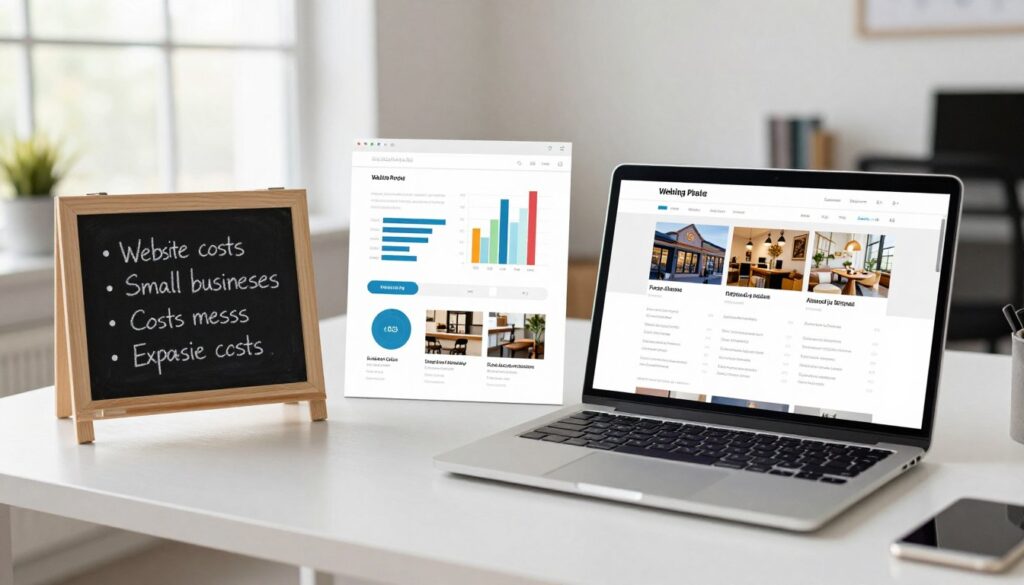
    A professional and modern workspace setting featuring a stylish desk with a laptop displaying a visually appealing website pricing table. In the foreground, a small chalkboard or whiteboard with neatly organized bullet points outlining key website costs for small businesses. The middle ground includes colorful charts and graphs illustrating typical expenses alongside images of a small Medford or Ashland business, such as a café or boutique. The background showcases a well-lit office environment with large windows letting in natural light, emphasizing a friendly and inviting atmosphere. The scene conveys a sense of professionalism and clarity, with soft focus effects for a clean aesthetic. The camera angle is slightly elevated, capturing the entirety of the workspace while maintaining an intimate feel.

    Typical Budgets for Local Small Business Websites

    A five-page service site usually needs less work than booking, eCommerce, or software connections. More locations and custom features raise the price.

    DIY, Freelancer, and Agency Pricing Compared

    • Freelancer: $1,500–$8,000 for focused design and development.
    • Agency: $6,000–$35,000+ for strategy, custom design, and larger builds.

    What a Professional Website Build Usually Includes

    My plan may cover discovery, mobile-first design, development, content structure, search setup, testing, launch, and support. Strong web design helps small businesses turn visits into calls or leads.

    Option Typical Price Best Fit
    DIY builder $17–$50 per month Simple needs
    Freelancer $1,500–$8,000 Focused projects
    Agency $6,000–$35,000+ Complex growth plans

    What Makes a Business Website More or Less Expensive?

    Project scope sets the starting price. Page count, custom design, booking, eCommerce, and outside integrations add work. Simple layouts and ready-made tools can keep the budget lean.

    Even free WordPress software requires skill and time. Beginners may spend 40–80 hours on setup, content, mobile testing, security, and launch. Hosting, premium themes, and plugins add recurring costs. One plugin may run $50–$200 per year.

    A visually engaging infographic depicting the pricing factors of business websites in 2026. In the foreground, display a modern laptop open to a website design mock-up, surrounded by colorful icons representing various features such as SEO, e-commerce, custom design, and training. In the middle, include a professional business person in smart casual attire, analyzing the pricing elements on a notepad. In the background, illustrate a clean and modern office environment with a large window showing a cityscape of Medford or Ashland. The lighting should be bright and inviting, emphasizing a productive and professional atmosphere. The overall mood should be informative and engaging, perfect for illustrating the complexities of website pricing.
    • Content: Copywriting often runs $50–$150 per hour. Photography may add $500–$2,500 or more.
    • Design: A custom designer creates stronger brand fit than builder templates.
    • Features: Booking, payments, data feeds, and software connections raise project needs.
    • Accessibility: Clear structure and keyboard support protect visitors and improve usability.

    Complex web applications can reach $50,000–$150,000. For many businesses, DIY work saves cash but consumes hours better spent with customers. I weigh the true price against sales, operations, and long-term growth.

    Website Builder Costs for Beginners

    Choosing the right platform can give beginners quick results without complex web software. I compare three popular options so you can match monthly costs with your goals.

    What Wix, Squarespace, and Shopify Plans Include

    Wix starts near $17 per month. Higher plans range from $32 to $172. Squarespace starts near $16 with annual billing, while its business plans run about $23–$49. Shopify begins near $29 for Basic and reaches $79–$299 for advanced annual plans.

    These closed platforms combine hosting, security, an SSL certificate, templates, support, and tools. Annual billing may save 20–30%, yet subscription fees continue each year. Plans may also include email, domain registration, and payment features.

    When a DIY Builder Is the Right Fit

    Wix and Squarespace often suit service companies, portfolios, and informational sites. Shopify focuses on selling products, inventory, and checkout tools. I suggest DIY builders for owners who need simple design, limited customization, and quick launch time.

    • Best for: small business owners with basic needs
    • Trade-off: less control and platform portability
    Platform Starting Price Strongest Use
    Wix $17 per month Service sites
    Squarespace $16 annually Design-focused pages
    Shopify $29 annually Online stores

    WordPress Website Costs and Ongoing Responsibilities

    WordPress powers roughly 40% of online sites, giving owners strong control and broad design freedom. Yet free WordPress.org software still brings several expenses and tasks. WordPress.com works differently because it bundles hosting within its platform.

    For most projects, shared hosting runs about $3–$15 per month. Managed hosting costs roughly $25–$100 per month and often includes stronger security, backups, updates, and support. A domain name usually adds $10–$20 per year.

    Premium themes often run $50–$100. Premium plugins may add $50–$200 per year each. Owners also need to review maintenance, email settings, and technical issues. Over time, these costs can exceed the original plan.

    Choosing Tools That Match Your Needs

    WordPress offers more than 50,000 free plugins, but each tool can create update or compatibility risks. Elementor Hosting combines Google Cloud hosting, Cloudflare CDN services, Elementor Pro, and unified support. This integrated option suits owners who prefer less DIY work.

    I recommend WordPress for business owners seeking flexibility. A small business website still needs regular care, even when design starts with one template.

    Hiring a Freelancer or Web Agency

    Choosing the right partner can shape your launch, lead flow, and long-term support. I view freelance work as the middle ground between DIY tools and full-service guidance. Your goals, timeline, and feature list should guide the final price.

    What Freelance Web Design Typically Costs

    Freelance web design commonly runs $1,500–$8,000. Custom WordPress builds often fall between $2,000 and $8,000. Rates near $75–$150 per hour are common, with delivery taking about 2–8 weeks. Direct contact with the designer can speed feedback and keep communication clear.

    When an Agency Investment Makes Sense

    An agency project often ranges from $10,000–$35,000. This price may include strategy, copywriting, design, development, SEO, project management, and post-launch support. Custom online stores can start near $20,000 and exceed $55,000. Larger builds may need 12–16 weeks or more.

    How Scope, Strategy, and Custom Features Affect Price

    Before signing, confirm ownership of hosting, the domain, content, software licenses, updates, email, and ongoing maintenance. Clear terms protect your budget and prevent surprises.

    The Website Costs Many Business Owners Forget to Budget For

    Small extras can raise your planned budget by 10% to 20%. I suggest keeping this reserve before signing a design or hosting plan. It can cover premium plugins, stock images, new content, and surprise technical work.

    Professional email through Google Workspace or Microsoft 365 often adds $6–$12 per user per month. Online stores also pay Stripe’s standard fee: 2.9% plus $0.30 for each card transaction. That charge applies across platforms.

    Strong visuals and clear copy support trust. Business photography often runs $500–$2,500 or more. Copywriting commonly costs $50–$150 per hour. These services can improve reach and lead quality.

    • Let’s Encrypt often provides an SSL certificate at no charge.
    • Hosting plans may include SSL, backups, or basic security.
    • Advanced security, accessibility fixes, updates, and ongoing maintenance may require extra funds.
    • Renewals for the domain name and software can add annual costs.
    Expense Typical Range Budget Note
    Professional email $6–$12 per user monthly Recurring service fee
    Photography $500–$2,500+ Useful for local brand trust
    Copywriting $50–$150 per hour Supports search and sales
    Stripe payments 2.9% + $0.30 Applies per card transaction

    Ongoing Website Expenses After Launch

    Launch day marks the start of regular care, not the end of your budget. Hosting, domain renewals, content, updates, backups, and search work continue throughout each year. Small business owners should reserve $1,000–$6,000 per year for these needs.

    Maintenance, Security, Backups, and Updates

    Basic maintenance plans often run $50–$150 per month. Hands-on support, performance checks, malware scans, and security monitoring often range from $150–$500 per month. Managed WordPress hosting may cost $25–$100 per month and include updates, backups, and protection.

    “Reliable care protects both your investment and your customers’ trust.”

    Content, SEO, Email, and Accessibility Costs

    Professional SEO retainers commonly range from $500–$2,500+ per month. Fresh copy, image changes, and accessibility reviews help keep your site useful. Fixing access problems after launch can cost thousands. Email, domain renewals, and software licenses also require planning. Annual billing may save 20–30% compared with monthly billing.

    • Review plugin compatibility before updates.
    • Test backups and restore data often.
    • Schedule content refreshes and accessibility checks.

    How to Choose the Best Website Option for Your Business

    The best path depends on your goals, skills, budget, and available time. Consider future growth, booking needs, online sales, desired control, and preferred support before choosing tools or a platform.

    A DIY builder fits beginners who need a simple site quickly. It offers templates, email tools, hosting, and support, but permanent fees continue each month. WordPress suits owners who want control and scale. They must manage maintenance or hire help for security and updates.

    • Freelancer: Custom web design, often priced from $1,500 to $8,000.
    • Agency: Strategic design, advanced features, and broader support, often from $6,000 to $35,000 or more.
    • DIY: Simple digital presence with lower starting price and less ownership.

    Ask every provider about mobile-first design, SEO, accessibility, domain ownership, hosting, backups, updates, and post-launch support. The cheapest initial price may become expensive if future locations, bookings, content, or integrations exceed platform limits.

    “Plan for day two,” advises Itamar Haim, and choose tools that can grow with your company.

    Since 2012, GruffyGoat has designed, built, and supported local companies. Its Partnership Plans may include managed hosting, security monitoring, SEO, content, and ongoing growth work.

    Conclusion

    An Ashland or Medford owner can choose under $20 per month with one builder, roughly $100–$300 upfront through DIY WordPress, or $4,000–$15,000 for professional design and build. Freelancers often range from $1,500–$8,000. Agencies commonly reach $6,000–$35,000 or more when strategy and advanced features enter the plan.

    Include hosting, domain renewal, email, content, security, maintenance, and SEO in total ownership costs. That view reveals the true cost across each year, not only launch day. Strong design also helps each site support trust, calls, and sales.

    My practical advice: select platform and design that fit today’s needs while leaving room for growth. Before signing, define the small business website’s purpose and set an honest budget. Then compare providers by scope, support, ownership, and long-term value. This approach helps your business avoid needless migration later.

    Choose tools that serve your goals, protect your time, and support steady growth.

  • local business directories Oregon, Southern Oregon business listings, citation building

    local business directories Oregon, Southern Oregon business listings, citation building

    In 2025, social feeds change fast, yet trusted listings still guide buying choices. I use citation building as a simple way to keep core business information clear across search tools. Accurate names, addresses, hours, services, plus a complete phone listing help customers act with confidence.

    Google Business Profile reportedly shapes 80% of local search results. Bing Places also deserves attention, since Bing holds 36% of desktop searches. Apple Maps can reach people who rely on iPhones, while a business profile on each platform can support steady discovery.

    I will compare local directories, online directories, chambers, trade platforms, plus community listings. My goal is not to place every small business on every site. Instead, I will show how relevance, authority, reach, cost, traffic, plus measurable actions can guide smart choices.

    Readers will see how consistent location details build trust over time. I will also explain which listings may bring calls, visits, or leads after months of careful upkeep. This practical review helps people choose useful business directories with less guesswork.

    Why Local Business Directories Still Matter in Southern Oregon

    People often need a quick answer when a pipe breaks, dinner plans change, or tax season arrives. A trusted listing helps local customers find plumbers, restaurants, accountants, and other services without moving past page one of search results. For a small business, that early visibility can turn nearby interest into a call.

    A vibrant scene depicting local business directories in a charming Southern Oregon town. In the foreground, a diverse group of four business professionals in smart casual attire is gathered around a table, glancing at an open directory displaying business listings. The middle ground features a rustic storefront with windows showcasing local products and a colorful sign promoting a business fair. In the background, the picturesque Southern Oregon landscape with rolling hills and trees creates a serene atmosphere. Sunlight filters through the trees, casting warm, dappled light across the scene. The overall mood is inviting and community-oriented, illustrating the importance of local business connections.

    How Directories Help Local Customers Find Your Business

    BrightLocal reports that 76% of consumers trust specialized online directories much like personal recommendations. That finding shows why a focused profile can influence potential customers. A business local to Jackson County may gain more trust when its listing reflects community needs, clear photos, strong reviews, and useful contact details.

    Why Consistent Listings Strengthen Local SEO

    Matching a business name, address, phone, hours, and website removes doubt. Customers comparing nearby providers can choose with less effort. Accurate citations also support map visibility, review confidence, and local seo signals. If details conflict, businesses may lose visibility even when their work remains excellent.

    • Keep core details identical across major platforms.
    • Update holiday hours before customers search.
    • Show services clearly so people can act.

    Which Southern Oregon Listings Deserve Your Time?

    I start with customer intent, industry fit, authority, and geographic reach. A strong business listing should help potential customers act, not merely add another citation.

    A vibrant and informative scene showcasing Southern Oregon business directories. In the foreground, a professional open laptop displaying a colorful website interface featuring various local business listings, with an inviting cup of coffee beside it. The middle ground features a wooden table surrounded by folders filled with printed documents, maps of Southern Oregon, and business cards, illustrating the diversity of local businesses. In the background, a softly blurred view of the beautiful Southern Oregon landscape, showcasing rolling hills and a clear blue sky that gives a sense of place and community. Warm, natural lighting illuminates the scene, creating a welcoming atmosphere that encourages viewers to explore local business opportunities. The image captures the essence of local directories without any text or distractions.

    What Makes a Directory Worth Your Time

    I favor platforms that serve clear needs. A focused foodie site may send more bakery customers than a broad site with higher authority. One bakery gained more leads from a DA 45 niche site than from a DA 80 general platform. Relevance can beat size.

    How Authority and Industry Fit Affect Visibility

    Leading platforms often show domain authority above 70. Google Business Profile is reported at 100. Still, directories often rank well when content matches what actively seeking customers want. I use Google Trends, Moz Link Explorer, and Ahrefs before choosing a site.

    Why Geographic Coverage Matters

    City-level research gives businesses an advantage. A coffee chain raised foot traffic by 40% in three months after studying city-specific listings. I check each location, audience, and service area before committing time.

    Check Useful Signal Action
    Authority DA above 70 Review link quality
    Relevance Industry-focused audience Choose a focused platform
    Reach City or county coverage Match customer location

    How I Evaluate Local Directories and Citation Sites

    A polished profile can still waste money if few people see it. I judge each platform through trust, reach, cost, and customer intent. My years experience show that useful data matters more than a glossy sales pitch.

    Directory Reputation and Search Visibility

    I review authority trends, indexing quality, ownership details, review rules, and map visibility. A DA 40 score offers a practical starting point, unless a focused niche site serves a clear audience. Directories often lose value when authority declines, even if design remains strong.

    Cost, Traffic Potential, and Customer Intent

    Free general listings average GBP 0 each year. Paid general platforms often cost GBP 200–GBP 500. One Yellow Pages listing cost GBP 300 yet produced zero customers. That result reminds business owners to demand proof before renewal.

    • Compare traffic, lead quality, profile features, and required work.
    • Check whether online directories reach nearby customers.
    • Use UTM parameters, call tracking, plus “How did you hear about us?” surveys.
    Review Point Useful Benchmark Decision Signal
    Authority DA 40 or higher Proceed when trends stay steady
    Price GBP 0–GBP 500 yearly Match spend with likely business value
    Intent Service-focused searches Prioritize relevant customers
    Tracking UTMs, calls, surveys Keep listings that produce leads

    Google Business Profile for Southern Oregon Business Listings

    Southern Oregon businesses should claim Google Business Profile first. It links a business with Google Maps, local-pack results, knowledge panels, and wider search results. This visibility puts useful information near customers ready to act.

    Start with an exact business name, complete address, phone number, holiday hours, website, categories, and core services. Confirm each detail on the business listing. A second phone check can prevent missed calls or weak local SEO signals.

    • Add fresh posts, Q&A answers, attributes, and review replies.
    • Keep every business profile detail current each day.
    • Use clear photos of products, staff, rooms, signs, and work in progress.

    A local pizzeria increased calls by 150% after adding its menu and answering reviews within 24 hours. That simple habit can turn a profile into a useful sales page for potential customers.

    Reported data also links more than 100 photos with 520% more calls than average. Varied images help customers picture an experience before they visit. I would track calls, messages, and website clicks through Google Business tools.

    Bing Places and Apple Maps for Local Search Coverage

    Search habits reach beyond Google. Bing Places reaches an estimated 36% of desktop search users, including professionals plus older audiences who keep default browsers. Cortana, Alexa, plus some Siri results can surface a verified listing. That reach gives my clients another advantage when customers search by service or phone.

    Reaching Customers Through Bing Places

    Businesses can reuse core details from Google Business Profile, then complete Bing Places with categories, photos, descriptions, services, plus phone details. I confirm Bing Places ownership before publishing. Clear data helps a business earn trust across search results.

    Keeping Your Business Visible on Apple Maps and Siri

    Apple Maps powers discovery across iPhone, Mac, Apple Watch, CarPlay, plus HomePod devices. Apple Maps helps Siri answer questions about nearby locations, hours, routes, plus contact details. Apple Maps verification often takes about 48 hours, while Google verification can take several weeks.

    Apple Maps Guides offer a smart way for complementary shops, trails, eateries, plus lodging spots to appear in one curated recommendation.

    • Sync names, hours, categories, photos, plus contact details.
    • Test directions, calls, website visits, plus map pins.
    • Review each listing after major changes.

    Southern Oregon Chamber, City, and Community Directories

    Strong community ties can turn a simple listing into steady referrals. I review city pages, tourism sites, chamber profiles, and neighborhood groups before choosing a platform. These sources often connect small businesses with nearby customers who already need trusted services.

    Medford and Jackson County Business Listings

    Start with accurate location details. SCORE Central Oregon Chapter’s Medford Branch lists 2640 E. Barnett Road, Suite E-201, Medford, Oregon 97504. Its published phone number is (541) 644-4911. I verify each address, business name, and contact detail before publishing.

    Regional Chamber of Commerce Directories

    Chambers can offer more than a citation. Membership may cost GBP 50 each year in a small town or GBP 500-plus in a major city. New York State reports a 15% first-year revenue increase among Chamber members. One client gained three corporate accounts through referrals.

    Neighborhood Groups and Community Business Platforms

    Community pages, event calendars, and tourism listings can reach people near each location. Google Business Profile supports discovery, while directories often rank well when information matches local intent. I favor active participation over a passive business listing.

    • Check address, phone, services, and event details.
    • Compare fees with referral potential.
    Source Value Check
    Chamber Referrals Fees and events
    City page Public trust Business name
    Neighborhood group Nearby reach Active members

    Industry-Specific Directories for Local Businesses

    A buyer’s search path often begins with a specialist’s name, not a broad category. I match each local business with a platform built around clear customer intent. This approach helps small businesses reach people who need focused expertise.

    Listings for Professional Services, Contractors, and Consultants

    Saguaro Technologies LLC shows how an IT business can present cloud computing, networks, security, repair, training, plus consulting services. Sunrise Services Pro in Medford can highlight window cleaning, janitorial services, commercial work, plus residential services.

    Avvo and FindLaw display legal credentials, case histories, peer endorsements, plus client reviews. Healthgrades, Zocdoc, Vitals, Opencare, plus Psychology Today support specialized healthcare searches. These platforms help potential customers compare providers with less effort.

    • Match professional services with platforms that reflect buyer needs.
    • Show clear service details, credentials, coverage areas, plus contact steps.
    • Choose sites where people are actively seeking expert help.

    My years experience shows niche listings can build trust within a community. They often convert better than broad sites because visitors already understand a service need.

    Business Type Useful Platform Profile Focus
    IT firm Saguaro Technologies LLC Cloud, security, repair
    Contractor Sunrise Services Pro Window, janitorial work
    Legal practice Avvo or FindLaw Credentials, reviews

    How to Build Accurate Local Citations Across Oregon

    Reliable citation work begins with one master record. I use Google Business Profile as a primary reference, then compare each business listing against it. Matching information builds trust with search engines plus customers.

    Matching Your Business Name, Address, and Phone Number

    Keep business name, street address, website, phone number, categories, hours, plus service areas identical across platforms. Sunrise Services Pro offers a clear check: its Medford, Oregon listing shows (541) 301-6789. Any other phone detail needs review.

    My audit process uses a spreadsheet, Google Business Profile, plus citation tools. I flag duplicate pages, old addresses, missing categories, or incomplete profiles. This simple routine supports local SEO without guesswork.

    Updating Business Hours, Services, and Locations

    Each location needs its own profile, phone detail, reviews, address, plus service area. Never combine separate sites into one record. Update holiday hours, emergency availability, appointment rules, plus changing services promptly each day.

    • Review core data each month.
    • Check customer-facing pages after edits.
    • Remove duplicate business records.

    Accurate citations help a local business appear dependable when customers need help.

    Local Directory Platforms I Would Skip or Treat Carefully

    I protect each client’s budget by checking a platform before creating a profile. A familiar name does not prove value. I look for real traffic, clear moderation, useful analytics, and a visible audience in Southern Oregon. A listing must support discovery or lead generation.

    Low-Quality Directories With Little Local Relevance

    Weak sites may show duplicate profiles, thin descriptions, wrong categories, or old phone data. Directories often rank poorly when pages lack original details, geographic context, trusted reviews, or specialist knowledge. I also check whether local customers use a site before adding a business profile.

    • Authority below 40 needs a strong niche reason.
    • Poor moderation can damage trust.
    • Missing audience data signals wasted effort.

    Paid Listings That Offer No Measurable Customer Value

    One business paid GBP 300 each year for a Yellow Pages listing and gained zero customers. That result shows why owners should request proof before paying for priority placement. I want referral reports, tracked calls, click data, or qualified inquiries. Without those signals, I remove the listing or keep only a free citation.

    Useful business directories earn their place through relevance, evidence, and community reach.

    Free Versus Paid Business Directory Listings

    Budget size should guide each listing decision. A free profile usually includes a name, address, phone number, description, hours, and website field. Free general directories average GBP 0 each year, making them a practical starting point for a small business.

    Paid upgrades may add enhanced profiles, priority placement, competitor-ad removal, analytics, promotional opportunities, or event features. General paid platforms often cost GBP 200–GBP 500 yearly. Premium city platforms commonly range from GBP 100–GBP 300. Industry-focused options may reach GBP 2,000 each year.

    Listing Type Typical Cost Useful Benefit
    Free general GBP 0 Core contact details
    Premium city GBP 100–GBP 300 Stronger area exposure
    Paid general GBP 200–GBP 500 Added profile features
    Industry focused GBP 500–GBP 2,000 Qualified service leads

    I pay only when customer intent supports the expense. A paid business listing needs measurable value. Track calls, clicks, inquiries, and conversions before renewal. One GBP 300 Yellow Pages purchase produced no leads.

    “Cost never replaces performance measurement.”

    Free listings suit many small businesses. Paid placement gains an advantage only when qualified potential customers justify its price.

    How I Optimize and Track Southern Oregon Directory Listings

    Good listing work needs regular review, not a one-time upload. I check each profile against customer needs, then record changes in a simple tracking sheet. This process helps a small business keep useful information current across search tools.

    Completing Profiles With Photos, Services, and Reviews

    My checklist covers business name, phone number, address, description, categories, services, photos, booking links, plus review replies. I also confirm that each phone detail works. Authentic images of people, products, premises, and work add trust.

    Profiles with more than 100 photos reportedly receive 520% more calls than average businesses. A local pizzeria raised calls by 150% after adding its menu plus replying within 24 hours. Fresh content can turn a basic business profile into an active customer channel.

    • Add UTM parameters to website links.
    • Use call tracking numbers, call logs, plus customer surveys.
    • Ask, “How did you hear about us?”

    Each month, I audit Google Business, Bing Places, Apple Maps, plus community listings. I note missing details, outdated offers, review gaps, and inconsistent contact data. These tools show which potential customers are actively seeking help, helping businesses focus effort where it earns results.

    Conclusion

    My practical path begins with a verified Google Business profile, then grows through relevant regional, industry, plus community listings. Each profile should keep its name, address, phone, hours, services, plus website information aligned. This simple habit gives customers a clear reason to trust each listing.

    Bing Places plus Apple Maps widen reach across search tools and devices. Chamber pages, trade groups, plus community sources add useful context. A local business can weigh authority, relevance, area coverage, price, referrals, calls, clicks, plus sales before spending money.

    After years of citation work, I know steady care matters most. Small businesses gain more from fresh photos, thoughtful review replies, plus regular checks than from empty profiles. Consistent updates turn listings into durable visibility. Firms that track results can refine each choice, protect time, plus serve buyers with confidence.

    Clear data, measured effort, steady trust.

  • The Rogue Valley Small Business Guide to Google Business Profile

    The Rogue Valley Small Business Guide to Google Business Profile

    When nearby customers need a trusted service, I help owners get found across Roseburg, Medford, Grants Pass, Winston, Sutherlin, Myrtle Creek, and Glide. A clear Google Business Profile can turn a map view into a call, visit, or website inquiry.

    One search giant controls 91.9% of the market, while 75% of people never reach page two. That makes strong visibility vital across the Rogue Valley. My approach to local seo Southern Oregon combines accurate details, useful local pages, reviews, and easy paths to contact you.

    Search habits also move quickly. “Near me” and “close by” queries rose 900% in two years. Nearly half of nearby search actions begin with these listings, and 88% lead to a call or visit within 24 hours.

    I focus on practical optimization, not thin marketing copy. Together, we build a clear strategy that helps people find the right service, trust the information, and take the next step.

    Google Business Profile for small business, local SEO Southern Oregon

    People in Medford, Roseburg, and Grants Pass often compare nearby options before they call. They check distance, services, reviews, photos, hours, and contact details in one search. I use this behavior to guide practical optimization that supports trust and visibility.

    Nearly half of local searches begin with a Google Business Profile. Customers also tend to review the top three map results before requesting directions or opening a website. A complete business profile can make customers 70% more likely to visit or consider purchasing.

    “Eighty-eight percent of local searches lead to a call or visit within 24 hours.”

    Why Nearby Customers Use Google Search and Maps

    A clear profile helps each service stand out when intent is high. Proximity, relevance, photos, reviews, citations, keywords, backlinks, engagement, organic ranking, and social signals all support stronger results. I focus on accurate information, not keyword stuffing or unsupported claims.

    How Profile Visibility Supports Calls, Visits, and Website Leads

    When details match across listings, customers can act with less doubt. They may call, request directions, or visit a website within minutes. My approach connects search visibility with measurable actions, without promising guaranteed rankings.

    A vibrant depiction of a small business owner interacting with a Google Business Profile on a laptop in a cozy Southern Oregon café. In the foreground, a focused individual in smart casual attire is engaged with a sleek laptop, their screen displaying a well-organized Google Business Profile. The middle ground features a coffee cup and local decor, showcasing Southern Oregon's unique charm, such as a map of the Rogue Valley on the wall. In the background, large windows reveal lush green landscapes and rolling hills, with warm sunlight filtering through, creating an inviting atmosphere. The scene conveys a sense of empowerment and local connectivity, highlighting the importance of local SEO for small businesses.

    Customer need Profile signal Likely action
    Nearby help Distance and service area Request directions
    Proof of quality Reviews and photos Make a call
    More details Website and contact options Visit the website

    Build a Complete Business Profile That Customers Trust

    A well-built listing answers key questions before a call begins. The current Google Business Profile name replaced the older Google My Business label. Complete details can make customers 70% more likely to visit or consider a purchase.

    Choose Accurate Categories and Describe Real Services

    I select one primary category that best matches the company’s main work. Then, I add only genuine services, clear descriptions, and helpful content. This gives search systems a stronger way to match intent with the right provider.

    Keep Details, Hours, and Service Areas Consistent

    I match the name, phone number, address, hours, and coverage areas across the listing, website, and citation sources. A service-area company can hide a home address while naming valid communities, such as Roseburg or Central Point. Consistent data builds trust, visibility, and long-term authority.

    Use Local Photos to Show Proof

    Real images create stronger proof than stock art. I recommend job sites, storefronts, clinic rooms, food, staff, equipment, and current work. Up to 50 location-signaled photos can support updates, credibility, and better optimization.

    A professional workspace focusing on Google Business Profile optimization, featuring a modern laptop displaying a colorful business listing dashboard. In the foreground, show a diverse group of business owners, dressed in professional attire, engaged in a discussion. The middle ground should include a whiteboard or flip chart with strategic notes, graphs, and checklists for building credibility. In the background, depict a bright, inviting office environment with large windows allowing natural light to flood the room. Use a soft focus and warm lighting to create an optimistic atmosphere, emphasizing collaboration and trust. The scene should feel dynamic yet professional, highlighting the importance of an optimized business profile.

    Profile element My focus Customer benefit
    Category and services Accurate details Clear expectations
    Hours and coverage Consistent records Fewer missed calls
    Photos and content Real evidence Greater confidence

    Improve Local Visibility Across the Rogue Valley

    Strong geographic signals help a company appear when people need help nearby. I connect a Google Business Profile with focused city pages, useful service details, and clear contact paths. This approach gives customers a simple route from a map result to a trusted website.

    “Near me” and “close by” searches grew by 900% in two years. That shift makes accurate coverage important across Roseburg, Medford, Grants Pass, Winston, Sutherlin, and Central Point.

    Connect Your Profile With City and Service-Area Pages

    Each page should offer genuine value, not copied text with a new city name. I add useful FAQs, industry details, internal links, and technical SEO support. These elements strengthen relevance while helping visitors find the right service.

    Support Searches Across Roseburg, Medford, Grants Pass, and Nearby Communities

    Coverage may include Myrtle Creek, Glide, Oakland, Canyonville, Riddle, White City, Reedsport, Coos Bay, North Bend, and Drain. Accurate information builds authority more reliably than hundreds of thin pages. My optimization plan connects the homepage, service pages, city pages, FAQs, and contact options so customers move naturally through the site.

    Turn Reviews and Updates Into Customer Confidence

    Trust often starts with a customer’s latest experience, not a sales message. Nearly 90% of people check reviews before choosing a provider. I make reputation care part of each company’s daily strategy, since steady feedback can improve search results and local visibility.

    Create a Consistent Review Request Process

    I suggest asking after a clear success moment, such as a finished repair, delivered meal, completed project, or successful appointment. One simple review link helps teams and customers in Medford, Roseburg, and Grants Pass avoid confusing steps. Requests must follow Google’s guidelines.

    A review request system should feel natural, not forced. AmpLocal describes automated requests and collection as part of its review-management approach. This steady process can turn positive experiences into useful proof.

    Respond to Reviews With Specific, Human Answers

    Each reply should be brief, warm, and tied to the customer’s experience. I avoid canned language and never reveal private details. Repeated themes can shape website content, service pages, FAQs, and future updates.

    The reported 225% rise in call volume at All City Event Rentals shows why this work deserves measurement. I track review activity, calls, and outcomes to refine each business profile.

    Action Best timing Customer benefit
    Request feedback After a success moment Easy participation
    Answer reviews Within a short interval Visible care
    Use themes During page updates Clearer service details

    Align Your Website With Your Google Business Profile

    A profile click should keep the same promise from search to contact. I connect each offer with a focused page that shows the service, coverage area, proof, and next step. This keeps the message clear and helps protect search visibility.

    Match Profile Services to Focused Website Pages

    A vague homepage can waste strong intent. A plumbing, repair, fitness, dental, or catering service needs its own page. Each page should use clear content, real photos, reviews, and a direct call to action. I also match page details with the listing to support steady SEO optimization.

    Make Mobile Calls, Directions, and Contact Forms Easy

    Most people scan reviews, photos, services, location signals, and contact choices in seconds. I use mobile-first design with tap-to-call links, simple menus, directions, and short forms. Next.js can support fast loads, server-rendered pages, clean routes, and strong Core Web Vitals.

    Need Page feature Customer action
    Service detail Focused page Review options
    Fast contact Tap-to-call link Start a call
    Easy access Directions and form Request help

    My Google Business Profile and Local SEO Services

    I turn scattered listing details into a clear plan that supports trust, action, and measurable growth. My work can cover Roseburg, Medford, Grants Pass, Eugene, Springfield, Cottage Grove, Reedsport, Coos Bay, and North Bend.

    Profile Audits, Optimization, and Ongoing Updates

    I review categories, services, citations, photos, website links, and map details. One-time cleanup may suit a company with outdated records. Ongoing care adds updates, review monitoring, content planning, and reporting.

    Review Strategy, Citations, and Search Reporting

    I track calls, impressions, traffic, and actions after each change. Reported results include a 103% traffic increase at Martin Outdoor Property Group and 170% more impressions at Superior Buildings and Design. Improvements may appear in analytics within one to two weeks.

    “The right plan should match your goals, resources, and service area.”

    Custom Local SEO Support in Southern Oregon

    AmpLocal lists a $499 Starter Package, a $699 monthly Growth Package, and a $1,499 monthly Amplify Package. These examples show how scope can vary. The right strategy depends on site health, review needs, and page count. Request a consultation, and I will recommend focused work rather than unnecessary marketing.

    Conclusion

    A clear path from discovery to action gives Rogue Valley customers confidence. A complete business profile, accurate services, fresh photos, steady details, and honest reviews can improve visibility in Roseburg, Medford, Grants Pass, and nearby communities.

    The same promise should continue across website pages, mobile contact tools, service areas, and review requests. Helpful content and real customer proof build trust. Duplicated pages, unsupported claims, and artificial reviews can weaken that trust.

    I use practical optimization to connect search actions with measurable results. Contact me to discuss a profile audit, website handoff review, or a tailored plan across Southern Oregon. I will help you choose the next steps that fit your goals and resources.

  • Your Roadmap to SEO Success for Service-area Businesses

    Your Roadmap to SEO Success for Service-area Businesses

    Roadmap to SEO success for businesses.

    Imagine losing 6 out of 10 potential clients because they discovered a competitor first. With 65% of shoppers researching options online before visiting stores—and 59% checking products in-person before buying—your digital footprint decides who wins these customers. How do you become the first choice in an invisible race?

    Companies covering multiple locations face a unique hurdle: standing out in local searches without a single storefront. Traditional marketing often misses the mark, leaving gaps where competitors thrive. Recent data shows consumers now compare providers weeks before making contact—scrutinizing reviews, service areas, and expertise.

    This isn’t about chasing algorithms. It’s about strategic visibility. Top-performing brands use coordinated tactics across search engines, maps, and directories to build trust. They optimize profiles, target hyper-local keywords, and track what actually drives calls or clicks.

    One HVAC company doubled its leads within three months by refining its Google Business Profile alone. Another plumbing service expanded into two new cities using precise geographic targeting. The pattern? A clear plan that adapts as customers move from “just browsing” to “ready to book.”

    Key Takeaways

    • 65% of shoppers start their buying journey with online research
    • Multi-location operations need tailored visibility strategies
    • Google Maps and local directories influence 80% of purchase decisions
    • Profile optimization can double lead generation for service providers
    • Real-time tracking reveals what converts browsers into customers

    Introduction to Local SEO for Service-area Businesses

    Did you know 76% of mobile searches for nearby services lead to in-person visits within a day? This urgency defines modern consumer behavior. Local search optimization bridges the gap between digital visibility and real-world results.

    Local SEO transforms how companies appear in location-based queries. Unlike broader strategies, it prioritizes geographic relevance. A restaurant equipment repair company, for instance, might target “commercial oven servicing [City Name]” rather than generic terms. This precision matters because 82% of shoppers use “near me” filters before contacting providers.

    Google Maps and traditional search results work like twin engines. One plumbing contractor saw a 140% boost in calls after synchronizing their website content with map listings. “Optimizing both channels isn’t optional—it’s how customers find solutions,” notes a Popproxx strategist.

    Three pillars define success here:

    • Accurate business details across directories
    • Reviews addressing local pain points
    • Content answering hyper-specific questions

    Search engines reward businesses that demonstrate community ties. A roofing company in Phoenix gained top rankings by embedding neighborhood-specific keywords like “Monsoon-ready roof inspections.” Mobile users especially favor brands appearing in their immediate area during urgent searches.

    Mastering these elements creates a digital footprint that turns casual browsers into confirmed appointments. The goal? Being the first name customers see—and trust—when needs arise.

    Understanding the Importance of a SEO Roadmap

    Picture a blueprint that turns digital chaos into structured growth. A strategic plan aligns teams around measurable goals, replacing guesswork with clarity. One electrical contractor increased website traffic by 180% in six months after mapping their priorities. “Without direction, even talented teams spin wheels,” notes a digital strategist.

    Disjointed tasks drain budgets. When marketing efforts lack coordination, duplicate work and missed deadlines become routine. Studies show companies using clear plans resolve issues 40% faster than those winging it. Tracking progress becomes impossible when no one knows which metrics matter.

    Focus fuels results. Prioritizing high-impact actions—like optimizing local listings or creating location-specific content—delivers quicker wins. Allocate resources to initiatives that boost rankings while building lasting authority. For example, a landscaping company redirected efforts from generic ads to neighborhood-focused blog posts, tripling organic clicks.

    “Plans evolve as markets shift. What worked yesterday might miss tomorrow’s opportunities.”

    Effective strategies include:

    • Setting quarterly targets tied to search trends
    • Assigning roles for content updates and profile management
    • Reviewing performance data weekly to adjust tactics

    Businesses that document their approach see 30% higher customer retention. Regular check-ins keep teams accountable, turning abstract ideas into trackable outcomes. The right framework doesn’t restrict—it empowers smarter decisions.

    Popproxx: Your Partner in Local SEO Growth

    What separates thriving service providers from those stuck answering missed calls? Strategic partnerships built on measurable results. Popproxx delivers tailored solutions that transform how multi-location operations connect with local customers.

    The agency’s approach begins with hyper-local visibility. By optimizing for “near me” searches and Google Maps placements, clients appear when urgency matters most. One appliance repair company saw 23% more same-day bookings after implementing these tactics.

    “We treat every client’s digital presence like a neighborhood storefront—visible, welcoming, and ready to serve.”

    Comprehensive profile management ensures accuracy across platforms. Popproxx handles everything from initial Google Business Profile setup to review monitoring. Regular updates prevent outdated hours or addresses from costing leads.

    Their team digs deeper than basic keywords. Analyzing search patterns reveals phrases like “emergency drain cleaning [City]” or “24-hour HVAC repair.” This data shapes content that answers real questions from local customers.

    Technical improvements load pages faster while mobile-friendly designs keep users engaged. A recent client reduced bounce rates by 41% after site optimizations. Performance dashboards track rankings and conversions, proving what drives growth.

    With Popproxx, businesses gain more than an SEO vendor—they get a growth partner invested in their community impact. Results speak through increased calls, bookings, and lasting customer relationships.

    Roadmap SEO Service-area Businesses

    What separates brands that dominate local searches from those struggling to get noticed? A structured approach rooted in data and tailored to unique operational needs. Start with a deep audit of your online presence. Check where you rank for key terms in each city you serve. Identify technical gaps slowing your site or hiding your services.

    Geographic patterns matter. Companies covering multiple regions need strategies reflecting their actual coverage. A pest control provider might target “bed bug removal in coastal towns” rather than generic phrases. This precision helps match customer intent while standing apart from competitors.

    “Cookie-cutter plans fail because every market has distinct needs. Your plan should flex like your service trucks—ready for any neighborhood.”

    Set clear targets tied to growth. Aim to boost leads from underperforming areas by 25% in six months. Focus on terms like “24/7 appliance repair [Region Name].” Track progress weekly using tools that show real-time rankings and traffic sources.

    Prioritize foundational fixes first:

    • Optimize Google profiles with accurate service areas
    • Fix mobile loading speeds below 2 seconds
    • Create location-specific FAQ pages

    Teams thrive with assigned roles and deadlines. Schedule monthly reviews to adapt tactics as markets shift. One garage door installer gained 38% more appointments after aligning content updates with seasonal demand spikes. Stay agile—what works today might need tweaking tomorrow.

    Local Search Optimization for “Near Me” Searches

    When was the last time you searched for a service and didn’t use “near me”? Over 72% of consumers now include location terms in their queries—a 210% surge since 2019. This shift means companies must adapt to how people find solutions during urgent moments.

    Optimizing Visibility on Google Maps

    Your Maps presence acts as a digital storefront. Complete profiles with updated hours, photos, and service areas rank higher. One bakery in Austin gained 31% more weekend orders after adding “gluten-free cupcakes near downtown” to their description.

    Regular updates matter. Search algorithms prioritize businesses that refresh their listings weekly. A garage door repair company saw 19% more same-day bookings after posting seasonal maintenance tips every Friday.

    “Maps optimization isn’t just about pins on a screen—it’s about proving you’re the closest solution to someone’s problem.”

    Leveraging Local Directory Citations

    Consistency builds trust. Ensure your name, address, and phone number match exactly across Yelp, Yellow Pages, and industry-specific platforms. Discrepancies confuse both customers and search crawlers.

    • Claim profiles on at least 15 quality directories
    • Use neighborhood-specific keywords like “Midtown appliance repair”
    • Respond to reviews within 48 hours

    Popproxx’s approach combines hyper-local content with technical precision. Their clients average 40% more map views by aligning service pages with how different areas describe needs—like “pool leak detection” vs. “hot tub repairs” in regional searches.

    Google Business Profile Management Best Practices

    How many potential customers scroll past your listing because of outdated hours or missing photos? A polished Google Business Profile acts as your 24/7 storefront—answering questions before customers even call. Proper management bridges the gap between being visible and being chosen.

    Establishing and Verifying Your Profile

    Start by claiming your free profile. Fill every field with precise details: exact service areas, phone numbers, and operating hours. Inconsistencies with other directories—like Yelp or industry sites—can delay verification. One electrician lost 18 leads monthly until fixing mismatched addresses across platforms.

    Verification proves legitimacy. Most service-area companies use postcard verification mailed to their physical address. Instant phone verification works for eligible businesses. Popproxx streamlines this process, handling document submissions and resolving common roadblocks like location conflicts.

    Ongoing Optimization and Updates

    Fresh content keeps profiles competitive. Upload photos weekly—before/after project shots or team images build trust. A roofing contractor increased profile clicks by 33% by adding seasonal service tags like “storm damage inspections” during hurricane months.

    “Treat your profile like a living billboard. Regular updates signal reliability to both customers and algorithms.”

    Enable messaging for instant inquiries. Integrate booking tools to convert profile visitors into appointments. Respond to all reviews within 48 hours—positive or negative—to show engagement. Popproxx clients see 27% higher conversion rates when using these advanced features consistently.

    Advanced Local Keyword Targeting Strategies

    Did you know 93% of online experiences begin with a search bar? For service providers, the right phrases determine whether you appear as the solution or remain invisible. Precision in keyword selection separates market leaders from competitors stuck guessing what clients need.

    Researching Customer Search Terms

    Start by mining real queries from tools like AnswerThePublic and Google’s “People also ask” features. A garage door company discovered customers searched “stuck garage door emergency repair [City]” 23% more often than generic terms. This insight reshaped their content strategy.

    Keyword Type Example Competition Level Conversion Potential
    Short-Tail Plumber High Low
    Long-Tail 24/7 sewer line repair [Neighborhood] Medium High

    Incorporating Long-Tail Keywords

    Specific phrases attract ready-to-buy clients. Popproxx found HVAC companies using “noisy AC unit troubleshooting [Region]” converted 40% better than those targeting broader terms. These hyper-detailed phrases match urgent needs while bypassing crowded markets.

    Regional dialects matter. A pool service in Florida optimized for “hurricane-proof screen enclosures,” while Arizona teams used “monsoon drainage inspections.” Local SEO thrives on these nuances. Track monthly search trends to adapt as language evolves.

    “Keyword research isn’t a one-time task—it’s a conversation with your market’s changing needs.”

    Balance core services with location modifiers. Create pages targeting both “emergency tree removal” and “storm damage cleanup [County].” This dual approach captures varied search behaviors across your service areas.

    Website Optimization for Improved Performance

    What happens when customers click your link but can’t load your site? Over half abandon pages taking longer than 3 seconds to load. Technical groundwork ensures your digital presence works as hard as your team.

    Enhancing Technical SEO Elements

    Mobile responsiveness isn’t optional—it’s survival. With 62% of urgent service searches happening on phones, slow-loading pages lose bookings instantly. Popproxx streamlines code and compresses images to slash loading times below 2 seconds.

    Secure connections build trust. SSL certificates encrypt data while signaling reliability to search crawlers. Proper XML sitemaps guide bots through your pages, ensuring new service areas get indexed fast. One HVAC provider fixed crawl errors and saw 37% more traffic in 30 days.

    “Your site’s skeleton determines how high it climbs. Optimize the bones before decorating the walls.”

    Clear navigation keeps visitors engaged. Separate service pages for each region—like “Orlando AC repair” vs. “Tampa HVAC maintenance”—help users find answers quickly. Structured headings and meta descriptions align content with local search intent.

    Popproxx combines speed upgrades with UX tweaks. Clients report 29% longer session durations after simplifying contact forms and adding emergency service buttons. Every technical fix fuels better rankings and more conversions.

    Performance Tracking and Data-Driven Decisions

    What if you could predict customer needs before they search? Tracking key metrics turns guesswork into actionable insights. Without clear data, companies risk pouring resources into strategies that don’t deliver real results.

    Popproxx simplifies this process through customized dashboards. Their tools monitor what matters most—local search positions, website visits, and conversion patterns. One appliance repair team discovered 42% of their calls came from neighborhoods they’d nearly stopped targeting.

    Setting Up Key Metrics and Reports

    Start by defining success. Track weekly rankings for priority phrases like “emergency HVAC repair [City].” Monitor mobile traffic spikes during peak service hours. Popproxx clients receive monthly reports highlighting growth areas and hidden opportunities.

    Analyzing SEO Progress Regularly

    Review data every 14 days to spot trends. A roofing company adjusted their content calendar after noticing “storm damage inspection” searches doubled in rainy months. Tools like Google Analytics reveal which pages convert visitors into leads.

    Popproxx’s approach turns numbers into narratives. Their teams explain results in plain terms—showing how improved rankings translate to more booked jobs. This clarity helps businesses shift budgets toward tactics that drive actual revenue.

    FAQ

    How do I optimize my business for “near me” searches?

    Focus on adding location-specific keywords (like city or neighborhood names) to your website content and Google Business Profile. Ensure your NAP (Name, Address, Phone Number) is consistent across directories. Encourage customer reviews to boost local trust signals.

    Why is verifying my Google Business Profile important?

    Verification confirms your business’s legitimacy, making it eligible to appear in Google Maps and local search results. Unverified profiles often rank lower or get filtered out, reducing visibility to nearby customers.

    What are long-tail keywords, and how do they help?

    Long-tail keywords are specific phrases like “emergency plumbing service in Austin.” They attract high-intent customers with lower competition. Tools like Google Keyword Planner or SEMrush can help identify these terms for your industry.

    How often should I update my website for technical SEO?

    Regularly audit your site for broken links, page speed issues, and mobile responsiveness. Tools like Google Search Console provide actionable data. Monthly checks ensure your site meets evolving search engine standards.

    Can online reviews impact my local search rankings?

    Yes. Positive reviews signal credibility to Google’s algorithm and improve click-through rates. Respond professionally to all feedback, and ask satisfied customers to leave reviews with location-specific keywords.

    What metrics should I track for SEO success?

    Monitor organic traffic, keyword rankings, and conversion rates. Tools like Google Analytics and Ahrefs show how well your strategy performs. Adjust tactics based on data trends to stay ahead of competitors.

    How does Popproxx support local SEO growth?

    Popproxx offers tailored strategies like local citation audits, review management, and hyper-targeted keyword research. Their expertise helps service-area businesses dominate local search results and attract qualified leads.

  • Local SEO Tips for Oregon Businesses

    Local SEO Tips for Oregon Businesses

    Listen to the Article: Experience the full content by listening to the audio version below.

    Learn About Local SEO

    Did you know that 46% of all Google searches seek local information? This striking figure illustrates the crucial need for Oregon businesses to fine-tune their local SEO strategies. With most customers turning to online searches to guide their local purchasing decisions, it becomes paramount for companies, especially those nestled in the picturesque landscapes of Oregon, to optimize their digital footprint. Leveraging local SEO tips for Oregon businesses is beneficial and indispensable for those aiming to thrive in the competitive digital marketplace. Employing savvy Oregon SEO techniques can dramatically elevate a business’s visibility and directly contribute to its growth and success.

    Local search optimization tips often revolve around creating a robust regional presence online, signaling to search engines like Google that you are not only available but also highly relevant to the local audience. Whether you’re a quaint café in the heart of Bend or a tech startup in the bustling hub of Central Oregon, adapting to the nuances of local SEO is your ticket to securing a spot in the all-important ‘local pack’ of search results. It is time to embrace the digital terrain with these practical local SEO tips for Oregon businesses and witness your customer engagement soar.

    Graphic with SEO tips for Oregon businesses.

    Key Takeaways

    • Understanding the impact of local searches on business success is crucial for Oregon entities.
    • Effective use of local SEO tips for Oregon businesses can substantially increase search visibility.
    • Optimizing for local signals such as content, profile pages, links, and citations garners better Google rankings.
    • Professional services, including digital marketing agencies, can tailor local SEO strategies.
    • Local SEO is not just an option but a necessity for businesses seeking to dominate their regional markets.
    • Implementing these local search optimization tips increases traffic and fosters local customer loyalty.

    Unlocking the Potential of Local SEO for Oregon Companies

    Harnessing the power of local SEO best practices directly correlates with improving local search rankings, placing businesses in front of customers right when they need them.

    Scenic Crater Lake panorama with SEO text overlay in Oregon.

    Understanding Local SEO and Its Significance in Oregon

    Local SEO is a targeted approach that allows businesses, especially those in highly competitive regions like Oregon, to appear prominently on search engine results pages (SERPs) for local queries. By optimizing your digital presence to speak directly to local consumers, you cultivate a local brand that resonates with the community’s character and needs.

    The Importance of Google My Business Optimization

    At the forefront of local SEO is Google My Business (GMB) – a critical tool for local businesses aiming to improve their online visibility. An optimally configured GMB profile provides accurate and detailed business information, elevating a company’s search ranking and delivering essential data to potential customers.

    Feature Importance Actionable Steps
    Complete Profile Information Increases the chance of appearing in local searches Ensure all sections are filled out with up-to-date details
    Regular Posting Engages customers and signals active business operations Share updates, offers, and events to maintain an interactive profile
    Utilizing Keywords Improves relevance in search results for targeted queries Incorporate keywords from research tools like Semrush in your profile description and posts
    Responding to Reviews Builds trust and positive reputation Acknowledge both positive and negative feedback with thoughtful responses
    Adding High-Quality Images Attracts more clicks and provides a visual understanding of the business Regularly update your GMB with clear images that represent your business effectively

    Integrating these elements into your GMB profile with SEO best practices can dramatically affect your ability to attract local online traffic and, by extension, foot traffic into your establishment. Oregon businesses can create a significant competitive edge in their market by optimizing local search results.

    Strategic Keyword Research: Targeting an Oregon Audience

    Illuminated Portland, Oregon sign at night with traffic blur.

    For any Oregon-based enterprise looking to climb the search engine ranks, the significance of local keyword research cannot be overstated. It’s not just about identifying keywords; it’s about discovering the specific terms that echo through the streets of Oregon, resonating with the local culture and community.

    Indeed, utilizing SEO tips for Oregon businesses involves more than just a superficial approach to content creation. It demands a deeper understanding of the local lexicon and societal trends. Optimizing content for local searches means seamlessly integrating the essence of Oregon into your digital presence.

    In the heart of every Oregonian is a love for local flavor, and nowhere is this more evident than in their search queries. Businesses can create a formidable and relatable online identity by tapping into this local heartbeat.

    Let’s explore the tools and strategies necessary to harness the power of local keywords:

    • Analyzing search trends within Oregon to determine prevalent search terms related to your business.
    • Looking at the language and references used in local magazines, newspapers, and popular online platforms.
    • Incorporating local landmarks, events, and colloquialisms that pertain to your audience’s daily lives.

    With a strategic approach to keyword selection, Oregon businesses can develop content that attracts the right audience and empathizes with them on a cultural level. And here’s how you can visualize which factors to consider in your research:

    Keyword Factor Importance for Oregon SEO Tools for Analysis
    Search Volume High – Ensures visibility in popular searches Semrush Listing Management Tool
    Relevance to Local Culture Critical – Connects with the regional audience Local online forums and publications
    Competitiveness Moderate – Allows for strategic positioning amongst local competitors SEO competitive analysis tools

    Adopting these SEO tips for Oregon businesses and integrating them into a comprehensive local SEO strategy will set the stage for success. By meticulously optimizing content for local searches and engaging with your audience through meaningful and relevant keywords, Oregon businesses can ensure that they’re seen and cherished by the local community.

    Local SEO Tips Oregon Businesses Need to Thrive Online

    Wine glasses, bottles, grapes with SEO tips overlay.

    For small businesses in Oregon, understanding and implementing effective SEO tactics can be the game-changer for dominating local searches and driving more organic traffic to their websites. Tailoring your strategy to emphasize Oregon SEO tactics can lead to tangible growth and a more substantial online presence in your community.

    Creating Location-Specific Content for Oregon Businesses

    One of the most effective local SEO for small businesses is creating content that speaks directly to the local audience. This includes developing pages highlighting local landmarks, events, or cultural nuances that resonate with residents. By creating local content, companies improve their relevance in search engine algorithms and forge stronger connections with their customer base. Remember, authentic, location-specific content can be a powerful tool in delivering the local flavor that users and search engines appreciate.

    Leveraging Customer Reviews and Online Reputation

    Customer reviews are a digital form of word-of-mouth and can major in local search rankings. Encouraging satisfied customers to share their experiences on prominent review platforms can benefit your business’s online reputation and SEO. These reviews provide fresh, unique content that search engines value and give potential customers insights into the quality of your products or services.

    Improving Site Performance for Enhanced User Engagement

    • Ensure your site loads quickly to reduce bounce rates and retain visitors.
    • Make navigation intuitive and mobile-friendly, given the rising number of smartphone users accessing the web.
    • Enhance user experience with interactive elements and clear calls-to-action that encourage deeper engagement.

    As voice search becomes more prevalent, optimizing for these queries is essential, and it ties back to Oregon SEO tactics that target local, conversational phrases likely to be used in voice searches. Combining speed with voice search optimization ensures that your site meets the current SEO standards and is prepared for future trends.

    Support local business sign, SEO tips for Oregon.

    Link Building and Local Citations: Essential for Oregon SEO

    Effective local SEO strategies are essential for Oregon businesses to enhance online visibility within their community. Building high-quality backlinks is a cornerstone of such strategies, leading to increased site authority and a significant boost in organic traffic. In addition to constructing a solid backlink profile, local businesses should focus on acquiring local citations for Oregon businesses, which are particularly influential for local search optimization.

    High-quality backlinks are a vote of confidence from one website to another, signifying to search engines that the content is valuable and trustworthy. To build high-quality backlinks, Oregon businesses should:

    • Create engaging and informative content that naturally attracts backlinks
    • Participate in local community events and sponsorships
    • Collaborate with local influencers and industry professionals

    Local citations, on the other hand, encompass the online mentions of a business’s Name, Address, and Phone number (NAP). Consistent local citations across the web strengthen a business’s local SEO efforts by reinforcing its presence within the community. To optimize local citations, consider the following:

    1. Ensure accuracy and consistency of NAP information across all online directories
    2. List your business on reputable local directories, such as Google My Business
    3. Engage with local media outlets to get featured in local news stories or articles
    SEO Tactic Description Benefits for Oregon Businesses
    High-Quality Backlinks Links from reputable websites to your business site. Improves domain authority, increases organic traffic, and elevates search rankings.
    Local Citations Online mentions of your business’s name, address, and phone number. Enhances local presence, aids in NAP consistency, improves local search engine rankings.
    Local Community Engagement Participation in community events and local sponsorships. Builds local brand awareness and creates opportunities for backlinks and citations.
    Local Media Collaboration Getting featured in local media stories or articles. Increases exposure and potential for additional backlinks and citations.

    As Oregon businesses harness these SEO endeavors, the aim should be to create a solid local digital footprint. Tailoring an approach that combines quality backlink building with consistent local citations is not merely beneficial but necessary for thriving in the competitive digital landscape. This combination can substantially improve a business’s ability to influence its local market, attracting a dedicated customer base that supports online growth and overall business success.

    Conclusion

    As we wrap up our exploration of local SEO tips for Oregon businesses, it’s clear that implementing a tailored SEO strategy is crucial for visibility and growth in the digital sphere. The journey to achieving a solid online presence involves a sequence of deliberate and well-informed steps, from laying the groundwork with a deep understanding of local SEO dynamics to harnessing the power of detailed keyword research and genuine, region-specific content creation. Deep-rooted in Oregon SEO techniques, these efforts can propel a local business to new heights in a competitive online marketplace.

    Putting Local SEO Into Action for Business Growth in Oregon

    Local SEO isn’t just a buzzword for business owners in the Beaver State—it’s a vital component of digital success. By leveraging SEO best practices, such as precise Google My Business optimization and local content that resonates with the community, businesses can ensure that they are seen and preferred by local patrons. The effectiveness of these local SEO strategies lies in their ability to connect businesses directly with their surrounding community, laying a path for sustained growth and success.

    Next Steps for Oregon Businesses After Implementing SEO Best Practices

    After establishing a solid foundation of SEO best practices, the ultimate goal for Oregon-based companies is to maintain momentum through continuous improvement and adaptation. Regular site audits, consistent refinement of local SEO strategies, and attentive online reputation management are part of an ongoing process that keeps a business relevant and resonant with local customers. As business owners embrace these core tenets and evolve with the SEO landscape, they can expect to expand their digital footprint and see a positive impact on their bottom line.

    FAQ

    What Are Local SEO Tips for Oregon Businesses?

    For Oregon businesses, local SEO tips include optimizing your Google My Business profile, focusing on local keyword research, creating location-specific content, leveraging customer reviews, improving site performance, building high-quality backlinks, and ensuring your business is listed with consistent local citations across various online directories.

    How Can Understanding Local SEO Benefit Oregon Companies?

    Understanding local SEO helps Oregon companies improve their visibility in local search results, which can lead to increased local traffic, customer engagement, and brand awareness within their specific geographic service areas.

    Why Is Google My Business Optimization Important?

    Optimizing your Google My Business account is crucial because it ensures your business information is accurate and up-to-date, which improves your visibility in Google’s local search results and Maps and allows potential customers to find you more easily.

    What Should Be Considered When Conducting Strategic Keyword Research?

    When conducting strategic keyword research, Oregon businesses should focus on locality-centric keywords, include local colloquialisms and landmarks, and use advanced tools like Semrush’s Listing Management Tool for tracking keyword performance.

    How Can Creating Location-Specific Content Benefit Oregon Businesses?

    Creating location-specific content can help Oregon businesses resonate with the local audience, enhance their online footprint, and improve their site’s performance in search engines by tailoring content to reflect the needs and interests of the local community.

    Why Are Customer Reviews and Online Reputation Vital for Local SEO?

    Customer reviews and online reputation are vital because they signal trust to potential customers and search engines. They influence rankings in local search results and can significantly impact a business’s ability to attract new customers.

    What Is the Importance of Improving Site Performance for User Engagement?

    Improving site performance is crucial for user engagement because a fast and user-friendly website provides a better experience for visitors. This can increase retention, lower bounce rates, and improve search engine rankings.

    How Can Link Building and Local Citations Impact Oregon SEO?

    Link building can increase a website’s authority and drive organic traffic, whereas local citations help establish local prominence and improve search engine rankings by ensuring business information is consistent across the web.

    What Are the Next Steps for Oregon Businesses After Implementing SEO Best Practices?

    Once SEO best practices are implemented, the following steps for Oregon businesses include conducting regular site audits, continuously optimizing content and listings for the local audience, managing online reviews, and keeping abreast of changes in local SEO strategies and techniques.

  • Understand Google’s Local Search Algorithm for Better Rankings

    Understand Google’s Local Search Algorithm for Better Rankings

    Understanding Google's local search algorithm diagram.

    Did you know that proximity, relevance, and prominence are the three cornerstone factors influencing local search rankings? Google’s evolution from a simple list of “ten blue links” to a multifaceted tool offering organic results, images, videos, and local listings has revolutionized how businesses are discovered. Today, organic search results play a pivotal role in local visibility, outshining paid ads in driving authentic customer engagement.

    The foundation of local search success lies in optimizing for organic rankings. This involves understanding and mastering the “big three” ranking factors: Google Business Profile (GBP) optimization, on-page SEO, and review management. These elements work synergistically to enhance your business’s online presence and attract more local customers.

    This article delves into the intricacies of Google’s local search algorithm, providing actionable strategies to boost your rankings. From the fundamentals of the algorithm to practical tips on optimizing your GBP and managing reviews, we’ll explore the essential tools and techniques to help your business thrive in the competitive local search landscape.

    Key Takeaways

    • Mastering the “big three” local search ranking factors—GBP optimization, on-page SEO, and review management—is crucial for improving your local visibility.
    • Organic search results drive more authentic customer engagement compared to paid advertisements.
    • Proximity, relevance, and prominence are the cornerstone factors influencing local search rankings.
    • Optimizing your Google Business Profile can significantly enhance your local search performance.
    • Effective review management and high-quality local citations are essential for building trust and authority with search engines.

    Overview of Local Search and Its Evolution

    Over the years, the way people find local businesses has undergone a significant transformation. Search engine result pages (SERPs) have evolved from simple lists of links to dynamic, location-aware interfaces. This shift reflects how user behavior has changed, with more people seeking location-specific information.

    The Shift from Traditional SERPs to Localized Results

    In the past, search results were generic and didn’t consider the user’s location. Today, search engines prioritize local businesses, making it easier for users to find nearby services. For example, searching for “pizza” now shows options close to your location, highlighting the importance of proximity.

    How Google Maps and Google Business Profiles Shape Local Search

    Google Maps has become indispensable for local searches, celebrating 20 years of helping users find businesses. Google Business Profiles (formerly Google My Business) bridge the gap between online searches and physical stores, enhancing visibility for local businesses.

    Feature Classic SERPs Modern Local Search
    Results Generic, non-localized Location-specific, dynamic
    Interface Text-heavy lists Map-integrated, visual
    Business Listings Basic info, limited interaction Detailed profiles, reviews, and photos

    This evolution mandates a fresh approach to optimizing for local search, ensuring businesses adapt to these changes to remain competitive.

    Understanding Google’s Local Search Algorithm

    The foundation of local search rankings is rooted in three essential factors: relevance, proximity, and prominence. These elements work together to determine how visible a business is in local search results.

    Key Ranking Factors: Relevance, Proximity, and Prominence

    Relevance refers to how well a business matches a user’s search query. For instance, optimizing your Google Business Profile with accurate categories and descriptions can improve relevance. Proximity is about physical location—how close a business is to the searcher. A search for “pizza” will prioritize nearby options, highlighting the importance of proximity.

    Prominence reflects a business’s online visibility. This includes positive reviews, high-quality citations, and strong on-page SEO. Google’s guidelines emphasize that businesses with detailed profiles and active engagement tend to rank higher.

    Insights from Google’s Official Guidelines and Industry Experts

    Experts suggest balancing on-page SEO with off-page signals like reviews and citations to enhance trust with search engines. Understanding these factors is crucial for any local SEO strategy, as they form the backbone of search engine visibility and customer engagement.

    Optimizing Your Google Business Profile for Local Success

    Optimizing your Google Business Profile (GBP) is a cornerstone of local SEO success. A well-optimized profile not only enhances your online visibility but also builds trust with potential customers. By following a structured approach, you can ensure your GBP stands out and drives more local traffic to your business.

    Setting Up and Enhancing Your GBP Listing

    Setting up your GBP listing involves more than just filling out basic details. It requires a strategic approach to ensure accuracy and completeness. Start by verifying your business location, as unverified locations are less likely to appear in local search results. Next, provide a detailed business description, ensuring it includes relevant keywords that match what your customers might search for.

    Accurate business details are crucial. Ensure your address, phone number, and operating hours are up-to-date. Even minor discrepancies can confuse customers and harm your local SEO efforts. For example, if your business operates seasonally, update your hours accordingly to maintain customer trust.

    Incorporating Keywords and Accurate Business Details

    Incorporating targeted keywords into your GBP listing can significantly enhance its relevance. Use specific terms that describe your services and location. For instance, if you own a pizza shop in New York, include terms like “New York-style pizza” or “pizza delivery service” to match local searches.

    Linking your GBP to your official website is another critical step. This connection helps search engines understand your business’s online presence, improving your local SEO performance. Additionally, ensure your profile is consistently updated across all online directories to avoid inconsistencies that could hurt your credibility.

    Feature Well-Optimized Profile Under-Optimized Profile
    Profile Completeness 100% complete with accurate details Missing key information
    Keywords Usage Relevant keywords naturally integrated Lack of targeted keywords
    Business Hours Up-to-date and accurate Outdated or missing hours
    Website Linking Linked to official website No link or incorrect link

    By following these steps and maintaining a consistent, accurate GBP, you can improve your local search visibility and attract more customers to your business.

    On-Page SEO and Local Content Strategies

    Effective on-page SEO is the backbone of a successful local search strategy. By optimizing your website’s content and structure, you can significantly improve your visibility in local search results. This section explores the best practices for creating localized web content and the importance of structured data, meta descriptions, and title tags in boosting your search rankings.

    Best Practices for Localized Web Content

    Creating content that resonates with your local audience is crucial. Start by incorporating location-specific keywords naturally into your website’s content. For example, a bakery in Chicago could mention “Chicago-style pastries” or “baked goods in Lincoln Park.” This not only helps search engines understand your relevance but also attracts local customers.

    Another key strategy is to develop content that addresses the needs and interests of your local community. Blog posts about local events, community news, or guides tailored to your area can drive organic traffic and engagement. For instance, a blog titled “Top 5 Summer Festivals in Austin” can attract local readers and signal to search engines that your content is geographically relevant.

    Structured Data, Meta Descriptions, and Title Tags

    Optimizing technical elements like title tags and meta descriptions is essential for improving your search ranking. Use location-specific terms in your title tags, such as “Pizza Delivery | New York City,” to clearly indicate your service area. Meta descriptions should also include relevant keywords and a call-to-action to encourage clicks from local searchers.

    Implementing structured data, or schema markup, on your website can enhance your online presence. By adding schema markup for your business hours, address, and reviews, you help search engines understand your website’s content better. This can lead to improved visibility in search results and even rich snippet features.

    Leveraging Reviews, Citations, and Backlinks

    Customer reviews, citations, and backlinks are powerful tools that enhance your business’s online presence and local search rankings. These elements work together to build trust and credibility, making your business more attractive to both search engines and potential customers.

    Building Trust Through Customer Reviews and Responses

    Positive reviews are essential for establishing trust and prominence. Encourage your customers to leave feedback by providing excellent service and making it easy for them to review your business. Responding to reviews, both positive and negative, shows that you value your customers’ opinions and helps improve your online reputation.

    Did you know that 74% of new customers will choose a business because of its positive reviews? Regularly monitoring and responding to reviews can significantly boost your local search rankings and attract more customers to your business.

    Developing a Consistent Citation Strategy Across Directories

    Citations are mentions of your business’s name, address, and phone number (NAP) across the web. Consistency is key to ensuring search engines trust your business’s information. Accurate and uniform citations across directories like Yelp, Foursquare, and TripAdvisor can improve your local search visibility.

    Avoid inconsistencies in your NAP details, as they can confuse customers and harm your local SEO efforts. Use online tools to manage and update your citations regularly, ensuring your business information is accurate and up-to-date.

    Feature Well-Optimized Profile Under-Optimized Profile
    Review Management Actively monitors and responds to reviews Does not engage with reviews
    Citation Consistency Maintains accurate NAP across directories Has inconsistent NAP details
    Backlink Quality Has high-quality, relevant backlinks Has few or low-quality backlinks

    By leveraging reviews, citations, and backlinks effectively, you can enhance your business’s online presence and improve its local search rankings. Remember, trust and consistency are key to attracting and retaining customers in the competitive local market.

    Utilizing Analytics and Advanced Tools for Local SEO

    In today’s data-driven world, leveraging analytics tools is essential for refining your local SEO strategy. These tools provide valuable insights into your online performance, helping you make informed decisions to improve your visibility and attract more local customers.

    Tracking Local Search Performance with Analytics Tools

    Google Analytics and Semrush Local are powerful tools that help monitor your local SEO performance. They offer detailed insights into website traffic, user behavior, and conversion rates. By setting up conversion goals, you can measure actions like form submissions, calls, or store visits, which are crucial for assessing your local SEO success.

    Adjusting Strategies Based on Data Insights

    Data-driven decision-making is key to refining your local SEO tactics. Regularly review metrics to identify trends and areas for improvement. For instance, if certain pages have high traffic but low conversions, consider optimizing them with more targeted content or calls-to-action. This approach ensures your strategy remains effective and aligned with your business goals.

    Enhancing visibility requires continuous effort. Use analytics to identify gaps in your local SEO efforts and implement changes accordingly. Whether it’s adjusting your keyword strategy or improving your website’s user experience, data insights guide you toward better outcomes. Regular audits help maintain optimal performance and adapt to evolving search trends.

    By integrating analytics tools into your local SEO strategy, you gain the insights needed to stay competitive and drive sustainable growth. Let data be your guide to unlocking new opportunities and achieving your business objectives.

    Conclusion

    In conclusion, mastering the intricacies of Google’s local search landscape is vital for businesses aiming to thrive in today’s competitive market. By focusing on key elements like Google Business optimization, on-page SEO, and review management, businesses can significantly enhance their online visibility and attract more local customers.

    The actionable takeaways from this article emphasize the importance of continuous monitoring and iterative improvements. Regularly updating your Google Business Profile, engaging with customer reviews, and leveraging analytics tools can drive sustainable growth and better results.

    Remember, precise strategies and a commitment to adaptability are essential for outperforming competitors. Encourage your team to implement these tactics and consider consulting with local SEO experts to further refine your approach. By doing so, your business can achieve improved customer engagement and a stronger online presence.

    FAQ

    How can I improve my business’s visibility in local search results?

    To enhance your local search visibility, focus on optimizing your Google Business Profile with accurate details, gather positive reviews, and ensure your website has localized content. Additionally, building high-quality citations and leveraging structured data can boost your rankings.

    What are the most important factors for local search rankings?

    The key factors are relevance, proximity, and prominence. Ensure your business profile clearly matches what users are searching for, is located near their search area, and has a strong online presence through reviews and citations.

    How do I set up my Google Business Profile effectively?

    Start by claiming and verifying your profile. Add your business name, address, and phone number accurately. Include high-quality photos, update your hours of operation, and use relevant keywords in your description to improve visibility.

    Why are customer reviews important for local SEO?

    Positive reviews build trust and signal to search engines that your business is reputable. Responding to reviews, both good and bad, shows engagement and can improve your ranking factors. Aim to encourage satisfied customers to leave feedback.

    How can I ensure consistent citations across directories?

    Use trusted platforms like Yelp, Bing Places, and industry-specific directories to list your business. Ensure your name, address, and phone number (NAP) are identical across all platforms. Tools like Semrush Local can help monitor and fix inconsistencies.

    Can I manage multiple business locations in Google Business Profile?

    Yes, you can create a Google Business Profile for each location. Ensure each profile has unique and accurate details, and avoid duplicating content. This helps improve local search performance for each location.

    How do I track the effectiveness of my local SEO efforts?

    Use tools like Google Analytics and Semrush Local to monitor your website traffic, search rankings, and profile performance. Regularly review these insights to refine your strategy and improve results.

    What role does my website play in local search rankings?

    Your website’s content, meta descriptions, and title tags should include localized keywords to improve relevance. Additionally, ensure your site is mobile-friendly and loads quickly, as these factors influence user experience and rankings.

    Source Links

  • How to Use Location-Based Keywords to Attract More Customers to Your Store

    How to Use Location-Based Keywords to Attract More Customers to Your Store

    Fishing hook with fish and location pin illustration.

    Have you ever wondered why some businesses attract more customers while others struggle to get noticed? The answer often lies in their use of local keywords. In today’s competitive market, understanding how to leverage these keywords can make a significant difference in your business’s visibility and success.

    Local keywords are essential for helping your business rank higher in search engine results for geographically specific queries. By targeting the right keywords, you can improve your website’s visibility, drive more organic traffic, and ultimately attract more foot traffic and sales. Tools like Semrush’s Keyword Magic Tool can help you identify and map the most effective keywords for your business.

    Aligning your keyword strategy with your business objectives is crucial for maximizing your return on investment. This guide will walk you through the process of understanding local search intent, mapping keywords, and optimizing your location pages for better performance. Whether you’re a small local shop or a larger enterprise, these strategies will help you stay competitive in the ever-evolving digital landscape.

    Key Takeaways

    • Local keywords improve your website’s visibility in search engine results.
    • Targeting the right keywords increases organic traffic and foot traffic.
    • Tools like Semrush’s Keyword Magic Tool aid in effective keyword mapping.
    • Aligning keyword research with business objectives boosts conversion rates.
    • Optimizing location pages enhances your business’s online presence.

    Understanding Local SEO and Its Impact

    Local SEO is a crucial strategy for businesses aiming to attract customers in specific geographic areas. By optimizing your online presence for local searches, you can significantly improve your visibility in search results, driving more foot traffic and sales.

    What Are Local Keywords?

    Local keywords are phrases that include geographic modifiers, such as city names or “near me,” which customers use when searching for products or services in their area. These keywords help businesses rank higher in local search results, making it easier for potential customers to find them. For example, a search like “coffee shop in New York” uses a local keyword to target a specific location.

    Explicit vs. Implicit Local Search Intent

    Explicit local search intent involves clear geographic terms, like “locksmith near me” or “Italian restaurants in Chicago.” These searches explicitly mention a location, making it easier for search engines to deliver targeted results. On the other hand, implicit local intent doesn’t include a specific location but relies on context, such as “best pizza,” where the search engine infers the user’s location based on their device’s location data.

    Incorporating city names and service-related phrases into your content helps capture local search queries. For instance, a florist in Los Angeles could use keywords like “Los Angeles flower delivery” to attract local customers. Search engines analyze these signals to tailor results, ensuring users find relevant businesses in their area.

    Using explicit geographic modifiers can lead to more targeted leads. For example, “plumbing services in Miami” is more specific than “plumbing services,” making it more likely to attract customers in Miami. This approach not only improves visibility but also increases the chances of conversion by addressing the specific needs of local customers.

    By understanding local search intent and incorporating the right keywords, businesses can enhance their online presence and attract more local customers. This foundational understanding is key to developing an effective local SEO strategy.

    Identifying Business Solutions and Location Opportunities

    Understanding your business’s core offerings and how they align with local demand is the first step in creating an effective keyword strategy. This process involves identifying seed keywords that represent your business’s primary services or products.

    Developing Seed Keywords

    Seed keywords are broad terms that define your business, such as “coffee shop” or “florist.” These keywords are the foundation of your strategy because they can be expanded with location-based modifiers to create more targeted phrases. For example, a florist in Los Angeles might start with “flower delivery” as a seed keyword and then add “Los Angeles” to create “flower delivery Los Angeles.” This approach helps businesses rank better in local search results.

    Choosing the Right Location Modifiers

    Location modifiers, such as city names or neighborhoods, refine your keywords to target specific geographic areas. For instance, “coffee shop near me” is more specific than “coffee shop.” Tools like Semrush can help you expand and validate these keywords, ensuring they have local intent. Understanding the user’s search journey, from general terms like “best pizza” to specific queries like “best pizza in Chicago,” is crucial for aligning your strategy with customer needs.

    By merging your business strategy with local SEO efforts, you can attract more customers. For example, a locksmith in Miami could use “locksmith Miami” as a seed keyword and then add modifiers like “emergency locksmith Miami” to target specific needs. This approach ensures your business appears in more targeted search results, driving local traffic and sales.

    Performing Keyword Research for SEO Location Based Keywords

    Effective keyword research is the cornerstone of any successful digital marketing strategy, especially when targeting specific geographic areas. By leveraging powerful tools and analyzing key metrics, businesses can uncover valuable insights that drive their online visibility and customer engagement.

    Leveraging Powerful Keyword Tools

    Tools like Semrush’s Keyword Magic Tool are indispensable for identifying location-based keywords. These tools allow you to filter by location modifiers, such as city names or regions, ensuring your keyword list aligns with local search intent. For instance, a business in Miami might use the tool to discover terms like “Miami landscaping services” or “gardening supplies in South Florida.”

    Analyzing Search Volume and Ranking Potential

    Once you’ve gathered your keywords, it’s crucial to analyze metrics like search volume, keyword difficulty, and ranking potential. High search volume terms, such as “New York pizza delivery,” indicate popular queries, while low search volume terms, like “eco-friendly landscaping Miami,” might attract a niche audience. Balancing these factors helps you prioritize keywords that offer the best opportunity for visibility and conversion.

    • Use tools to identify and filter location-based keywords.
    • Analyze metrics to determine keyword effectiveness.
    • Narrow your list to high-impact terms.
    • Combine explicit and implicit local searches for broader reach.
    • Refine your strategy with competitor insights.

    By focusing on the right terms and leveraging competitor analysis, you can create a keyword strategy that enhances your online presence and drives local success. Proper keyword research is the foundation of an effective local SEO strategy, ensuring your business stands out in a competitive landscape.

    Mapping Your Keywords to Optimize Website Content

    Organizing your keywords strategically is key to creating content that resonates with your audience and search engines. By mapping each keyword to a specific page or section, you ensure a cohesive and targeted approach to attracting potential customers.

    Creating Location-Specific Pages

    Location-specific pages are tailored to address the needs of customers in particular areas. For example, a business in Miami might create a page focused on “Miami landscaping services,” detailing local climate considerations and popular garden designs. These pages speak directly to local audiences, making them more relevant and engaging.

    On-Page SEO: Titles, Meta, and Headers

    Optimizing on-page elements is crucial for visibility. Titles should be concise (under 60 characters) and include target keywords. Meta descriptions need to be compelling, around 150-160 characters, and include a call-to-action. Headers (H1, H2s) should naturally incorporate keywords to guide users and search engines through your content.

    Element Best Practice Example
    Title Tag Under 60 characters, includes main keyword “Miami Landscaping Services | Local Experts”
    Meta Description 150-160 characters, includes keyword and CTA “Discover top Miami landscaping services. Get a quote today!”
    Headers Use H1 for main title, H2s for sections H1: “Miami Landscaping Services”
    H2: “Why Choose Our Miami Landscaping Company”

    Tips for natural keyword integration include using synonyms and varying phrases to avoid repetition. Avoid duplicate content by ensuring each page offers unique value, even when targeting similar keywords. This approach not only enhances user experience but also improves search engine rankings, driving more organic traffic and boosting conversions.

    Boosting Local Visibility with Google Business Profile

    Optimizing your Google Business Profile (GBP) is a powerful way to enhance your local search presence. A well-crafted GBP helps your business appear in the local pack and on Google Maps, making it easier for customers to find you.

    Optimizing Your Google Business Profile

    To maximize your GBP’s effectiveness, start by incorporating location-based keywords in your business description and categories. This helps Google understand your target area and match you with relevant searches. For example, a bakery in Chicago could use keywords like “Chicago bakery” or “fresh bread near me” to attract local customers.

    Maintaining consistency between your GBP and website is crucial. Ensure your business name, address, and phone number (NAP) are identical across both platforms. This consistency signals to Google that your business is trustworthy and credible.

    Keep your GBP updated with real-time information. Accurate business hours, especially during holidays, and precise location data are essential. Google may take up to five business days to verify new listings, so plan accordingly to avoid delays.

    Engage with customer reviews to build trust. Responding to reviews, whether positive or negative, shows customers you value their feedback. High ratings and positive reviews can improve your local search rankings and encourage more visits.

    A well-optimized GBP complements your broader local SEO efforts. By integrating accurate information, location-based keywords, and active customer engagement, you strengthen your online presence and attract more local customers.

    Tracking and Measuring Local SEO Performance

    Tracking the success of your local SEO efforts is essential for understanding what strategies are working and where improvements are needed. By monitoring key metrics, businesses can make data-driven decisions to enhance their online visibility and attract more local customers.

    Utilizing Position Tracking Tools

    Tools like Semrush’s Position Tracking and Map Rank Tracker are invaluable for monitoring keyword performance. These tools allow you to set triggers for ranking changes, providing real-time insights into your progress. For example, a business in Miami might use these tools to track how its keywords like “Miami landscaping services” are performing, ensuring they remain competitive.

    Monitoring Keyword Ranking Changes

    Regularly monitoring keyword rankings helps businesses identify opportunities for improvement. By setting up alerts for important ranking changes, companies can take quick action when their rankings drop. This proactive approach ensures they maintain or improve their local visibility in competitive markets.

    Tool Features Benefits
    Semrush’s Position Tracking Keyword tracking, alerts, competitor analysis Provides detailed insights into keyword performance and competitor strategies
    Map Rank Tracker Local pack tracking, ranking changes, data export Offers comprehensive tracking of local search rankings and market trends

    By leveraging these tools and continuously analyzing data, businesses can refine their strategies to stay ahead in the market. Remember, consistent effort in tracking and adjusting your strategy is key to maintaining visibility in competitive markets.

    Conclusion

    In conclusion, leveraging location-based keywords is a powerful strategy to enhance your business’s online presence and improve its rank in local search results. By conducting thorough research, mapping your keywords, and optimizing your content, you can attract more local customers and drive organic traffic. A well-crafted business profile and a robust SEO strategy are essential for standing out in competitive markets.

    To achieve better local search performance, apply the discussed tactics and monitor your progress regularly. Stay proactive in refining your approach to maintain visibility and attract more foot traffic. Remember, consistent effort in tracking and adjusting your strategy is key to long-term success in local search results.

    FAQ

    How can I use location-based keywords to attract more customers to my store?

    To attract more customers, incorporate location-based keywords into your website content, meta tags, and online listings. This helps your business appear in local search results when potential customers search for products or services in your area.

    What tools can I use to find the best local keywords for my business?

    Tools like Google Keyword Planner, Ahrefs, and SEMrush are excellent for identifying local keywords. These tools help you analyze search volume and competition to find the most relevant terms for your business.

    How does local search intent impact my business’s visibility?

    Local search intent refers to when users search for products or services with the intention of making a purchase nearby. Optimizing for explicit local search intent (e.g., “best coffee shop in New York”) and implicit intent (e.g., “coffee shop near me”) can significantly improve your business’s visibility in search results.

    What is the importance of a Google Business Profile for local SEO?

    A Google Business Profile is crucial for local SEO as it provides potential customers with essential information about your business, such as hours, location, and reviews. It also enhances your business’s visibility in Google Maps and local search results.

    How can I optimize my website content for location-based SEO?

    Create location-specific pages for each area you serve, and incorporate local keywords naturally into your page titles, meta descriptions, and headers. This ensures your content is relevant to local searches and improves your ranking in search engine results.

    What are the best practices for tracking local SEO performance?

    Use tools like Google Analytics and Google Search Console to monitor website traffic and keyword rankings. Regularly track changes in your local rankings to refine your SEO strategy and improve your online visibility.

  • Citation Building and Listings Management: Boost Local SEO

    Citation Building and Listings Management: Boost Local SEO

    Compass on map for local search SEO boost.

    Have you ever wondered why some businesses appear at the top of local search results while others remain invisible? The answer often lies in consistent citation building and effective listings management. These practices are cornerstone strategies for any local SEO effort, yet they are often misunderstood or overlooked.

    Consistent NAP (Name, Address, Phone number) data across directories like Google Business Profile and Yelp is crucial for improving online visibility. However, many businesses still underestimate the power of structured citations in enhancing their local search rankings. While some view these tactics as quick fixes, they actually lay the groundwork for long-term SEO success.

    Expert insights reveal that misconceptions about local SEO often stem from a confusion between local and traditional SEO strategies. By focusing on high-quality directories and leveraging tools like BrightLocal, businesses can build a robust online presence that drives real results.

    In this guide, we’ll explore the strategies and tools you need to master citation building and listings management. Whether you’re a small business owner or managing multiple locations, understanding these concepts will help you stay ahead in the competitive local search landscape.

    Key Takeaways

    • Consistent NAP data across directories is vital for local SEO success.
    • Citation building is a foundational tactic, not a quick fix.
    • Google Business Profile and Yelp are essential for local visibility.
    • Tools like BrightLocal can streamline citation management.
    • Accurate citations improve your chances of ranking higher in local search results.

    Introduction: The Role of Local SEO and Citations

    Local SEO is a critical strategy for businesses aiming to attract nearby customers. At its core are local citations, which play a pivotal role in enhancing online visibility and credibility.

    Understanding Local Citations

    A local citation is any online mention of a business’s Name, Address, and Phone number (NAP). These can be full citations (including all three elements) or partial citations (missing one or more details). While they resemble traditional backlinks, citations are unique as they specifically validate a business’s existence and location.

    Impact on Online Visibility

    Type of Citation Details Included Impact
    Full Citation Name, Address, Phone number Enhances credibility and visibility in local search results
    Partial Citation Missing one or more details Limits visibility but still provides some recognition

    Consistent citation data across directories like Google Business Profile significantly boosts a business’s search visibility. Studies show that businesses with accurate citations rank higher, with some industries averaging over 100 citations for first-page results. Conversely, outdated listings can erode trust and lead to negative reviews.

    Citation building and listings management: Key Strategies

    Effective citation building and listings management form the backbone of a successful local SEO strategy. By implementing well-structured approaches, businesses can enhance their online presence and improve search engine visibility. This section explores key strategies to guide you through the process.

    Educating Clients and Setting Expectations

    Educating clients about the nuances of local citations and listings management is essential. Many confuse citation building with link building, but they serve different purposes. Citation building focuses on consistent NAP data across directories, while link building is about earning backlinks from authoritative sites. Setting clear expectations helps prevent misunderstandings and ensures clients understand the gradual nature of SEO improvements.

    • Clarify the differences between citations and traditional backlinks.
    • Highlight the role of citations in improving brand perception and local algorithm trust.
    • Use examples like BrightLocal’s approach to illustrate best practices.

    Maintaining NAP Consistency

    Consistent Name, Address, and Phone number (NAP) data is critical for local SEO success. Inconsistent NAP across directories can confuse search engines and customers, leading to poor visibility and negative reviews. Regular audits and updates are necessary to maintain accurate information.

    • Audit current citations to identify inconsistencies.
    • Use tools like BrightLocal for efficient management.
    • Understand that citation building is an ongoing process, not a one-time task.

    “Consistent and accurate citations are the foundation of local SEO success. They signal trust and reliability to both search engines and customers.” – John Doe, SEO Expert

    By following these strategies, businesses can streamline their citation management process, ensuring long-term success in local search results.

    Auditing and Enhancing Your Business Listings

    Auditing your business listings is the first step toward improving your online visibility. This process involves checking directories, websites, and platforms where your business is mentioned to ensure accuracy and consistency.

    Assessing Current Citation Accuracy

    Start by gathering all existing citations. Tools like Citation Tracker can help you discover where your business is listed. Look for inconsistencies in your Name, Address, and Phone number (NAP) across directories. Even small discrepancies, like using “Avenue” instead of “Ave,” can confuse search engines and customers.

    Aspect Manual Audit Automated Tools
    Time Required High Low
    Accuracy Dependent on detail High, with real-time updates
    Scope Limited reach Comprehensive across directories

    Identifying and Fixing Inconsistencies

    Once you identify inconsistencies, prioritize updates. Correcting NAP errors improves your local SEO and customer trust. Use tools to streamline fixes and reduce manual effort. Remember, accurate listings enhance your online presence and search rankings.

    “Accurate and consistent business listings are vital for local SEO success. They build trust with both search engines and customers.” – SEO Expert

    Regular audits and updates are essential. They help maintain accurate information, prevent errors, and improve your local search performance. By ensuring consistency, you strengthen your business’s online foundation.

    Leveraging Tools for Automated Listings Management

    Automating your listings management can significantly streamline your local SEO efforts. With the right tools, you can ensure consistency, save time, and improve accuracy.

    Overview of Top Directory Aggregators

    Directory aggregators like Semrush Local and Whitespark play a crucial role in distributing your business information across multiple platforms. These tools ensure your NAP data is consistent and up-to-date, which is essential for local search visibility.

    Utilizing Automated Tools for Efficiency

    Tools like BrightLocal and Synup offer advanced features such as automated audits and real-time updates. They can identify inconsistencies in your listings and flag outdated information, ensuring your online presence remains accurate.

    Feature Manual Process Automated Tools
    Time Required High Low
    Accuracy Variable High
    Scope Limited Comprehensive

    “Automated tools are a game-changer for local SEO. They not only save time but also ensure your business listings are consistent and accurate across the web.” – SEO Expert

    By leveraging these tools, businesses can efficiently manage their online presence, improve local search rankings, and enhance customer trust. Choosing the right tool for your needs is key to maximizing the benefits of automated listings management.

    Conclusion

    While citation building and listings management may not deliver overnight success, they form the bedrock of a thriving local SEO strategy. These practices, though often underappreciated, are vital for enhancing your business’s online visibility and credibility.

    Consistent NAP data across directories like Google Business Profile and Yelp is essential for improving search engine trust. Accurate citations not only boost your local search rankings but also prevent customer confusion and negative reviews.

    Automated tools like BrightLocal and Semrush can streamline citation management, saving time and reducing errors. These tools help maintain accurate listings across multiple platforms, ensuring your business remains visible and trustworthy.

    In conclusion, investing in citation building and listings management is a wise long-term strategy. By auditing and updating your business listings, and leveraging the right tools, you can strengthen your online presence and improve local search performance. Start today and monitor your progress to see the tangible benefits for your business.

    FAQ

    What is the importance of NAP consistency for local SEO?

    Consistent NAP (Name, Address, Phone Number) across all platforms is critical for improving local search rankings. It helps search engines like Google trust your business information, making it easier for customers to find you online.

    How does Google My Business impact local citations?

    Google My Business is a key platform for managing your business profile. Ensuring your profile is accurate and up-to-date enhances your local SEO and helps your business appear in local search results more frequently.

    What are directory aggregators, and why are they important?

    Directory aggregators like Yext and BrightLocal compile and distribute business information to multiple directories. They play a crucial role in ensuring your business data is accurate and widely available across the web.

    Can I manage my business listings without automated tools?

    While possible, manually managing listings is time-consuming and prone to errors. Automated tools streamline the process, saving time and ensuring consistency across platforms.

    How long does it take to see results from citation building efforts?

    Results from citation building can vary, but most businesses start seeing improvements in local search visibility within a few months. Consistency and accuracy are key to faster results.

    What if my business has multiple locations?

    Managing multiple locations requires creating separate, unique profiles for each. This ensures each location is accurately represented in local search results and directories.

    How do customer reviews factor into local SEO?

    Positive reviews on platforms like Google My Business and Yelp can boost your local SEO. They signal to search engines that your business is reputable and trustworthy.

    What tools are best for auditing business listings?

    Tools like Whitespark and Moz Local are excellent for auditing and identifying inconsistencies in your business listings. They provide detailed insights and help improve your online presence.

    Source Links

  • Web Development Cost: How Much Does a Website Cost in 2024?

    Web Development Cost: How Much Does a Website Cost in 2024?

    Web Development Pricing Guide

    Web development costs in 2024 infographic.

    In 2024, the average cost of web development for small to medium-sized businesses is projected to increase by 15% compared to previous years as demand for advanced functionalities and integrations continues to rise. Whether planning to create a new website or revamp an existing one, understanding the average cost to build a website this year is essential.

    Gone are the days when a simple HTML page would suffice. In this day and age, companies require sophisticated websites with robust functionalities that provide exceptional user experiences. The website development costs reflect this complexity and the expertise of the web developers who bring these digital visions to life. From website design to website hosting, partnering with the right website designer and web developer can significantly influence the development cost while ensuring that the end product aligns perfectly with your brand values and business objectives.

    With a myriad of elements factoring into the expenses—from the intricacy of design to the depth of content, the scalability of infrastructure to the potency of functionality—the cost in 2024 to establish or upgrade a web presence requires detailed foresight. As digital solutions become increasingly integrated into our economic fabric, the question isn’t just how much does it cost to build a website, but rather how can we smartly invest to gain maximal returns from this digital transformation.

    Key Takeaways

    • Investigating the average cost of web development in 2024 is key for planning your business’s online strategy.
    • Complexity in design and functionality are major factors affecting the development cost.
    • Choosing between different web development options can make a significant financial difference for businesses.
    • Web design and website hosting remain critical components of overall website development costs.
    • Professional web developers and website designers can provide value in streamlining the web creation process.
    • Anticipating future needs and scalability can influence the upfront cost to build a website.
    • Understanding the long-term benefits is as important as considering the initial development cost.
    2024 Web Development Trends Guide Ad

    Understanding the Web Development Landscape in 2024

    As we forge further into the decade, it is essential to grasp the rapid advancements and prevailing trends shaping the web development industry. From custom website creation to the rise of comprehensive ecommerce functionality, these elements are crucial for businesses to consider when establishing or upgrading their digital presence in 2024. Now, let us explore how these trends are influencing the design and development process, and in turn, the financial landscape of creating and maintaining a small business website or any type of website.

    Jamin Giersbach, CEO and Co-founder at Popproxx: “The best approach is balanced, considering both immediate needs and long-term objectives. Businesses should not cut corners on essential aspects like security and user experience but also avoid overspending on unnecessary features. Consider the 80/20 rule: 80% for web development and 20% for ongoing maintenance and hosting. A well-planned budget aligned with clear business goals ensures a cost-effective and successful web development project.”

    Maria Martin, (February 22, 2024), Evaluating the Cost of Web Development: Coverage and Considerations, Design Rush. https://www.designrush.com/agency/web-development-companies/trends/cost-of-web-development

    The Evolution of Web Design and Development

    Advancements in web design and web development have outpaced almost all predictions, redefining what we consider to be a state-of-the-art website. Key to this evolution is the implementation of sophisticated content management systems that offer exceptional ease of use and enhanced functionality. Additionally, the push towards responsive design is not just a trend but a standard, given the variety of devices accessing the internet today.

    Key Trends Influencing Website Costs

    The cost structure of web development has felt the ripple effects of various trend currents. High on the list are the demands for bespoke, custom website designs which allow businesses to stand out in a crowded digital marketplace. Web design agencies are continually innovating, creating unique graphics and interactive features that require a deeper pool of resources to design, test, and implement. The integration of ecommerce functionality has also become more complex, accommodating an array of payment gateways, inventory management systems, and customer relationship tools. Here’s a comparative look at common website features and their influence on overall cost:

    Feature Impact on Design/Development Costs Added Value for Businesses
    Responsive Design Increased costs due to extensive testing across multiple devices Improved user experience leading to higher retention and conversion rates
    Custom Visuals and Interactivity Higher costs for custom graphic creation and user interface design A unique brand presence distinguishable from competitors
    Ecommerce Functionality Significant upsurge in costs due to the complexity of transactions and security Direct sales channel with comprehensive analytics for better business decisions
    Content Management Systems Varied costs depending on the level of customization and scalability Ease of site management and content updates, minimizing long-term maintenance costs

    Importance of SEO Optimization in Modern Web Development

    At the heart of a website’s success is its ability to be discovered by potential clients, making SEO optimization an integral aspect of modern web development. An optimized website transcends aesthetic appeal and functionality; it serves as a marketing powerhouse that propels a site’s visibility in search engine rankings. Effective SEO strategies incorporate responsiveness, fast loading times, quality content, intuitive navigation, and structured data – all playing pivotal roles in determining a website’s reach and, implicitly, its ability to generate business.

    Professional discussing web development costs.

    Breaking Down the Cost of Web Development 2024

    When we consider the development services required for a professional website, the total cost is often a focal point for businesses. A closer look at the breakdown of website development costs reveals a spectrum of financial commitments associated with website creation. Let’s dissect the average expenditures that one can anticipate in the current development process.

    Website Component Cost Range Remarks
    Domain Name $8.97 – $20 Annual registration
    SSL Certificate $0 – $1,500 Essential for website security
    Hosting Services $24 – $10,000 Varies based on traffic, resources
    Style/Theme Development $2,000 – $15,000 Custom designs incur higher costs
    Interactive Multimedia Features $250 – $10,000 Includes advanced interactivity

    The aforementioned elements encapsulate the primary investment areas, yet the average cost of hiring web development professionals can surge, particularly if specialized or custom work is required. The curation of website content, including text, graphics, and multimedia, must also be factored into the calculation for an all-encompassing financial overview of website creation.

    Note: The fees listed for development and content creation represent a one-time cost; it’s the upkeep, including hosting, domain renewals, and content updates that comprise the recurring financial responsibilities.

    To summarize, businesses exploring online presence through web development in 2024 need to prepare for an initial cost range of $12,000 to $150,000, which encapsulates the essentials for launching a robust and professional website. It’s crucial to recognize that these figures are sizeable but fundamental investments in the ever-evolving digital landscape.

    Options for Building a Website: Which Path Suits Your Budget?

    In 2024, the digital landscape offers a variety of routes for creating an online presence that aligns with both your budget and technical skill level. Whether you’re looking to build your website with a low-cost solution or invest in a high-end, professional design, understanding the cost implications of each option is vital in making an informed decision. Here we explore the common avenues available for website creation and the associated expenses.

    DIY with Website Builders: Costs and Considerations

    For those taking their first steps into digital territory or seeking a simple website, using a website builder stands out as the most budget-friendly choice. The cost of using a website builder can be surprisingly low, often starting at just $9.99 per month. This low-cost website solution provides a plethora of templates and drag-and-drop features, making it a practical choice for individuals and small businesses aiming to build your website without extensive technical expertise.

    WordPress: Balancing Flexibility and Expense

    Moving up the technical ladder, WordPress represents an excellent middle-ground solution. It requires a slight learning curve but rewards users with flexibility and control over their site’s design and functionality. Starting at $11 and going up to about $50 per month, WordPress users can select from a plethora of themes and plugins, making it a preferred platform for those who need more than a simple website but are still mindful of the cost around web development.

    Hiring Professionals: When to Invest in Expertise

    For businesses aiming to stand out with a complex website that boasts customized features and a unique brand identity, engaging a web development partner or hiring a professional designer or agency is the recommended path. Although this is the most costly option, with starting prices cost around $10,000, the investment translates into a high-quality, exclusive web presence tailored precisely to your business requirements. When the prefabricated templates of a website builder don’t suffice, the expertise of a dedicated professional ensures your website’s functionality and aesthetics are second to none.

    In essence, the website builder cost for a basic platform is dwarfed by the premium paid for tailored web development services. However, the right investment for your business depends on the balance between the desired website complexity and the allocated budget.

    Web design services ad with professional man and pricing info.

    The Comprehensive Cost of Website Design Services

    When contemplating the investment involved in launching a user-friendly website, understanding the financial commitment attributed to web design services is key. For a small business or an informational site, the cost range is typically narrower, potentially making it a more accessible option for small-scale operations.

    Freelancers and agencies cater to diverse needs by offering scalable services, from designing a custom website to integrating interactive multimedia. However, the complexity of the website remains a driving force behind the cost spectrum, with detailed features and bespoke design leading to higher prices.

    Type of Website Design Cost Maintenance Cost Interactivity/Multimedia Cost
    Small Business Site $2,000 – $9,000 Lower Annual Cost $250 – $5,000
    Ecommerce Website $10,000 – $55,000 Higher Annual Cost $1,000 – $10,000
    Custom Corporate Site $15,000 – $55,000 Correlated to Site Traffic $2,500 – $10,000

    Diligence in selecting the right web designer or design and development partner can lead to significant savings while ensuring an online presence that genuinely exemplifies your brand and engages your audience effectively. Whether choosing an independent professional or full-service agency, the investment in your online platform is fundamental to your business’s success and growth in the digital marketplace.

    Maintaining Your Investment: Website Maintenance Costs Explained

    To maintain the functionality and security of your website, you must account for the various ongoing costs associated with website maintenance. Understanding these recurring expenses is essential for budgeting and ensuring your site operates effectively and securely. Let’s explore the key components of annual website costs.

    Domain Names and Hosting Essentials

    Consistent and reliable website hosting and the annual renewal of your domain name are fundamental to your website’s presence and performance. The cost of maintaining these crucial aspects varies, reflecting the diversity in the services available to website owners.

    Keeping Your Website Secure with SSL Certificates

    The SSL certificate is critical to your website security, encrypting data and building trust with your visitors. The SSL certificate costs can range from free to a significant investment, based on the level of protection required for your site.

    Regular Updates and Content Management Systems

    Ensuring regular updates and effective content management are essential to keep your website functional. These ongoing tasks can be managed internally or outsourced to professionals, affecting the overall cost of maintaining your site.

    Website Maintenance Component Cost Range Notes
    Domain Name $8.97 to $20 per year Necessary for brand identity and site accessibility
    Hosting $24 to $10,000 per year Varies from shared hosting to dedicated servers
    SSL Certificate $0 to $1,500 per year Dependent on the level of encryption and validation
    Content Management System (CMS) $0 to $40,000 annually Can be free or carry a high cost for advanced features
    Regular Site Updates $200 to $1,250 per year Includes updates for security, features, and content
    Speaker discussing website marketing costs.

    Marketing Your Website: Budgeting for Digital Marketing in 2024

    Promoting online visibility is more crucial than ever before. Navigating options, from SEO to PPC and email marketing, businesses need a clear plan aligning with their financial capabilities while ensuring their message reaches the targeted audience. Below is a comprehensive overview of how to allocate your marketing budget effectively to enhance your site’s reach and foster optimal growth in 2024.

    Digital Marketing Service Average Monthly Cost Objective
    SEO $1,500 – $5,000 Improving search engine rankings for enhanced online visibility
    PPC Campaigns $2,500 – $10,000+ Generating targeted traffic quickly through paid advertisements
    Content Marketing $2,000 – $10,000 Engaging and educating potential customers with relevant content
    Social Media Marketing $2,000 – $7,000 Building brand awareness and community engagement on social platforms
    Email Marketing $1,000 – $5,000 Cultivating relationships and retention through targeted communication
    Copywriting $50 – $500 per page Conveying brand message and value proposition through compelling copy

    In pursuit of a robust marketing strategy, companies must weigh the pros and cons of each channel against their marketing objectives and sales targets. Effective search engine optimization (SEO)—a key player in website marketing—is not simply about increasing traffic but about drawing in the right audience ready to engage and convert. PPC can offer quick returns on investment, yet it requires meticulous tracking to ensure profitability.

    • Content marketing feeds information to your audience and fuels your SEO efforts for a double-edged approach.
    • Email marketing, often an underappreciated tool, holds remarkable power in maintaining customer relationships and driving repeat business.
    • Social media marketing can greatly increase your brand’s exposure and is crucial for sustaining an ongoing dialogue with your audience.

    However, ensuring a steady return on investment can become a complex challenge without a holistic approach that cohesively blends these channels into a unified marketing strategy. Critical to the success of any campaign is a thorough understanding of how each aspect contributes to a cohesive online presence, ultimately nurturing and converting leads into loyal customers.

    Conclusion

    As we encapsulate the vast landscape of web development costs for 2024, it becomes evident that cost-effectiveness remains a central tenet for businesses seeking to expand their digital footprint. The delicate balance between affordability and high-quality development underscores the emphasis on deriving maximum value for money from the web development budget. Astute businesses know all too well that a penny saved in the present, without a view toward future growth, could mean dollars spent prematurely. Thus, a prudent investment in quality development isn’t just considered expenditure—it’s capitalizing on a digital asset that will appreciate in value as technology advances.

    Maximizing Value for Your Web Development Budget

    When evaluating web development pricing quotes, the angle of cost-benefit analysis becomes indispensable. The analysis should pivot on how the proposed spending relates to the anticipated return, not just in monetary terms but also in terms of customer engagement, brand development, and market competitiveness. A judicious approach to the web development budget ensures that both the frontend allure and backend functionality synergize to embody the intended corporate persona, enhancing the user experience and, by extension, value for money.

    Preparing for Future Growth: Investing in Quality Development

    Investing in a website that scales with your business’s trajectory in an era of rapid technological evolution is paramount. Embracing quality development as an investment for future growth paves the way for enhancements, feature integrations, and platform updates without necessitating complete overhauls. The foresight to choose a web development partner that aligns with this philosophy will be the keystone to a resilient digital presence that grows in tandem with your enterprise.

    Next Steps: Calculating Your Customized Web Development Costs

    The path forward involves tailoring a strategy that works for your business’s unique needs. This means calculating your customized web development costs by assessing current requirements against long-term objectives, encompassing all facets of the process, from design to maintenance, and from marketing to continuous optimization. Crafting this detailed plan in partnership with a reputable web developer will chart a course for a website that not only meets today’s standards but is also primed for tomorrow’s opportunities.

    FAQ

    What factors influence the cost of web development in 2024?

    The cost of web development in 2024 is influenced by design complexity, functionality, type of website, responsiveness, user experience, ecommerce features, content management systems, SEO optimization, and the particular demands of custom web development.

    Can smaller businesses afford web development services?

    Yes, smaller businesses can find affordable web development options such as using a website builder for basic functionality, or they may opt for WordPress to balance cost and flexibility. There are also web design agencies that offer tailored services to fit smaller budgets.

    How much does it cost to hire a professional web designer or developer in 2024?

    The cost to hire a professional web designer or developer can vary widely, depending on the scope and complexity of the project. Simple website designs may start at a few thousand dollars, whereas custom, feature-rich websites can go upwards of $10,000 or more.

    What are some ongoing costs associated with maintaining a website?

    Ongoing website maintenance costs include domain name renewals, hosting services, SSL certificates, regular updates, and content management systems. These can range from a few dollars up to several thousand annually, depending on the services required.

    What should be budgeted for digital marketing in 2024?

    Digital marketing budgets can encompass SEO strategies, PPC campaigns, professional copywriting, content marketing efforts, and social media and email marketing. Costs can vary, but businesses may expect to spend from a few thousand up to $10,000 monthly on these services.

    How has the rise of responsive design and user experience affected web development costs?

    The increased importance of responsive design and user experience has led to more sophisticated and intensive development processes, which can raise the cost of creating a website. These elements are essential for ensuring accessibility and engagement across multiple devices.

    Why should businesses invest in SEO optimization for their websites?

    SEO optimization is essential for enhancing a website’s visibility online, improving search engine rankings, and driving organic traffic. This, in turn, can lead to better lead conversion rates and overall business growth.

    Is it more cost-effective to use a website builder or to hire a web development agency?

    The cost-effectiveness of using a website builder versus hiring a web development agency depends on the specific needs of a business. Website builders are often more affordable and suitable for basic websites, while agencies provide customized solutions which can have a greater initial cost but may offer more value in the long term.

    What additional features can affect the cost of building a website?

    Additional features such as interactive multimedia, advanced ecommerce functionality, custom animations, API integrations, and specialized content management solutions can significantly affect the overall cost of website development.

    How do I determine the total cost to build and maintain my website in 2024?

    To determine the total cost, you should account for the initial design and development expenses, add the ongoing maintenance fees (like domain renewal, hosting, SSL certificates), and include any recurring marketing and content updates to ensure comprehensive budgeting.

  • Black Friday Social Media Event: Tactics for Success

    Black Friday Social Media Event: Tactics for Success

    As Black Friday approaches, we must perfect our social media strategies to ensure a profitable event. The significance of Black Friday and Cyber Monday is monumental, not just as dates on the calendar but as opportunities for us to amplify sales through effective black friday social media marketing. We understand that social media tactics for a profitable black friday event hinge on heightened engagement and tactical anticipation – planting seeds of curiosity that blossom into sales.

    With a vast array of platforms, spotlighting our offers on popular channels like Instagram can set the stage for a record-breaking sales performance. Our tried-and-true approaches, comprising teasers that tantalize yet reveal just enough, leverage social media’s power to inform and captivate our audience. It’s about transforming that black friday event on social media from a mere promotional period into an experience that customers eagerly await.

    Key Takeaways

    • Encourage sales by engaging with customers through sneak peeks and anticipatory content.
    • Utilize Instagram and other platforms to create a buzz around our Black Friday event.
    • Implement urgency and scarcity to heighten interest and drive immediate action.
    • Prepare comprehensive pre-made campaigns to ensure a cohesive marketing message.
    • Employ live interactions to address queries and dismantle customer hesitations.
    • Streamline the marketing process with tools designed for efficient campaign management.

    Pre-Event Buzz: Crafting an Unmissable Black Friday Build-Up

    As veterans in the social media marketing field, we understand the power of build-up. The frenetic energy of Black Friday can be harnessed days, even weeks, in advance with the right strategies. We’re here to share essential tips for running a successful Black Friday event on social media and how to optimize your event to capture the collective anticipation of your audience.

    To kick off the event build-up, could you consider unveiling sneak peeks that pique consumer interest? A well-crafted teaser can spark conversation and sharing as a prelude to the sales crescendo. Behind-the-scenes videos offering a glimpse of your brand’s preparation for the big day or revealing a tantalizing corner of a new product can stir the imaginations of potential customers.

    Building Anticipation through Sneak Peeks and Teasers

    Imagine your followers’ excitement as they encounter a curated series of posts that tease your Black Friday offers. This slow reveal engages your audience and solidifies their attention on your upcoming deals. Effective use of teasers is a strategic lever in optimizing your event for social media platforms, where engagement can spread like wildfire.

    Creating a Puzzle-Style Grid Pattern on Instagram

    Instagram is the visual storyboard for suspenseful campaigns. We’ve seen significant success with a puzzle-style grid pattern approach. Here, each post interlocks with the next, forming a cohesive teaser that only makes sense when viewed as a whole. Followers can’t help but revisit your page, trying to unlock the grand scheme of your offers. This clever method keeps your audience guessing and encourages them to interact with each piece of the puzzle.

    In summary, leveraging social media for a successful Black Friday event involves a blend of intrigue and engagement. Starting your event with a bang is good, but a thoughtful pre-event buzz can turn good into extraordinary. Below is a comparison of traditional and innovative pre-event strategies that demonstrate the transformative power of anticipation and engagement:

    Traditional Approach Innovative Pre-Event Strategy
    Basic Sale Announcements Teasers and Puzzle Posts
    Countdown Clocks Behind-The-Scenes Videos
    General Discounts Sneak Peek Exclusive Offers

    Our crafting of your Black Friday pre-event buzz will captivate and convert, ensuring that your audience will be primed for engagement and sales when the day arrives.

    Maximizing Engagement: Utilizing Instagram Reels and Stories

    In social media marketing, Instagram Reels and Stories have emerged as powerful tools for brands seeking innovative strategies for engaging their audience during a Black Friday event. Stories, known for their transient nature, create a sense of urgency. At the same time, Reels allows us to deliver dynamic content that captures the essence of our deals more nuanced and captivatingly. By integrating these formats into our Black Friday strategy, we’re aiming to engage and maximize ROI with a Black Friday social media event.

    Our approach to utilizing Instagram Reels involves creativity and strategic planning. The content is designed to be bite-sized, easily digestible, and, above all, shareable. This entices our audience with a sneak peek of what’s to come and inspires a chain reaction of shares and saves, potentially expanding our reach exponentially.

    We recognize that the key to effective engagement lies in crafting a narrative that resonates with our audience and blends anticipation with instant gratification.

    With Instagram Stories, the countdown stickers and polls become our allies in stoking the excitement and making the audience feel like active participants in the buildup to our Black Friday event. This interaction enriches the customer experience, making them feel valued and seen and, thus, more invested in the event itself.

    • Teaser Reels: Short, enticing videos offering a glimpse into Black Friday deals.
    • Story Polls: Interactive polls about what deals or products the audience is most excited about.
    • Countdown Stickers: Timers that build anticipation and remind viewers of the event’s launch.
    • Behind-the-Scenes Content: Authentic visuals that humanize our brand and create a closer bond with the audience.

    The table below outlines the content types we’ll use and their intended impact:

    Content Type Platform Feature Expected Impact
    Product Showcases Instagram Reels Increase in product interest and shares.
    Deal Teasers Instagram Stories Growth of audience anticipation and engagement.
    Customer Testimonials Instagram Stories Highlights Greater trust and social proof, leading to higher conversion rates.
    Interactive Elements Instagram Polls and Questions Direct audience input, providing a sense of ownership and excitement.

    We understand that harnessing the full potential of Instagram’s offerings is pivotal in solidifying our connection with the audience and ensuring our Black Friday promotions are not just seen but actively sought after. Our commitment to these strategies for engaging our audience during a Black Friday event on social media is not just about brand visibility; it’s about creating a compelling journey that leads to maximized ROI, with each Reel and Story paving the way to our event’s success.

    Exclusive Offers: How to Develop and Communicate Limited Deals

    In the competitive landscape of Black Friday sales, creating and effectively communicating exclusive offers are integral to driving traffic and conversions through a black Friday event on social media. Unique, limited-time deals can create a buying frenzy but require innovative promotion strategies. Let’s delve into how to make these offers irresistible.

    Creating a Sense of Urgency through Countdown Stickers

    Our use of countdown stickers on platforms like Instagram is a crucial tactic in best practices for Black Friday event promotion on social media. These stickers serve as a visual cue and a reminder for your audience that time is ticking—increasing the likelihood they’ll act swiftly. Here’s how we capitalize on these features:

    • Launch a countdown a few days before the sale to create anticipation.
    • Reinforce the countdown across other social channels for an omnichannel approach.
    • Update the sticker regularly to reflect the diminishing time, maintaining the urgency.

    Introducing Scarcity to Drive Immediate Action

    Alongside urgency, we introduce scarcity into our promotional narrative. Informing our audience that our Black Friday offers are available in limited quantities spurs the fear of missing out and prompts immediate purchases. The table below highlights successful tactics:

    Exclusive Offer Description Scarcity Element
    Early Bird Specials Limited deals for the first number of customers First 50 Purchases Only
    Flash Hour Sales Steep discounts for a very short period Available for Only 1 Hour
    Limited Edition Products Products exclusively available for Black Friday While Supplies Last

    We consistently communicate these scarcity-induced promotions via stories, posts, and direct messages to ensure our offers are seen—and acted upon—quickly. This strategy has proven pivotal in driving traffic and conversions through a Black Friday event on social media, contributing to the overall success of our campaign.

    Overcoming Hesitations: Using Lives to Address Customer Objections

    Black Friday shopping sign on orange baclground
    Black Friday shopping sign on orange background

    As we approach the hustle and bustle of Black Friday, it becomes essential for businesses to understand how to optimize their Black Friday event for social media. Live streaming has proved indispensable in engaging your audience on social media and mitigating their purchasing reservations. Through the intimate and immediate format of live videos, we find a unique opportunity to interact authentically and transparently with potential customers.

    Incorporating live Q&A sessions into your social media strategy allows us to address customer objections head-on. This might take the form of a segment where we directly answer questions from viewers, providing them with the assurance needed to move forward with their purchasing decisions. Such interactions humanize our brand and create trust, an invaluable asset for any business.

    • Going live to showcase product demos and offer a sneak peek of the Black Friday deals.
    • Hosting live interviews with team members or loyal customers to share experiences and answer questions.
    • Promptly addressing concerns about product availability, shipping times, and return policies live.

    By empathetically engaging with followers, we can swiftly eliminate their doubts, reinforcing their confidence in our products and promotions. This approach facilitates a smoother customer journey and enhances their overall experience, prompting further interactions and sharing amongst their circles.

    “Live streaming on social media is like opening the doors to your store; it invites customers in a personal space where trust is built and sales are made.”

    In essence, effective use of live streams can significantly amplify the success of your Black Friday event, serving as the bridge between initial customer interest and final purchase commitment.

    Running a Black Friday Event on Social Media and How to Do It Right

    Let’s dive straight into it. Black Friday events are essential to harness the power of social media effectively. Critical factors like direct engagement with our audience and tapping into the persuasive nature of user-generated content could be the linchpin in swinging the needle toward a successful sale. Here, we’ll explore some foundational tips for running a successful Black Friday event on social media, focusing on personalization and community-driven validation to leverage social media for a successful Black Friday event.

    Direct Engagement: Proactive Outreach and Personalized Messaging

    In today’s digital landscape, customers value a brand that connects with them more intimately. Personalized messages and proactive responses are not just about being social; they’re about creating a relationship beyond the transactional nature of buying and selling. By appreciating new followers or sending personalized outreach with exclusive discount codes, we can cultivate a sense of community and loyalty, which translates into increased sales.

    Sharing Success: Leveraging User-Generated Content and Testimonials

    There is no stronger endorsement than that of a satisfied customer. We provide tangible evidence of our product’s value by showcasing user-generated content such as product reviews and testimonials. This social proof is instrumental in validating our Black Friday offers and persuading undecided shoppers to make a move. Let’s not underestimate the power of a well-timed share of success stories or sales milestones; these moments of victory can create a contagious enthusiasm that spreads across the platform.

    Collaborative Impact: Partnerships and Cross-Promotions

    top view of black friday white lettering near presents on black background
    top view of black friday white lettering near presents on black background

    As we navigate the bustling landscape of Black Friday sales, strategies for engaging your audience on social media during a Black Friday event are critical to standing out in a crowded market. One of the most effective social media tactics for a profitable black friday event is forming partnerships and participating in cross-promotions. When we align our brand with complementary businesses and influencers, we cast a wider net and capture the attention of diverse consumer groups.

    Collaborative ventures, whether they share giveaways or mutual shoutouts, leverage the power of combined audiences. The mutual support bolstered by Instagram’s ‘support small business’ sticker or similar initiatives is beneficial; it’s a powerhouse move for driving traffic and heightening brand visibility. Let’s explore some essential methods that can amplify our Black Friday impact through collaboration:

    • Identify compatible brands or influencers that align with our company’s values and target demographics.
    • Curate cross-promotional content that speaks to our audience and our partner’s followers, creating a seamless blend of value.
    • Engage in mutual shoutouts and features, harnessing the power of social proof to enhance credibility and broaden our reach.
    • Launch shared giveaways encouraging participation and generating excitement, multiplying our promotional efforts.

    The table below illustrates the potential benefits of cross-promoting our deals with another brand compared to solo promotions.

    Marketing Approach Estimated Reach Engagement Rate Conversion Rate Increase
    Solo Promotion 10,000 3% 2%
    Cross-Promotion 20,000+ 6% 4%

    The engagement and conversion rates double by tapping into two sets of audiences, highlighting the strength of collaborative endeavors.

    “The whole is greater than the sum of its parts. In the context of Black Friday, strategic partnerships on social media can significantly magnify our promotion’s success.”

    To conclude, integrating collaborative tactics into our Black Friday strategy does not just elevate our campaign. Still, it sets a tone for lasting partnerships that can yield profitable returns beyond the holiday season.

    Driving Traffic and Conversions: Strategic Use of Giveaways

    As seasoned marketers, we understand the leveraging power of giveaways, especially when running a Black Friday event on social media. A well-orchestrated giveaway not only thrills participants but also attracts enormous attention to your event. Engaging your audience through this approach turns them into active promoters of your brand, growing your reach exponentially.

    Creating Excitement with Gifting Mechanisms

    Giveaways invoke a sense of enthusiasm, instilling in participants the eager anticipation of winning something of value. The trick lies in the art of excitement—crafting gifting mechanisms that resonate with the audience’s desires. By aligning the giveaway prizes with the products on sale, we intricately weave the narrative of the Black Friday deals into the excitement of the giveaway, ensuring participants are keyed into what’s on offer.

    Boosting Reach: Leveraging Followers’ Networks

    The ingenuity of giveaways is their innate capacity to turn each participant into a node within a vast network. With the right call-to-action, participants share the giveaway with friends and family, who propagate it through their networks. Each share translates to potential eyes on our Black Friday event, driving traffic and fostering conversions. To harness this power, we meticulously plan our giveaways to incentivize shares and tags, tapping into the virality that social media thrives.

    Giveaway Tactic Benefit Expected Outcome
    Hosting Exclusive Contests Drives direct interaction and brand immersion Increase in direct traffic and heightened brand loyalty
    Encouraging Shares and Tags Exploits networks for wider reach Growth in follower count and potential customer base
    Partnering with Influencers Leverages influencer trust and audience Enhanced credibility and higher engagement rates
    Incorporating Sponsored Posts Targets specific demographics effectively Precise customer targeting leading to improved conversion rates

    When executed aptly, a giveaway becomes more than a game of chance; it morphs into a strategic tool for magnifying the scope of your Black Friday campaign. By running a Black Friday event on social media and doing it right, we create a wave of anticipation and eagerness that serves the present and paves the way for future engagements. Follow these tips for running a successful Black Friday event on social media and watch as analytics reflect a tale of triumph.

    Conclusion

    In the vigorous landscape of Black Friday events, standing out on social media demands creativity and strategic choreography. Our guide illuminates how **running a Black Friday event on social media** is a nuanced dance of anticipation, engagement, and compelling market offers. Successful campaigns hinge on meticulously planned and executed strategies that tap into consumer behavior and trends.

    Our tool kit for a formidable **Black Friday event social media marketing** plan includes leveraging sneak peeks to build curiosity, employing Instagram’s dynamic features to maintain interest, and promulgating exclusivity to create a compelling call to action. By intertwining direct interactions with our audience and showcasing the authenticity of customer testimonials, we construct a trustworthy narrative that fosters sales. **Social media tactics for a profitable Black Friday event** are, at their core, about forming connections that transform prospects into buyers and buyers into brand advocates.

    As we navigate the frenetic energy of Black Friday and Cyber Monday, our collective focus remains clear: sow the seeds of excitement early, attentively nurture our digital relationships, and deftly deploy incentives and social proof to harvest the rewards. By doing this, we aim to elevate traffic and conversions and deliver an experience that resonates with our audience, ensuring our brand’s prominence in a sea of holiday promotions.

    FAQ

    How can we build anticipation for our Black Friday event on social media?

    Anticipation can be built through gradual sneak peeks and tantalizing teasers. Consider using captivating visuals, behind-the-scenes footage, or cryptic messages that hint at the upcoming deals without ultimately revealing them. Craft a puzzle-style pattern on your Instagram feed to create suspense and maintain audience engagement.

    What strategies should we use to engage our audience on social media during a Black Friday event?

    Engage your audience by utilizing Instagram Reels and Stories to share exciting content highlighting your offers. Create a sense of urgency with countdown stickers and communicate the scarcity of products to encourage fast action. Use live sessions to interact in real-time and directly address customer queries or hesitations.

    What are the best practices for promoting exclusive Black Friday deals on social media?

    Best practices include creating and communicating time-sensitive deals that convey exclusivity. Use strategic storytelling, emphasize the limited nature of the offer, and highlight the unique benefits of your products or services. Employ clear, enticing calls to action and create shareable content that encourages engagement.

    How can we drive traffic and conversions during our Black Friday event?

    Drive traffic and conversions by combining direct engagement and urgency and scarcity strategies. Encourage proactive outreach with personalized messaging, leverage user-generated content for social proof, and collaborate with influencers or partners for a wider reach. Organize giveaways to engage the community and boost your social media presence.

    Can partnerships and collaborations enhance our Black Friday social media campaign?

    Absolutely. Teaming with influencers, complementary brands, or industry peers can extend your reach and bring new customers. Consider joint promotions, shared giveaways, or co-created content. Make sure to align with partners communicating your brand values and target audience to ensure a cohesive campaign.

    How can we use giveaways to increase interest and sales during Black Friday?

    Giveaways can spark interest and increase engagement, leading to potential sales. Encourage followers to participate by sharing your posts or tagging friends, turning them into brand ambassadors. Partner with other businesses to expand the reach of the giveaway and tap into new audiences, increasing your visibility and potential sales.

    How can we leverage followers’ networks during our Black Friday event?

    Leverage followers’ networks by encouraging them to share your content, partake in challenges, or use branded hashtags. I’d like you to implement a referral program where current followers can invite friends to join the event for exclusive deals, fostering organic growth and word-of-mouth marketing.

    How early should we start our pre-event buzz for Black Friday on social media?

    Begin creating a pre-event buzz at least a few weeks before Black Friday. This lead time gives you ample opportunity to pique interest, tease upcoming deals, and ensure your audience is primed when the event starts. Moreover, it allows for orchestrating a coordinated, well-thought-out marketing campaign.

    Source Links